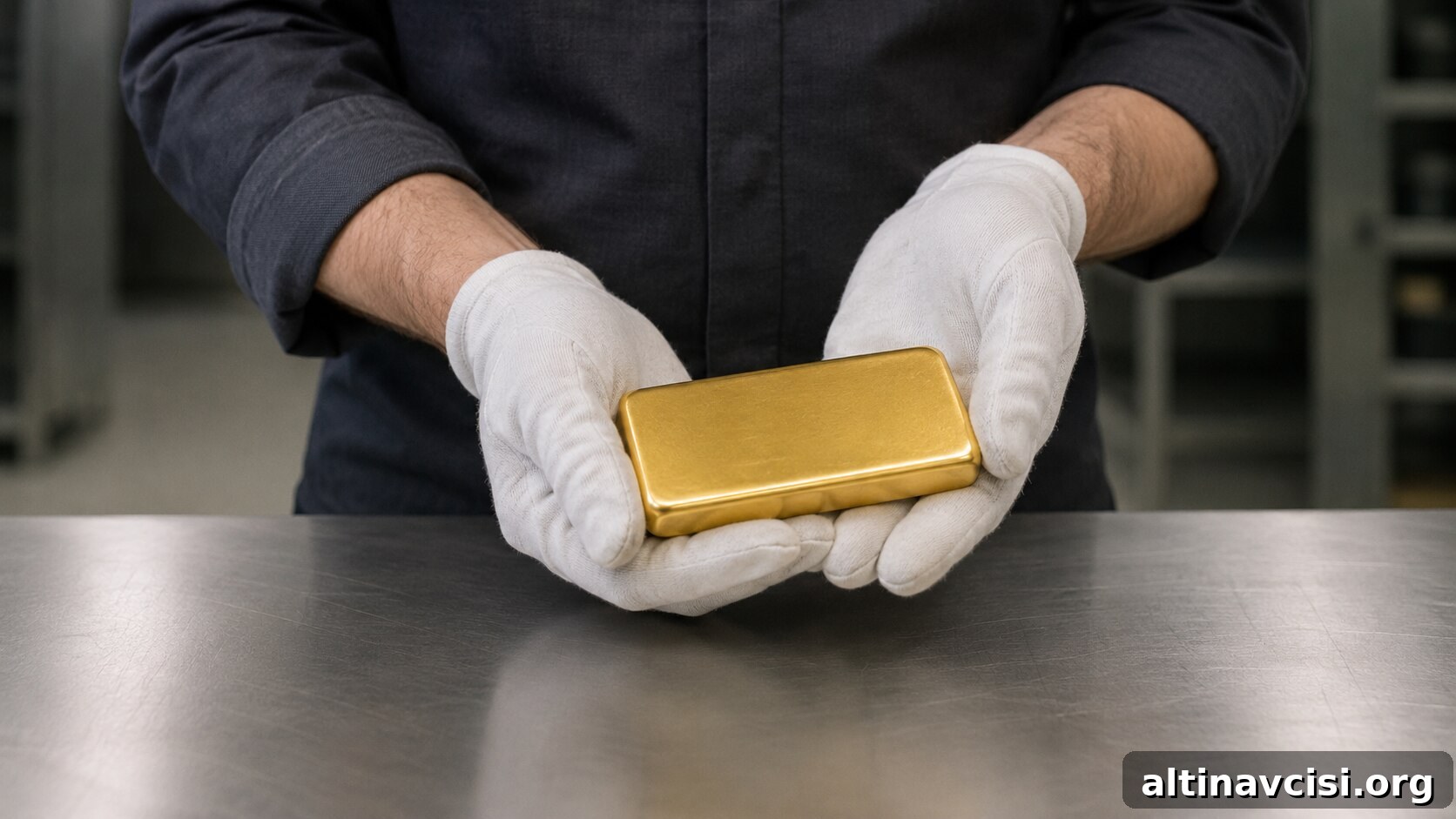
A precious metals IRA holds physical gold, silver, platinum, or palladium under the same tax rules that apply to other IRAs. However, one condition is decisive: a bank or an IRS-approved trustee must maintain physical possession of the metals. If you buy an eligible coin through an IRA and keep it in a personal safe, the IRS treats the holding as a distribution from the account.
Under Internal Revenue Code Section 408(m)(3), an IRA may hold certain coins or bullion that meet statutory standards, but only while a qualifying trustee actually possesses the metal. If a retirement account purchases collectibles outside that exception or if the owner takes possession, the IRS treats the transaction as a distribution in the year of purchase, valued at cost and reported on Form 1099-R. The Tax Court applied this rule in McNulty v. Commissioner (157 T.C. No. 10, Nov. 18, 2021), where coins stored at home were treated as taxable distributions despite being eligible by type. In short: eligibility determines what you may buy; custody determines whether it remains inside the tax-advantaged IRA.
Key Takeaways
- Two separate tests govern whether metal is an eligible IRA holding: the product test (type or fineness) and the custody test. Metal only needs to meet one product test to be eligible, but custody rules apply in all cases.
- Commonly quoted purity figures for IRA bullion—often stated as 99.5% for gold and 99.9% for silver—derive from commodity-exchange delivery standards, which the tax code references rather than listing verbatim.
- Popular coins such as the American Gold Eagle are only about 91.67% pure, yet they qualify because Congress specifically named them in the statute.
- Taking personal possession of IRA metals is not a storage preference; it changes the tax treatment and can trigger a taxable distribution, as highlighted in McNulty v. Commissioner.
- For 2026, IRS guidance sets the annual IRA contribution limit at $7,500, or $8,600 for those aged 50 and older.
What Is a Precious Metals IRA?
A precious metals IRA is not a separate type of retirement account under the tax code. It is an ordinary IRA—often self-directed—that holds physical bullion instead of cash, stocks, or funds. Contribution and distribution rules are the same as for any traditional or Roth IRA, including the potential 10% early withdrawal penalty for distributions before age 59½.
What changes is how the account is administered. Securities and mutual funds are recorded electronically, but physical metal requires a custodian willing to administer tangible assets and a secure location where the metal will be stored. The tax treatment depends critically on where the metal sits and who has legal possession.
The Knowledge That Changes Everything

Two essential guides — yours free. Understand why gold matters and why fiat currencies face long-term challenges.
Which Metals Qualify for a Precious Metals IRA?
Start with the general rule: Section 408(m) of the tax code prohibits IRAs from holding collectibles, and coins and bullion often fall into that category. Section 408(m)(3) then creates two alternative paths that permit certain metals inside an IRA. A holding must satisfy at least one of those paths to be eligible.
The first path is a specific list: Congress named particular coins or referred to coins authorized under federal law, which makes them eligible. For example, American Eagle coins qualify because the statute names them.
The second path is a purity or fineness test: bullion that meets or exceeds minimum delivery standards established by regulated futures markets qualifies under Section 408(m)(3)(B). In practice, these delivery standards translate to the commonly cited thresholds—such as 99.5% for certain gold bullion and 99.9% for silver—though the statute itself references the exchange standards rather than restating exact percentages.
Because these paths are distinct, a coin can qualify by being explicitly listed even if its fineness is below the commodity-exchange threshold. Conversely, an unlisted coin can qualify on its own if it meets the fineness standard. The phrase “IRA-approved” simply indicates the product meets one of these legal tests; it does not ensure the account remains compliant unless custody requirements are also met.
Why Can’t You Store a Precious Metals IRA at Home?
Because the exemption that allows IRAs to hold certain metals depends on trustee possession. Even if a coin meets the product eligibility test, the metal must be in the physical possession of a qualifying trustee—a bank or an IRS-approved non-bank trustee described by the statute—for the IRA to retain tax-advantaged status.
The McNulty case illustrates the point. Taxpayers who directed IRA-owned entities to buy American Eagle coins and then stored the coins in a home safe were found to have received a taxable distribution. Documentation, title to an LLC, or the fact that the coins were otherwise permitted investments did not change the outcome. Courts construe exceptions narrowly, and possession by the owner undermined the special treatment that the statute grants only while a trustee has control.
Consequently, marketing claims that promote “home storage IRAs” ignore a central legal condition. Custodial possession is not an optional feature; it is the basis for the IRA exemption that allows collectibles to be held in the first place.
What Do the Numbers Look Like in 2026?
Contribution limits follow standard IRA rules. For 2026 the IRS set the annual contribution limit at $7,500, rising to $8,600 for individuals aged 50 and older. That cap applies across all traditional and Roth IRAs you own and does not grant special treatment to precious-metals IRAs.
Market prices for gold and silver determine how many ounces an IRA contribution or a rollover buys and also influence the value reported if custody is mishandled. Storage and custody fees are recurring costs, but compared to the potential tax consequences of taking physical possession, storage expenses are often modest. That trade-off is a core consideration when choosing between direct ownership outside an IRA and holding metals inside a tax-advantaged account.
What Do Most Investors Get Wrong About IRA Custody?
Many investors assume that buying an “IRA-approved” product and minimizing storage fees is the main task. In reality, the statutory condition attaches to who holds the metal, not only to what the metal is. A custodian is not an optional service bolt-on; it is the legal foundation that allows the metal to remain inside an IRA.
Therefore, evaluate custody by asking who holds legal title, who physically possesses the metal, and whether you can document both facts. Serious institutional custody practices focus on these exact questions. Retail investors should treat custody as a primary concern rather than a secondary cost to minimize.
Stay On Top of Gold & Silver Prices
Get important market alerts sent straight to your inbox.
Frequently Asked Questions
Yes. An IRA can hold certain gold coins explicitly named in the statute or bullion that meets the fineness threshold referenced by Section 408(m)(3)(B). In both cases, a bank or an IRS-approved non-bank trustee must retain physical possession. If you take personal possession of metal bought through an IRA, the IRS treats that action as a distribution, reportable by the account custodian.
Bullion qualifying under the fineness path must meet the delivery standards of regulated futures markets that the statute references; in practice these translate to commonly cited thresholds such as 99.5% for certain gold products and 99.9% for certain silver products. Congress may also list specific coins by name, allowing some lower-fineness coins to qualify.
No. Court rulings have confirmed that when IRA metals are taken into personal possession, the transaction can be treated as a taxable distribution. An IRA must place eligible metal under the control of a qualifying trustee to preserve tax-advantaged status.
For 2026, the annual IRA contribution limit is $7,500, with a higher catch-up amount ($8,600) for those aged 50 and older. This limit applies to all IRAs combined and does not provide a special allowance for precious metals accounts.
A bank or an IRS-approved non-bank trustee must hold physical possession. In practice, trustees designate approved third-party depositories for storage, but legal possession must rest with the qualifying trustee to satisfy the statute.
Taking physical delivery is treated as a distribution. For traditional IRAs, the distribution is included in taxable income for that year, and an additional 10% penalty may apply if you are under age 59½. Even unintended possession can trigger these tax consequences.
SOURCES
1. Internal Revenue Service — guidance on investments in collectibles in qualified accounts
2. U.S. Code — 26 U.S.C. § 408: Individual Retirement Accounts
3. U.S. Code — 31 U.S.C. § 5112: Denominations, specifications, and design of coins
4. Tax court opinion applying possession rules to IRA metal (McNulty v. Commissioner)
5. IRS notice setting IRA contribution limits for 2026
Disclaimer: This article is for informational purposes only and does not constitute investment or tax advice. Consult a qualified advisor for guidance specific to your circumstances.
You May Also Like:
- Why Your Pension Can Own Gold and Your 401(k) Still Can’t
- Ten Percent Sent Gold Abroad. Nine Percent Brought It Home.
- Permanent Portfolio: Harry Browne’s 25% Gold Rule
- Australian Gold Kangaroo: The Bullion Coin Backed by an Act of Parliament
- What Is Sound Money? Why the Dollar Lost Value Since 1971
- Vault Storage vs. Gold ETFs: Who Owns the Gold You Paid For?
- Silver Price Outlook: Market Perspectives
- What Does an Inverted Yield Curve Mean for Gold Prices?
- Gold Price Outlook: Market Signals and What They Mean