How to Spot Fake Gold and Silver: Key Tests and Warning Signs
Counterfeiting precious metals has been a problem for as long as people have used gold and silver as money. The best way to avoid being duped is to understand how counterfeits are made and which tests reliably reveal them.
One notable case: in September 2012 a Manhattan dealer paid $100,000 for four PAMP Suisse 10-ounce gold bars that appeared genuine. After a tip, the buyer drilled into them and discovered tungsten cores beneath a gold shell. The bars had passed common surface tests and scale checks before the deception was uncovered. With gold prices often high, the incentive for this fraud remains strong.
Fortunately, most fakes can be detected before you complete a purchase. This guide explains how counterfeit gold and silver are produced, which home and professional tests work, what they miss, and the warning signs to watch for when buying bullion or coins.
What Are the Most Common Types of Fake Gold and Silver?
Counterfeit techniques range from obvious to highly sophisticated. No single test detects every method, so it helps to know the common approaches used by counterfeiters.
Gold-plated base metals are the most common fakes. A thin layer of real gold is electroplated or bonded over a core of brass, copper, or nickel. These pieces can look authentic to the naked eye and sometimes survive a shallow acid test if the plating is thick.
Tungsten-core bars and coins are the most dangerous. Tungsten’s density (≈19.25 g/cm³) is almost identical to gold (≈19.30 g/cm³), allowing a gold exterior over a tungsten interior to match the correct weight and dimensions. Surface XRF analyzers and scale checks can be fooled because they sample only a very thin layer at the surface and cannot detect internal substitution.
Mislabeled purity is another common fraud: the item is real gold but not the karat advertised. For example, 10k gold (about 41.7% pure) sold as 18k (75% pure) is genuine gold but not the expected purity. Visual inspection alone can’t determine karat.
Counterfeit coins with replicated hallmarks are produced with modern CNC machining. Replicated design details, mint marks, and stamped weights can look convincing to an untrained buyer.
Silver fakes typically use lead, copper, or lead-tin alloy cores plated with silver. Because no inexpensive metal closely matches silver’s density (10.49 g/cm³), many silver counterfeits fail simple weight-and-dimension checks and are easier to detect than gold fakes.
Your Gold Buying Guide Most investors overpay when they buy gold and again when they sell. This guide explains what to own, and why.
How Can You Test Gold and Silver at Home?
Effective authentication combines several tests. No single check is definitive, so layer quick, non-destructive methods first and follow up with stronger tests if anything looks suspicious.
Authentication guide
What each test detects — and what it misses
Use multiple complementary methods. The table below summarizes their strengths and limitations.
| Test | Plated fakes | Magnetic cores | Purity fraud | Tungsten core |
|---|---|---|---|---|
|
Weight & dimensions Scale + caliper |
|
|||
|
Magnet test Neodymium magnet |
|
|||
|
Ping test Strike and listen |
|
~ |
||
|
Visual inspection Hallmarks + security features |
|
|||
|
Acid test Touchstone + nitric acid |
|
|
||
|
Ultrasound testing Professional / coin shop |
|
|
|
19.25 vs. 19.30 g/cm³
Tungsten’s density compared with gold’s — a tiny difference that makes tungsten-core counterfeits difficult to detect without specialized testing.
1. Weight and Dimensions
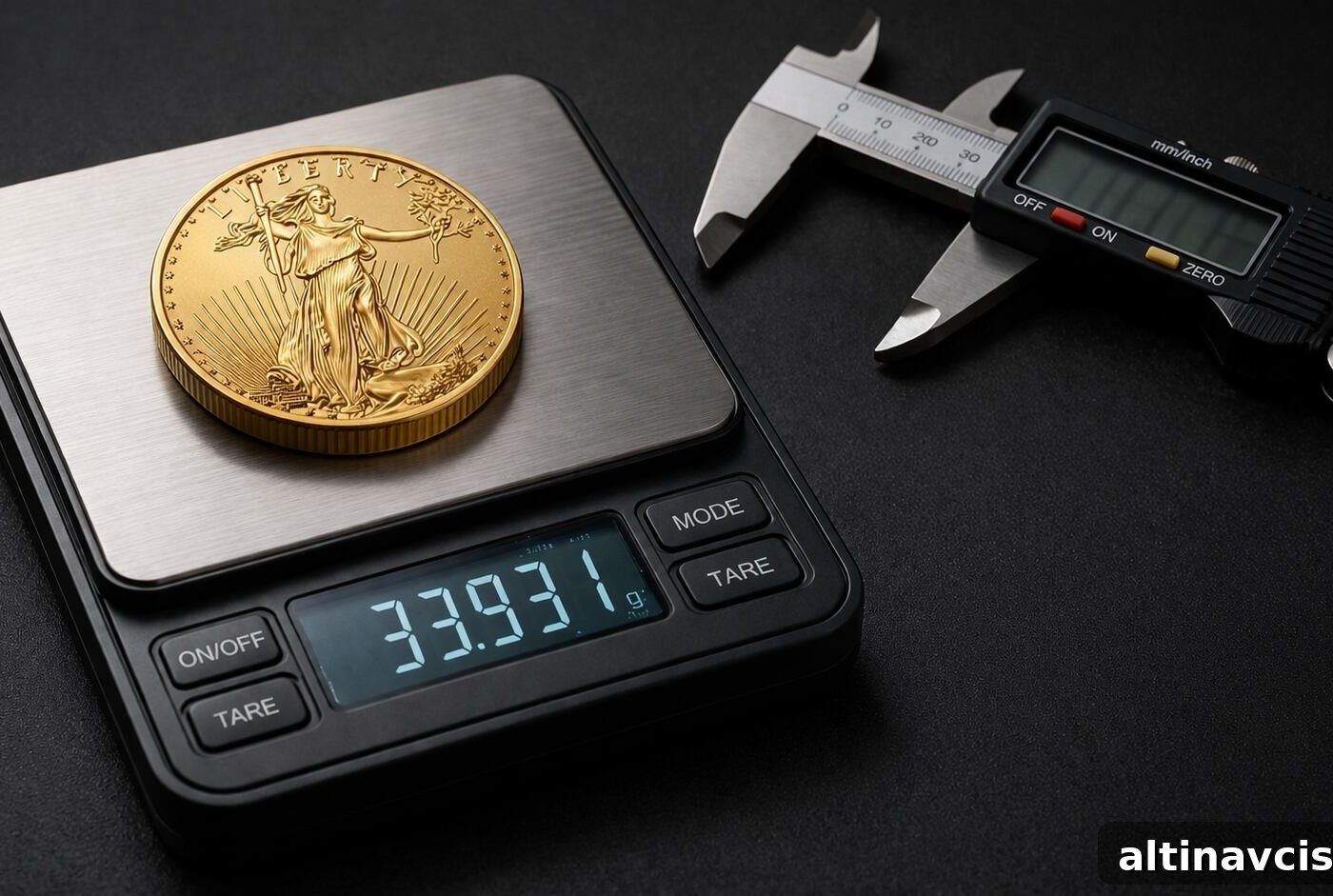
This objective test is the best place to start. Every mint and reputable refinery publishes exact weight and size specifications for their products. Use a precision scale (to at least 0.01 g) and a digital caliper to compare the item to the published specs.
For example, a genuine 1 oz American Gold Eagle has a published mass and diameter you can verify. Any deviation is a red flag worth investigating further.
What it catches: Gold-plated items and most base-metal fakes, which usually fail to match both weight and dimensions.
What it misses: Tungsten-core counterfeits. Because tungsten closely matches gold’s density, a skilled forger can make a bar or coin that matches published specs precisely.
Silver note: the density difference between silver and common substitutes is larger than for gold, so weight-and-dimension checks are more definitive for silver.
2. The Magnet Test
Gold and silver are non-magnetic. If a strong rare-earth magnet attracts a coin or bar, that object almost certainly contains iron, steel, or certain nickel alloys.
Hold the magnet close without touching the metal. Any pull indicates a magnetic core. You can also place the coin on a slight incline: genuine pieces slide smoothly while magnetic fakes may drag.
What it catches: Low-quality counterfeits with iron or steel cores—an immediate, cost-free filter.
What it misses: Tungsten and other non-magnetic cores. Treat the magnet test as a quick screening tool, not definitive proof.
3. The Ping Test
Genuine gold and silver coins produce a clear, sustained ringing tone when struck gently; base metals sound duller and shorter. Balance the coin on a fingertip and tap it with another coin or small metal object to listen for the difference.
What it catches: Most plated and poorly made fakes with mismatched acoustic properties.
What it misses: Tungsten-filled items can produce misleading tones. While professional equipment can measure acoustic velocity accurately, ear-based listening is subjective and less reliable.
4. Visual Inspection and Security Features
A careful visual check will catch many fakes. Verify hallmarks, purity stamps (e.g., .999 or .9999), weight, and the issuing mint. Blurry text, wrong fonts, or misaligned stamps are strong indicators of a counterfeit.
Inspect the coin’s edge and look for mint-specific security features: for example, certain modern issues include micro-engraved marks or deliberate edge notches. Missing or irregular edge details are a red flag. Also examine surface finish, relief sharpness, and color consistency; counterfeit pieces often show subtle flaws under magnification.
What it catches: Low- and mid-quality counterfeits and coins missing the security features expected for their type and year.
What it misses: High-precision counterfeits made with modern machining that closely replicate design details.
5. The Acid Test
An acid test uses a touchstone and nitric acid to check the metal beneath the surface. Scratch the metal onto a testing stone and apply a drop of the appropriate acid. Real gold will not react; many base metals will discolor or dissolve.
What it catches: Plated base metals and mislabeled purity grades, since the acid reveals the material under the plating.
What it misses: Items with a genuine gold surface over a different interior, such as tungsten cores. Acid testing examines only the surface layer and cannot determine internal composition.
When Is Professional Authentication Worth It?
Home tests are valuable, but for higher-value purchases—especially large-format gold bars—professional testing is often essential.
XRF (X-ray fluorescence) is widely used by dealers to identify surface elemental composition quickly and non-destructively. Its limitation is that it measures only a thin surface layer, so it can miss internal substitution.
Ultrasound testing measures the speed of sound through the metal and is the most reliable non-destructive way to detect tungsten cores. Because sound travels at very different speeds through gold and tungsten, ultrasound can reveal internal inconsistencies that other tests miss.
Electronic conductivity testers measure electrical properties that vary between metals and are available at many coin shops. For collectible coins, professional grading and encapsulation services provide trusted authentication and documentation.
If home tests leave doubts, pause the purchase. Walking away is often less costly than discovering a counterfeit later.
What Red Flags Should You Be Aware of?
Physical tests reveal composition; warning signs indicate when to test more carefully. Watch for these common red flags:
- Price below spot: No legitimate seller offers genuine gold or silver below metal value. Below-spot pricing almost always signals a problem.
- Unverifiable mint names: Genuine bullion comes from recognized mints or established refineries. Unknown or unconfirmed refinery names are suspect.
- Imprecise design details: Blurry text, misaligned stamps, or inconsistent fonts are evidence the piece did not come from a reputable mint.
- No seller history: Private sellers with no verifiable reviews or track record offer little accountability.
- Convincing packaging that cannot be verified: Tamper-evident cards and certificates help, but they can also be forged. Packaging alone does not prove authenticity.
Why the Source Matters More than the Tests
Combined tests catch most fakes, but the most reliable protection is buying from a verified supply chain. Reputable dealers source directly from authorized distributors and often offer buyback guarantees. That supply-chain integrity reduces the need for repeated authentication: you’re buying both the metal and the assurance of its origin.
When in doubt, choose sources with verifiable provenance and a transparent return or buyback policy. It’s the simplest way to avoid costly authentication problems later.
Stay On Top of Gold & Silver Prices
Get important market alerts sent straight to your inbox.
People Also Ask
How do I know if my gold coin is real?
Begin with weight and dimensions using a precision scale and caliper, then add a magnet test and visual inspection for coin-specific security features. For many modern bullion coins, electronic conductivity testing at a reputable coin shop provides reliable, non-destructive confirmation.
Can a tungsten-filled bar pass a magnet test?
Yes. Tungsten is non-magnetic, so a gold-plated tungsten bar will not be attracted to a magnet. This is why the magnet test must be combined with other checks; ultrasound or professional testing is required to reveal tungsten cores reliably.
What does fake silver look like?
Fake silver often has a copper, lead, or lead-tin core with silver plating. These items usually weigh less than genuine silver, sound dull when struck, and may show discoloration or wear where plating thins. Because few affordable metals match silver’s density, weight checks catch most silver fakes.
Is gold ever legitimately sold below spot?
No. Legitimate sellers do not sell genuine gold below its metal value. If an offer is below spot, treat it as a strong warning sign and verify carefully before proceeding.
Do I need to test gold bought from a reputable dealer?
Generally no. Purchasing from a dealer with a verifiable supply chain and a buyback guarantee shifts the authentication burden to the seller. You’re paying for both the metal and the assurance of its origin.
SOURCES
NBC News — Counterfeit Gold Bars Discovered in New York City
New York Post (reported via a testing site) — More Counterfeit Gold Bars Found in Manhattan
The Safe House / Silver Bullion — How Ultrasound Testing Is Used to Authenticate Precious Metals
Testing and authentication guides — practical resources on testing gold, silver and fakes
U.S. Mint — Coin specifications and details on redesigned security features
Royal Canadian Mint — Bullion DNA program and micro-engraved security features
Industry reports on counterfeit bars and coins
This article is for informational purposes only and does not constitute financial or investment advice. Consult a qualified financial advisor before making investment decisions.
You May Also Like:
- Numismatic vs. bullion coins: know what you’re buying
- Silver in AI infrastructure: the metal behind many electronics
- Gold price forecasts and market outlook
- How to read the gold-silver ratio and what it means for investors
- Do gold ETFs mean you actually own physical gold?
- Silver demand by sector: industry, jewelry, investment
- Why silver is often more volatile than gold
- How to roll over a 401(k) into a gold IRA
Popular Topics
Picked from the archive
-
01
 Topics
Serbia Repatriates USD 6B in Gold Reserves From Overseas Vaults
-
02
Topics
How Real Interest Rates Drive Gold Prices: Investor Guide
-
03
Topics
Gold Prices Slip After Rally as Fed Rate Cut Looms
-
04
Topics
Gold Rises Amid Fed Uncertainty, Weak Jobs and Crypto Turmoil
-
05
Topics
Why BRICS Nations Are Stockpiling Gold
-
06
Topics
High Earners Falling Behind on Credit Cards and Auto Loans
-
07
Topics
Gold Prices Slip as Fed Officials Delay December Rate Cut
-
08
Topics
Extra $21 Billion in Tariff Revenue Fails to Stem the Deficit