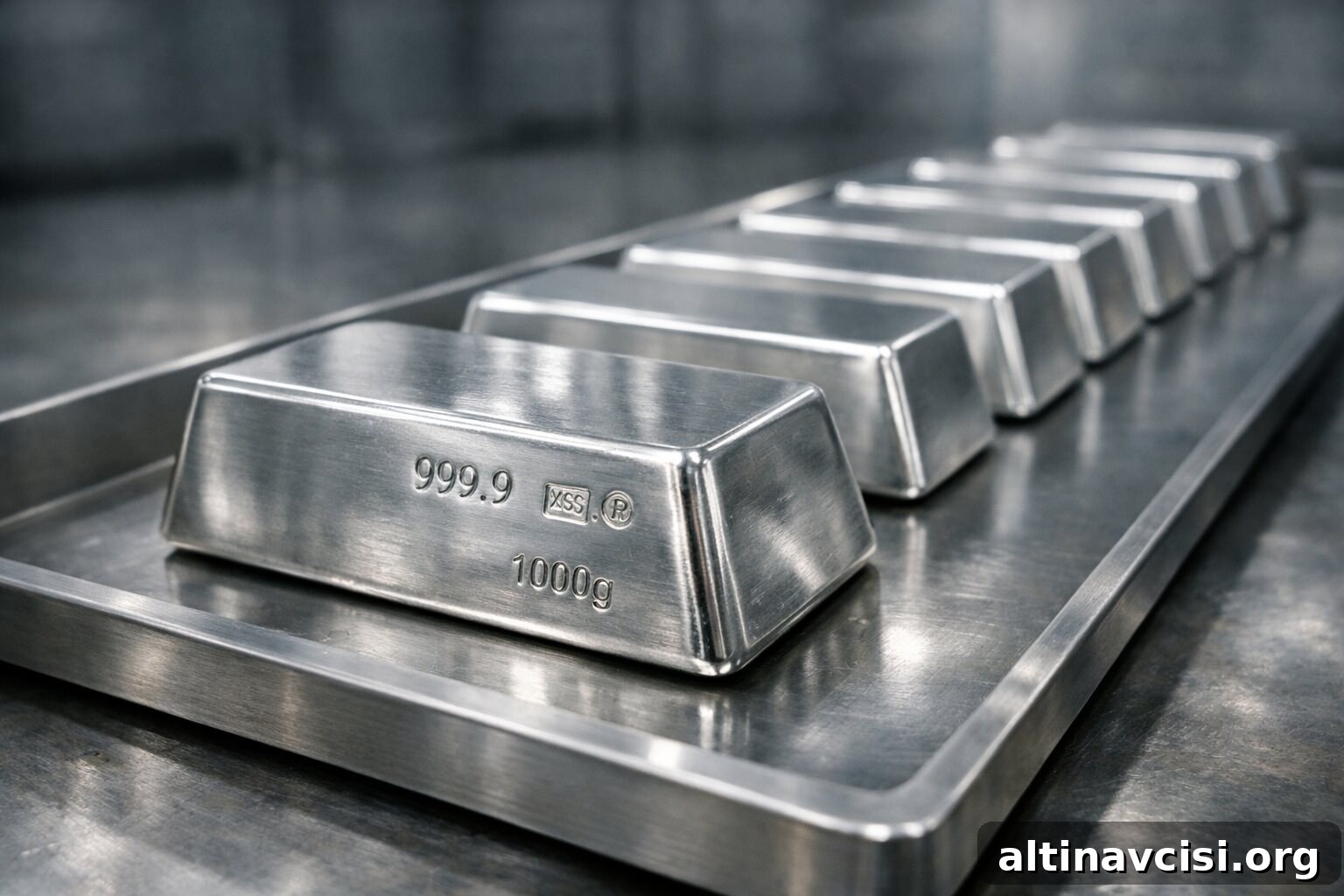
If you’re considering buying silver bars, you’re already thinking about physical silver the right way.
Silver bars are one of the most cost-efficient ways to own the metal — they generally carry lower premiums than coins, come in sizes from 1 oz to 1,000 oz, and can be IRA-eligible when they meet purity and refiner requirements. At the same time, the global silver market is entering its sixth consecutive annual supply deficit in 2026, and the physical inventory drawn down during that period is not returning quickly.
As of April 2026, silver is trading around $80 per ounce, down from its January 29, 2026 high of $121.67. For long-term buyers, a roughly 34% pullback during an ongoing structural deficit is an entry opportunity rather than a warning sign. This guide explains bar types and sizes, premiums, storage options, and what to check when buying silver bars.
What Are Silver Bars?
A silver bar is a refined piece of silver, typically stamped with its weight, purity, and the refiner’s name. Common purities are .999 fine (99.9%) and .9999 fine (99.99%). Bars carry no face value or collectible premium — you pay for metal, not packaging or numismatic appeal.
Reputable bars come from LBMA-accredited refiners such as PAMP Suisse, Valcambi, Asahi Refining, and the Royal Canadian Mint. LBMA (London Bullion Market Association) accreditation is the global standard for quality assurance and means the bar is widely recognized and tradeable internationally.

Your Gold Buying Guide Most investors overpay when they buy gold. Then overpay again when they sell. This guide shows you exactly what to own — and why.
Silver Bars or Silver Coins — Which Is the Better Buy?
On cost, bars are usually the better choice. A standard 10 oz silver bar commonly carries a premium of about 3–5% over spot. A government-minted coin, like the American Silver Eagle, often trades at an 8–12% premium or higher. On a large allocation, that difference can amount to hundreds or thousands of dollars that do not go into metal.
Coins offer greater recognition: Silver Eagles and Canadian Maple Leafs are widely identifiable, which can help when selling small quantities quickly. But if your primary goal is the most silver for the least cost, bars are the straightforward answer.
Which Silver Bar Size Is Right for You?
Choosing a size depends on budget, storage, and how you expect to sell. Here’s a quick comparison of common sizes:
1 oz bars carry the highest per-ounce premium (typically 5–8%) but offer maximum flexibility. They’re easy to sell in small amounts, easy to gift, and easy to transport.
10 oz bars are the sweet spot for many investors: premiums usually fall to 3–5%, they’re simple to handle, and most reputable dealers buy them back readily.
100 oz bars (about 6.8 lbs) suit investors deploying larger sums. Premiums often drop to roughly 1–3%, meaning more of each dollar is actual silver. The trade-off is divisibility — selling part of a 100 oz bar is more difficult.
1,000 oz “Good Delivery” bars are the institutional standard for central banks, refiners, and major dealers. At current spot levels, a single bar represents tens of thousands of dollars and is rarely practical for individual buyers outside of allocated storage arrangements.
For most buyers, 10 oz bars balance low premiums, manageable size, and strong liquidity.
What Should You Look for When Buying Silver Bars?
The buying process is straightforward, and common mistakes are avoidable if you follow a few rules.
Verify the premium in real time: The premium is the amount you pay above live spot. Check a live price chart before buying and calculate the total cost per ounce. Reputable dealers display this information clearly.
Stick to LBMA-accredited refiners: Bars from well-known refiners like PAMP Suisse, Valcambi, Asahi, and major government mints carry stronger global resale recognition. Generic or unknown refiners may be discounted or harder to resell.
Calculate total cost, not just the spot premium: Shipping, insurance, and payment fees add up. Many dealers offer modest discounts for bank wire or ACH payments; on larger purchases that can be meaningful.
Check for assay cards on smaller bars: Bars of 10 oz and under from major mints often arrive sealed in tamper-evident assay packaging. Original packaging matters at resale; bars without it can trade at a discount even when genuine.
Price comparison tools can show live premiums across reputable dealers so you can identify the best offer before committing. Use transparent price feeds as a benchmark when comparing options.
Why Is Silver Worth Buying Right Now?
The supply outlook is the strongest near-term case. The global silver market is projected to record its sixth consecutive annual deficit in 2026, with a significant shortfall that widens the cumulative inventory drawdown from previous years.
From 2021 through 2025, the market experienced large cumulative deficits that were met by drawing down above-ground stocks. That inventory reduction cannot be restored quickly.
Supply is structurally constrained because about 70% of silver is produced as a byproduct of base-metal mining (lead, zinc, copper). That means higher silver prices alone don’t automatically drive substantial new supply, creating inelasticity that supports recurring deficits.
Demand is also robust from industry. Solar panels, electric vehicles, data centers, and 5G infrastructure all consume silver. Industrial use represented a large portion of global silver demand, while investment demand in coins and bars has recently risen and remains an important component of overall consumption.
Price context matters: silver reached an all-time high in January 2026 and later pulled back. In an environment of structural deficits and rising industrial demand, corrections create buying opportunities for long-term investors rather than signaling the end of a larger trend.
How Should You Store Silver Bars?
Storage choice depends on how much silver you own and whether it’s held inside a retirement account.
Outside an IRA: For holdings under roughly $50,000, a quality home safe that is bolted down and fire-resistant may be sufficient. For larger amounts, professional allocated storage in an insured vault is generally safer. Allocated storage fees typically run around 0.5–1% of metal value per year and include insurance.
Inside a Self-Directed IRA: The IRS requires precious metals held in an IRA to be stored by a qualified custodian at an approved depository. Home storage, including personal safe deposit boxes, is not permitted for IRA holdings and can trigger tax consequences. Confirm custodian and depository requirements before purchasing silver for an IRA.
To be IRA-eligible, silver must meet purity standards (commonly .999 fine) and be produced by an acceptable mint or accredited refiner. Purity alone does not guarantee eligibility; always confirm details with your custodian before buying.
Also keep in mind that silver is bulky relative to its dollar value. A 100 oz bar weighs roughly 6.8 pounds, and substantial allocations require planning for storage and transport ahead of purchase.
Stay On Top of Gold & Silver Prices
Get important market alerts sent straight to your inbox.
People Also Ask
What is the best size silver bar to buy?
For most investors, 10 oz silver bars are the best compromise between low premiums (about 3–5%), ease of storage, and liquidity. 100 oz bars lower premiums further but reduce divisibility. 1 oz bars are most flexible but cost more per ounce.
Are silver bars a good investment?
Silver bars are a cost-efficient way to hold physical silver and provide ownership without counterparty risk. They do not produce income and prices can be volatile. As a hedge against currency debasement and with ongoing structural deficits and industrial demand, silver can play a role in a diversified portfolio. Consult a qualified financial advisor for personalized guidance.
How much over spot should I pay for silver bars?
Expect to pay about 3–5% over spot for 10 oz bars in normal markets. One-ounce bars typically trade at 5–8% over spot. Premiums can spike above these ranges during periods of high demand or market stress. Always include shipping and fees in your comparisons.
What purity do silver bars need to be for an IRA?
IRS rules require silver held in an IRA to be at least .999 fine and produced by a government mint or an accepted LBMA/COMEX-accredited refiner. Home storage is not allowed for IRA metals.
How do I know if a silver bar is real?
Buy from dealers who source bars from LBMA-accredited refiners. Original sealed assay packaging is the best indicator of authenticity for smaller bars. If packaging is missing, have bars professionally assayed by a reputable dealer. If a price looks significantly below market, it is likely not legitimate.
What Should Serious Silver Buyers Do Next?
The practical steps are simple. Decide how much you can afford to allocate, choose LBMA-accredited sources, and pick bar sizes that match your capital and storage plan. For most investors seeking physical exposure to silver, bars offer the most efficient route: lower premiums, straightforward ownership, and broad resale acceptance.
The fundamentals for silver in 2026 — consecutive supply deficits, declining above-ground inventories, and steady industrial and investor demand — support a long-term case for ownership. Corrections can present buying opportunities for those focused on multi-year outcomes.
Buy what you can afford, prioritize reputable refiners, and plan storage before you purchase. If you need more detail on pricing, storage, IRAs, and the buying process, consult reliable resources and a qualified professional to tailor decisions to your situation.
SOURCES
1. London Bullion Market Association — Good Delivery Silver Current List
2. Silver Institute — Silver Supply & Demand
3. Silver Institute — Global Silver Investment to Remain Strong in 2026 Against the Backdrop of a Sixth Consecutive Annual Market Deficit
4. Internal Revenue Service — IRS Publication 590-A: Contributions to Individual Retirement Arrangements
Disclaimer: This article is for informational and educational purposes only and does not constitute investment advice. Past performance is not a guarantee of future results. Consult a qualified financial advisor before making investment decisions.
You May Also Like:
- Why Silver Falls While Gold Rises: What It Means for You
- Gold Price Forecast 2026–2027: Key Predictions from Top Analysts
- Is Now a Good Time to Buy Gold? Here’s the Macro Case
- Is Gold a Better Investment Than Bitcoin Right Now?
- What the Silver-to-CPI Ratio Reveals That Spot Price Hides
- Gold & Silver Supply and Demand: What Really Drives Prices Over Time
- Dow to Gold Ratio: 100 Years of History Decoded
- How the 50 Day SMA Helps You Understand Gold & Silver