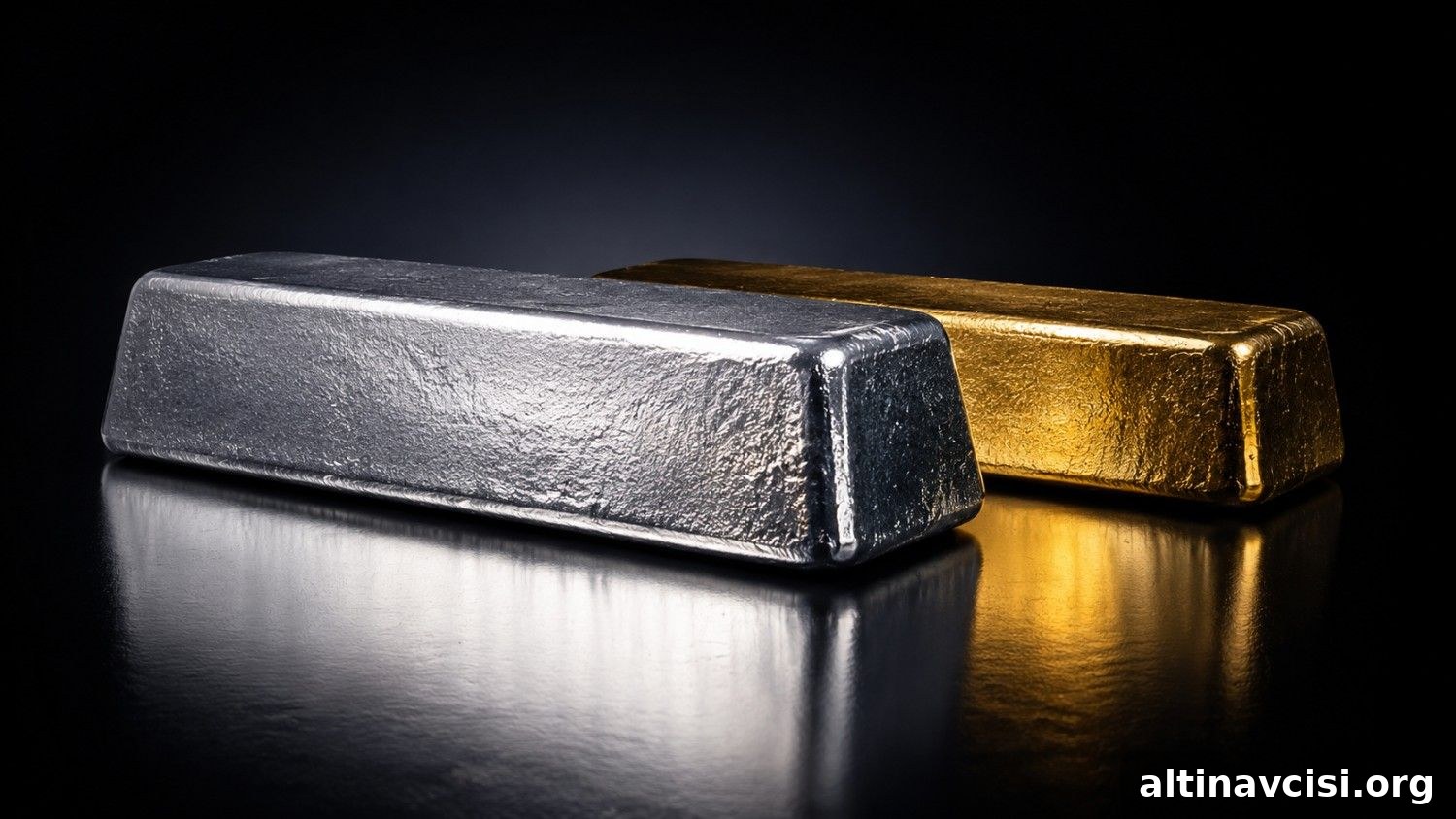
On Friday, gold traded at $4,358 and silver at $64.27 — daily gains of 2.8% for gold and 3.6% for silver. What made the session notable wasn’t just the price moves but the fact that five distinct market developments all pointed in the same direction. That uncommon convergence merits a closer look: what happened, why it mattered, and what to monitor next.
Why Did Gold Rise After a Weak Jobs Report?
The Bureau of Labor Statistics reported that the US economy lost 23,000 jobs in July, a substantial miss versus the consensus forecast of an 80,000 gain. June’s payrolls were also revised sharply lower, from +57,000 to +20,000, leaving the labor market with roughly 103,000 fewer jobs across May and June than earlier data indicated.
That softer employment picture pushed gold higher almost immediately. The explanation is straightforward: a weakening jobs report changes the Federal Reserve’s tradeoff between price stability and maximum employment. With job growth faltering, the Fed has less incentive to raise interest rates. Expectations for fewer or later hikes reduce the opportunity cost of holding non-yielding assets like physical gold. Lower expected rates and compressed real yields make gold relatively more attractive, increasing demand and driving prices up.
What Happened to September Rate Hike Odds?
The CME FedWatch tool showed the probability of a September rate hike sliding sharply — from about 55% at Thursday’s close to roughly 40% by mid-morning Friday. That 15-point swing in a single session reversed a six-week consensus that had priced in a September increase, a view built on the assumption that inflation would remain strong and the labor market would stay resilient. The July payrolls miss undermined that second assumption and prompted markets to reprice the odds.
For precious metals, the link is direct: lower rate expectations reduce nominal Treasury yields and compress real yields (nominal yields minus inflation expectations), one of gold’s most consistent short-term drivers. Treasury yields fell quickly after the jobs report, and gold tracked that move, peaking around $4,411 before settling near $4,358.
Did China Keep Buying Gold in July?
Yes. The People’s Bank of China disclosed an addition of roughly 20 tonnes of gold in July 2026, extending its buying streak to 21 consecutive months and marking its largest single-month purchase since October 2023. Importantly, these purchases occurred while gold was trading above $4,000 per ounce.
Central bank buying behaves differently from retail or ETF inflows because it is not directly driven by interest-rate expectations. China appears to be steadily reducing dollar exposure and diversifying reserves away from the US financial system. That kind of structural demand provides a persistent support level for gold and remains active even when rates are elevated.
Is Silver Outperforming Gold Right Now?
On Friday silver outpaced gold, gaining 3.6% compared with gold’s 2.8%, narrowing the gold-silver ratio to about 67:1. That pattern extended a trend observed throughout the week.
Silver benefits from the same rate-repricing tailwind as gold — lower expected rates make non-yielding metals more attractive — but it also carries an industrial demand story that gold lacks. The silver market has experienced a supply deficit over recent years, with industrial demand from solar panels, electric vehicles and electronics consuming a growing share of available supply. When monetary factors and physical undersupply coincide, silver often posts larger percentage gains than gold.
How Close Is a Strait of Hormuz Deal?
Diplomatic progress on a Strait of Hormuz shipping agreement appeared closer than it has been in months, though the situation was not finalized. Reports indicated that Iranian lawmakers were discussing the phrasing of an Oman-mediated proposal while various officials described negotiations as advancing toward completion.
The link to precious metals runs through oil and inflation. Escalations that push oil prices higher also raise energy-driven inflation, strengthening arguments for Fed hikes and pressuring gold. Conversely, a de-escalation or maritime agreement would likely ease oil prices, lower energy-related inflation, weaken the case for near-term rate hikes, compress real yields, and lift gold — which is the direction markets appeared to be moving on the news.
What Do These Five Signals Add Up To?
Friday’s session brought five distinct, reinforcing signals: a weak jobs report, sharply reduced Fed-hike odds, falling Treasury yields, continued central bank buying, and geopolitical progress that could ease oil prices. Together, they produced a coordinated push higher for gold and silver.
That alignment doesn’t guarantee continued gains. Upcoming inflation prints — CPI, PPI, and the Fed’s preferred PCE measure — will still shape policy expectations ahead of the September meeting. The proposed Hormuz agreement must clear domestic approvals and be implemented, and structural central-bank demand, while persistent, does not eliminate short-term volatility. Still, when multiple drivers converge simultaneously, the move is more likely to reflect a meaningful shift in the macro backdrop rather than random noise.
Stay On Top of Gold & Silver Prices
Get timely market alerts, price updates and concise analysis delivered to your inbox.
SOURCES
Selected sources for data and reporting: Bureau of Labor Statistics (US Non-Farm Payrolls, July 2026); CME FedWatch market data; Bloomberg reporting on China’s central bank gold purchases and regional diplomacy; industry reports on silver supply and demand; market price data for gold and silver.
Disclaimer: This article is for informational purposes only and does not constitute investment advice. Past performance is not indicative of future results. Consult a qualified financial advisor before making investment decisions.
You May Also Like:
- China Has Been Buying Gold for Many Months. Now It’s Moving It.
- Industrial Demand Shifts and Silver’s Role in Clean Energy Supply Chains.
- How Jobs Data and Central Bank Policy Are Shaping Precious Metals.
- Why Silver Is Showing Stronger Percentage Moves Than Gold.
- Five Macro Drivers That Moved Gold and Silver in a Single Session.