
Key Takeaways
- The U.S. dollar’s share of global foreign exchange reserves has dropped from about 71% in 2000 to roughly 57% today — a structural decline that favors gold and silver.
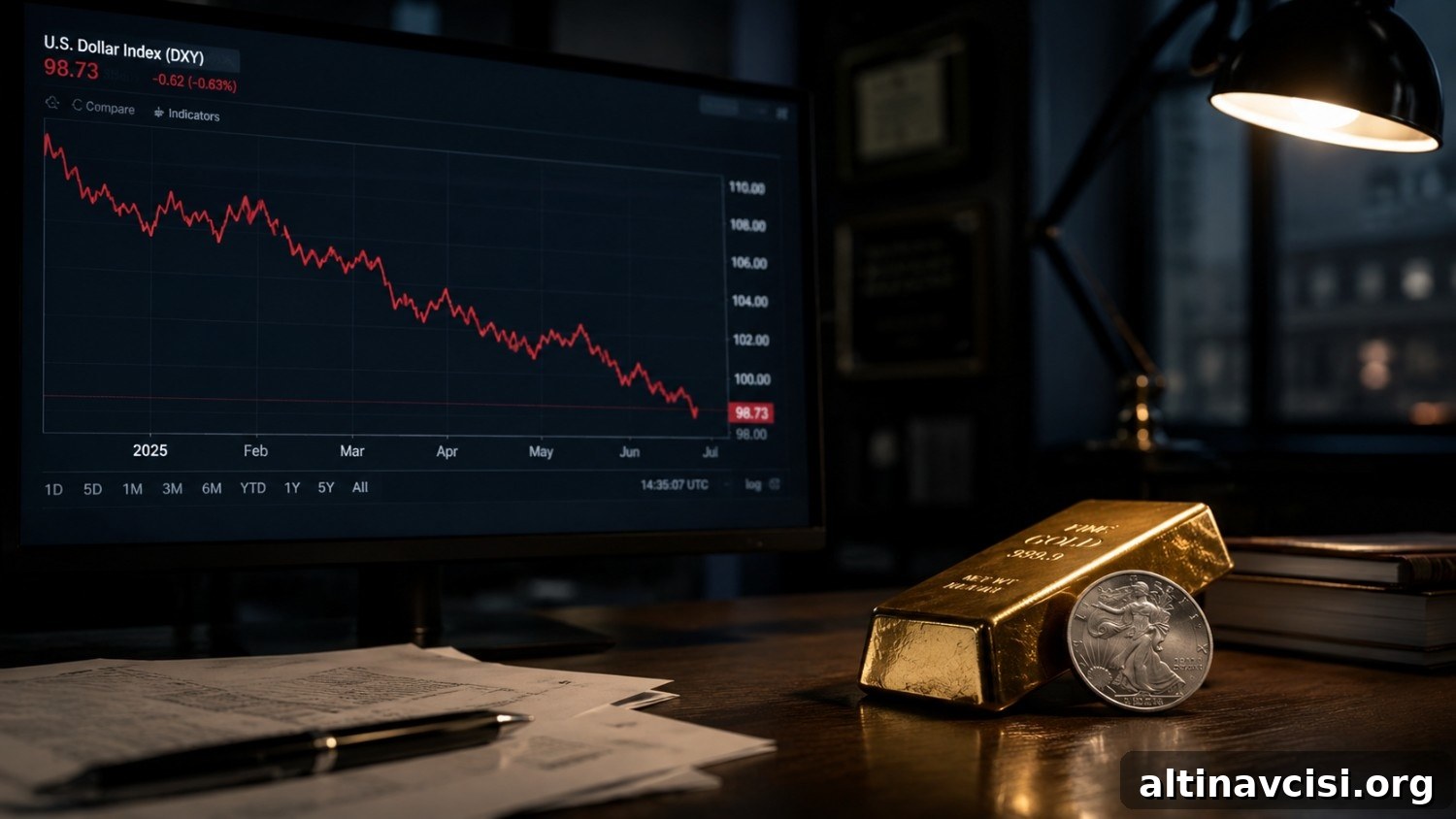
- When the U.S. Dollar Index (DXY) fell roughly 10–11% in the first half of 2025, gold set successive record highs and silver gained about 147% that year.
- Central banks purchased gold at the highest rate in seven decades across 2022–2024 — a clear institutional indicator that dollar dominance is weakening long-term.
Gold and the U.S. dollar have a well-known inverse relationship. With gold trading around $4,690 and silver at historically high levels, that relationship is playing out as expected: a structurally weaker dollar benefits precious metals.
Investors often focus on inflation, interest rates, and geopolitical events when watching gold and silver. Those factors matter, but they typically operate through a single upstream variable: the dollar. Recognizing that link turns reactive investing into a proactive approach.
What Is Dollar Dominance — and How Does It Affect Gold and Silver Prices?
Dollar dominance refers to the U.S. dollar’s outsized role in the global financial system. Since Bretton Woods in 1944, the dollar has been the primary global reserve currency. Most international trade, sovereign debt, and commodity pricing — including precious metals — remain dollar-denominated.
When the dollar is strong, fewer dollars are needed to buy an ounce of gold, which tends to pressure prices. When the dollar weakens, gold and silver generally rise. This inverse link has held through multiple market cycles over decades.
What has changed is the dollar’s share of global reserves. That share has fallen from about 71% at the start of the century to near 57% today — its lowest level in decades. This long-term decline sets the context for how to interpret moves in gold and silver prices.
Your Gold Buying Guide Most investors overpay when they buy gold and often overpay again when selling. This guide explains what to own and why.
How Does Dollar Strength Drive Gold and Silver Prices?
The mechanism is straightforward: gold and silver are priced in U.S. dollars worldwide. When the dollar strengthens, metals become more expensive for buyers using other currencies, and demand typically falls. When the dollar weakens, demand often rises and prices move higher.
Analysts commonly watch the U.S. Dollar Index (DXY), which tracks the dollar against a basket of major currencies. In the first half of 2025 the DXY fell about 10–11% — the steepest H1 drop in more than fifty years — and gold climbed past previous records into 2026.
Gold carries no yield, no counterparty risk, and cannot be created like fiat currency. When the currency it’s priced in loses purchasing power, gold’s intrinsic value is preserved and the dollar price simply rises. That’s economic reality rather than speculation.
Silver follows the same relationship but often with greater volatility because of its smaller market and significant industrial use.
Why Is the Dollar the #1 Signal — and Not Just One Factor Among Many?
Many variables influence precious metals — inflation, interest rates, geopolitics, and central bank policy. The dollar matters more because those factors typically transmit through it first.
Consider inflation: rising consumer prices reduce the dollar’s purchasing power and make hard assets more attractive. The immediate transmission runs through real interest rates (nominal yields minus inflation). When real rates are negative, holding dollars becomes costly and demand shifts toward assets like gold.
Geopolitical crises once triggered a flight to dollars. As confidence in U.S. fiscal policy has weakened, that reflex has softened and investors increasingly move directly into gold. That shift is structural and worth watching closely.
In short: monitor the dollar first; most other signals follow.
What Happens to Silver When Dollar Dominance Fades?
Silver acts like a leveraged version of gold’s dollar-driven thesis. When the dollar weakens, silver often outperforms gold because of its smaller market and its dual role as both an industrial and monetary metal.
In 2025 silver rose roughly 147% as the dollar came under sustained pressure. At prices approaching $87.71 during the 2025–2026 rally, silver reached levels without historical precedent outside that surge. Its price reflected both monetary dynamics — dollar weakness and inflation expectations — and rising industrial demand from solar, electric vehicles, and electronics.
That combination creates a higher structural floor for silver’s price. When a weaker dollar meets tightening supply and growing industrial usage, silver tends to move quickly and strongly.
What Are the Long-Term Implications of a Declining Dollar for Gold and Silver?
The long-term picture is structural rather than cyclical. Central banks bought gold at the highest rates in more than 70 years during 2022–2024, with annual purchases exceeding 1,000 tonnes. Such sustained institutional buying signals a strategic shift away from reliance on dollar-denominated reserves.
This measurable dedollarization — reserve managers reallocating assets — is more consequential than short-term forecasts. Reserve currency transitions unfold over decades; the dollar is unlikely to disappear quickly, but its dominant share can erode gradually. That process creates a persistent tailwind for precious metals.
Gold has already been repriced to levels that would have seemed extreme a few years ago, and further adjustment is possible as global reserve allocations evolve.
Stay On Top of Gold & Silver Prices
Get important market alerts sent straight to your inbox.
People Also Ask
How does the U.S. dollar’s dominance affect gold and silver prices?
Gold and silver are priced in U.S. dollars. A weaker dollar makes them cheaper for buyers using other currencies, boosting demand and pushing prices up. A stronger dollar tends to have the opposite effect.
Why is dollar dominance considered a key signal for precious metals investors?
Most macro drivers of gold and silver — inflation, interest rates, geopolitical risk — flow through the dollar first. Monitoring the dollar’s strength, real yields, and reserve status gives investors an early indicator of potential moves in metal prices.
What happens to gold and silver when the dollar weakens?
Historically, a weakening dollar lifts gold and silver. For example, when the DXY fell about 10–11% in early 2025, gold reached new highs and silver posted very large gains. The inverse relationship is one of the most consistent in financial markets.
How do inflation and currency devaluation tie into dollar dominance and precious metals?
Inflation reduces the dollar’s purchasing power and, if real interest rates go negative, holding dollar cash becomes costly. Investors then favor hard assets like gold and silver, which preserve purchasing power and aren’t subject to the same debasement risks.
What are the long-term implications of a declining dollar for gold and silver investments?
A decline in the dollar’s reserve share from around 71% to 57% over two decades suggests a structural shift. Central banks buying gold at multi-decade highs is a tangible sign of that shift. These institutional moves create a persistent long-term tailwind for precious metals beyond any single economic cycle.
If the Dollar Is the Signal, You Need to Know How to Read It
The dollar’s declining share of reserves and elevated central bank gold purchases are not short-term noise but measurable, long-term trends. Silver has reached price levels not seen outside the 2025–2026 rally, and both metals benefit from structural forces few investors act on early. Knowing what the data implies is the first step to deciding how to respond.
SOURCES
1. IMF — Currency Composition of Official Foreign Exchange Reserves (COFER)
2. Federal Reserve — The International Role of the U.S. Dollar, 2025 Edition
3. GoldSilver.com — Coverage of silver’s 2025 performance
4. World Gold Council — Gold Demand Trends
Disclaimer: This article is for informational and educational purposes only and does not constitute investment advice. Consult a qualified financial adviser before making investment decisions.
You may also like:
- GoldSilver: Home Storage and Vault in One Account
- The Bond King’s Golden Signal: Jeffrey Gundlach on Gold
- Gold Price Outlook May 2026: Why Institutional Forecasters Still See $5,000
- India’s ‘Patriotic’ Gold Buying Freeze: What It Means for Prices
- How to Time Your Gold & Silver Buys Using Technical Analysis
- Silver Jewelry or Bullion? A Buyer’s Guide to the Real Difference
- Gold and Oil Move Opposite Ways. Here’s Why That Matters
- 7 Timeless Warren Buffett Rules for Gold & Silver Investors