
Last verified: September 2026
A silver allocation represents the portion of a portfolio held in physical silver. The correct way to size that allocation is not as an independent percentage of your entire portfolio, but as a fraction of whatever you already allocate to gold. Use the gold-silver ratio to translate a gold position into an appropriate silver exposure.
Common guidance places silver at roughly 10–30 percent of the dollar value held in gold, rather than as its own standalone share of the total portfolio. For example, a 25-year-old with a 10 percent gold allocation might add silver equal to 20–30 percent of that gold position. A 65-year-old, with a stronger emphasis on capital preservation, would typically target the lower end of that range—around 10–15 percent of the gold allocation.
As of September 2026 the gold-silver ratio sat near 65.6, meaning it takes about 65.6 ounces of silver to buy one ounce of gold. That ratio has compressed from the low 90s in early 2025 as silver outpaced gold on tighter physical supply and steady industrial demand. Silver today carries notably higher industrial exposure—roughly 61 percent of demand—so it reacts more sharply than gold when industrial cycles shift. Because silver combines monetary drivers with industrial sensitivity, treating it as a fraction of the gold position is a sound, data-driven approach compared with picking an independent number.
Key takeaways:
- There is no institutional silver equivalent to Dalio’s 5–15 percent gold rule. Size silver as a fraction of an existing gold position, not as its own fixed slice of the total portfolio.
- The gold-silver ratio (about 65.6 in September 2026) is the translation tool investors use to convert a chosen gold allocation into a dollar-sized silver allocation.
- Younger investors with longer time horizons can reasonably run silver at 20–30 percent of their gold allocation. Those near retirement should typically limit silver to about 10–15 percent of the gold position due to higher volatility.
- CFTC positioning in mid‑2026 showed speculative silver longs increasing but not yet at historical extremes, suggesting buying interest but not a blowout rally. That nuance matters when weighing whether it’s “too late” to add silver.
- Many family offices hold no precious metals exposure. For most investors the first decision is whether to own any gold at all; silver sizing only becomes relevant after a gold target is chosen.
Search “how much silver should I own” and you’ll find many unsupported splits on social media—70/30, 90/10, 50/50—offered with confidence but little grounding. This article extends an age-based gold framework to silver, using the gold-silver ratio and silver’s risk profile rather than guessing.
How Much Silver Should You Own at 25, 45, or 65?
Start with a gold allocation sized by age and goals, then add silver as a fraction of that gold position. The percentages below are pragmatic guidelines, not mandates.
Building wealth (20s–30s): Target a gold position around 5–10 percent of the portfolio and add silver equal to 20–30 percent of that gold allocation’s dollar value. A long time horizon helps absorb silver’s sharper swings and lets industrial-demand upside work in your favor.
Peak earning years (40s–50s): Aim for a gold allocation near 8–12 percent and add silver at roughly 15–20 percent of that allocation. This offers meaningful silver exposure without letting a volatile satellite dominate the metals sleeve.
Approaching or in retirement (60s+): A gold allocation of roughly 10–15 percent is common here, with silver dialed back to about 10–15 percent of that allocation. Capital preservation and liquidity priorities make lower silver exposure prudent.
None of these are universal rules; they scale an established gold framework using the single factual difference between the metals: silver’s greater volatility from industrial demand. That difference is the reason silver should be sized relative to gold, not chosen independently.
The Knowledge That Changes Everything

Two essential guides — yours free. Understand why gold matters and why fiat currencies always fail.
What Is the Gold-to-Silver Ratio, and Why Does It Matter for Sizing?
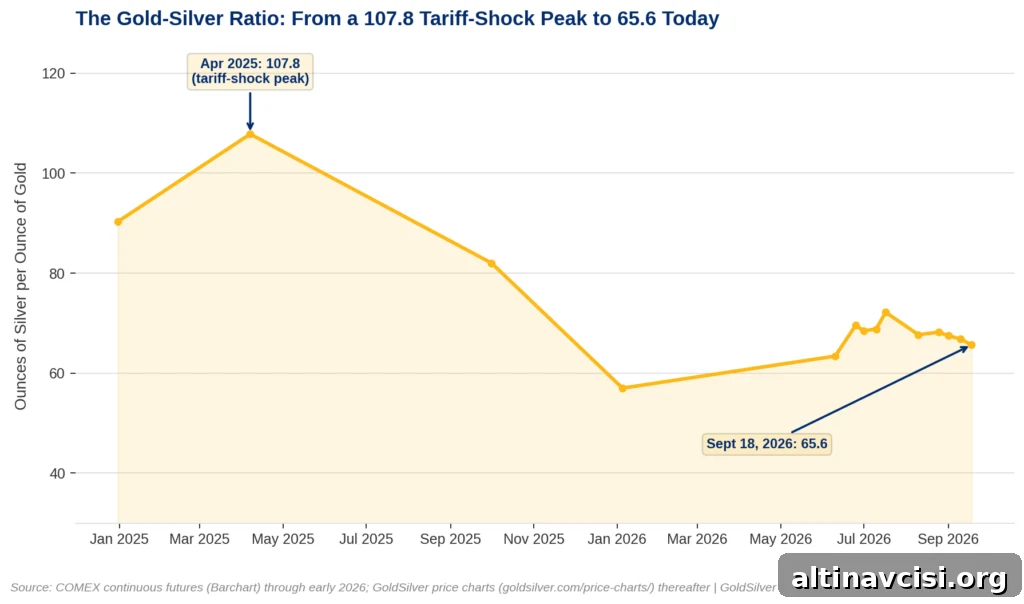
The gold-silver ratio expresses how many ounces of silver are needed to buy one ounce of gold at current prices. It is a translation tool, not a forecasting model: use it to translate a chosen gold allocation into equivalent dollar exposure in silver. A ratio in the mid‑60s is below some long-run averages but far above the very tight historical levels associated with extreme squeezes, so it removes a lot of the arbitrary guesswork that social-media splits omit.
Why Does Silver Swing Harder Than Gold?
Silver has both monetary demand—like gold—and significant industrial demand, which today accounts for a high share of total silver use. That industrial link ties silver’s price to manufacturing cycles (solar, electronics, data centers), so supply or demand shocks in industry can move silver independently of gold. In practice that means silver is higher-beta: greater upside in boom times but larger drawdowns in contractions. For that reason silver is best treated as a satellite allocation sized from a more stable gold core.
Is It Too Late to Add Silver Right Now?
Recent positioning data showed speculative silver longs increasing into mid‑2026, which indicates growing interest. However, the rise did not reach the crowded extremes that historically foreshadow sharp reversals. Combined with a gold-silver ratio that has compressed but not hit historical lows, the evidence suggests the easiest leg of the recent move may be over, but the market does not yet look exhausted of buyers. That nuance matters for timing but does not change the sizing framework.
What Does Warren Buffett Actually Say About Silver?
Warren Buffett has long been skeptical of precious metals, arguing that they produce no cash flow like productive businesses do. That critique is factually correct: silver pays no dividends and does not compound earnings. Yet precious metals serve a different role—insurance against monetary debasement and portfolio diversification—not as a growth engine. If compounding returns are the goal, equities are the tool; silver can be a smaller, purpose-built insurance allocation alongside gold.
Where Do Gold, Silver, and Real Yields Stand Today?
By mid‑September 2026 both gold and silver were up meaningfully year-to-date. Real yields and breakeven inflation create an opportunity‑cost backdrop that matters, but they do not change the core sizing logic: pick a gold allocation that matches age and goals, then size silver as a fraction of that position to reflect its higher volatility and industrial exposure.
Why Does Just Picking a Percentage Miss the Real Problem?
Picking an arbitrary percentage for silver treats it as a smaller gold, ignoring the gold-silver ratio and silver’s industrial sensitivity. More importantly, many investors first have to decide whether to hold any precious metals at all—data shows broad underexposure among institutions and retail investors. Once a gold target is chosen, then use the framework above to set silver as a deliberate fraction of that core holding. Building to that target through staged purchases reduces timing risk.
What Does This Framework Mean for Gold and Silver Investors?
In practical terms: decide a gold allocation based on age and objectives, then size silver as a fraction of that gold position using the current gold-silver ratio as the translation tool. Favor the higher end of the silver range only if you have a long horizon and are comfortable with industrial-linked volatility. Otherwise, favor the lower end if capital preservation and near-term liquidity matter more. This approach respects both metals’ distinct roles without requiring forecasts about short-term price moves.
Stay On Top of Gold & Silver Prices
Get important market alerts sent straight to your inbox.
People Also Asked
What is a good gold-to-silver ratio for a portfolio?
There is no single “good” ratio for allocation. The ratio measures market pricing; it helps translate a gold allocation into a silver allocation. In practice, many investors size silver at 10–30 percent of the dollar value already allocated to gold.
Should I own silver instead of gold, or both?
Most investors treat silver as a complement to gold rather than a replacement. Gold is primarily a monetary hedge; silver shares that monetary exposure but adds industrial demand, increasing volatility. Silver makes sense as a satellite allocation sized relative to an existing gold core.
How do I actually build a silver position in the right proportion?
Experienced holders often use staged buying—regular, smaller purchases over several months—to reach a target allocation. First choose a target using the framework above, then build into it gradually to avoid timing risk.
What are the risks of owning too much silver relative to gold?
Because a large share of silver demand is industrial, over‑weighting silver introduces extra volatility tied to the manufacturing cycle. That can erode the monetary-hedge role that gold more reliably provides, so many frameworks cap silver as a fraction of combined metals exposure.
How does this compare to an age-based gold allocation guide?
This approach builds on the same age-based gold recommendations. The gold percentages by decade remain the foundation; silver is then added as a fractional translation of that gold allocation using the current gold-silver ratio.
What happens to silver if the economy weakens or industrial demand slows?
If industrial demand weakens, silver’s price will likely fall relative to gold, widening the gold-silver ratio. That outcome is precisely why silver should be sized conservatively relative to gold.
What does Warren Buffett say about silver?
Buffett’s long-standing view is that precious metals produce no cash flow and thus are not investments in the traditional sense. That observation is correct; precious metals instead serve as portfolio insurance and diversification tools.
How much silver does the average person own?
Precise public data on silver ownership is limited, but research shows broad underexposure to precious metals generally. Many family offices and retail investors hold little or no gold, implying silver ownership is likely even rarer.
SOURCES
1. Gold & silver live price data and charts (September 2026).
2. Ray Dalio’s public guidance on gold allocations and age-based gold allocation frameworks (2026).
3. In Gold We Trust and J.P. Morgan family office research summaries (2026).
4. Silver demand sector breakdowns and CFTC Commitments of Traders positioning (2026).
Disclaimer: This article is for informational purposes only and does not constitute investment advice. Past performance is not indicative of future results. Always consult a qualified financial advisor before making investment decisions.
You May Also Like:
- Who Owns US Debt? Central Banks Own Less Than You Think
- What Is Junk Silver? The Old Dimes and Quarters Worth Nearly 50x Their Face Value
- Why Is Silver Demand Tied to AI Data Centers?
- The Copper Mine That Isn’t Trying to Mine Silver Just Explained the Whole Deficit
- Inherited Gold IRA: Beneficiary Rules & the Step-Up Basis Gap
- The Cantillon Effect: Why Money Printing Makes Some People Rich First
- Silver Price Outlook September 2026: The Hike Is Priced In. The Positioning Isn’t.