Gold vs Inflation: What 100 Years of Data Reveals

Is gold a good hedge against inflation? Over long horizons, the answer is yes. Since the end of dollar‑gold convertibility in 1971 through mid‑2026, gold’s price rose dramatically while the U.S. dollar lost a large share of its purchasing power. Gold tends to shine in environments of high inflation and low or negative real interest rates, and it commonly lags when real yields are strongly positive. In short: gold is a long‑term store of wealth and a monetary anchor, not a quick trade for short‑term inflation movements.
Inflation steadily erodes purchasing power. A dollar a century ago buys far less today. By contrast, an ounce of gold has preserved purchasing power across generations and, in many cases, significantly increased in currency terms. That long‑run performance makes gold a compelling component of a diversified portfolio for investors concerned about currency depreciation.
But the relationship between gold and inflation is nuanced. Examining a century of data reveals a clear long‑term advantage for gold, while also highlighting important short‑term caveats every investor should understand.
What Does “Inflation Hedge” Actually Mean?
An inflation hedge is an asset that preserves or increases its real (inflation‑adjusted) value as the cost of goods and services rises. Cash generally fails this test because fiat currencies lose purchasing power when central banks expand the money supply. Equities can protect purchasing power over very long periods but are inconsistent during inflation spikes. Real estate can preserve value but introduces liquidity, maintenance and location risks.
Gold occupies a distinct role. It cannot be printed, its supply increases only marginally each year through mining, and it carries no counterparty risk. Centuries of cross‑cultural use as a store of value and a medium of exchange underpin gold’s role as a monetary anchor.
Understanding how gold reacts to inflation statistics and to monetary policy is essential to reading the long record correctly. Gold is sensitive to real interest rates, monetary expansion, geopolitical risk and central‑bank behavior—not just headline CPI.
The Knowledge That Changes Everything
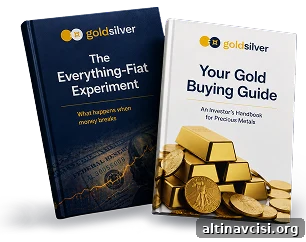
Two essential guides — free. Learn why gold matters and why fiat currencies face long‑term depreciation.
How Has Gold Performed Against Inflation Across Different Eras?
1924–1971: The Gold Standard Era
For much of the early 20th century, governments fixed gold prices. Under the Bretton Woods system, the U.S. dollar was linked to gold at $35 per ounce and major currencies were pegged to the dollar, which limited nominal gold movement. When the U.S. ended dollar‑gold convertibility in August 1971, gold returned to market pricing and the modern relationship between gold and inflation began.
Key takeaway: Before 1971, gold’s nominal price was constrained by policy. The modern era of gold as a market‑driven inflation barometer begins after that point.
1971–1980: Gold’s First Major Inflation Test
Following the end of the gold peg, rising inflation in the 1970s — amplified by two oil shocks and expansionary fiscal policy — pushed U.S. CPI into double digits by the late 1970s. Gold responded with a historic rally, far outpacing CPI in nominal terms and delivering strong real returns to investors who held through the decade.
Key takeaway: During sustained high inflation and low real rates, gold can outperform dramatically.
1980–2000: The Cautionary Chapter
Gold’s long run is not uninterrupted. After peaking around 1980, gold entered a lengthy decline as central banks, led by the U.S. Federal Reserve under Paul Volcker, raised interest rates sharply to bring down inflation. As real interest rates became positive and inflation dropped, the opportunity cost of holding non‑yielding gold rose. Through the 1980s and 1990s, stocks and even cash outperformed gold for extended stretches.
Key takeaway: When real yields are meaningfully positive and inflation is subdued, gold often underperforms for long periods.
2000–2011: A New Bull Market Built on Debasement
A sequence of shocks — the dot‑com bust, geopolitical tensions and the 2008 financial crisis — led to aggressive monetary easing and large fiscal deficits. Central‑bank balance sheets expanded, real rates fell and confidence in traditional assets weakened. Gold entered a sustained bull market in this environment, rising significantly despite relatively moderate headline CPI figures. This period highlights gold’s sensitivity to monetary expansion and perceived currency debasement, not merely the headline inflation rate.
Key takeaway: Gold reacts to monetary policy, systemic risk and real interest rates as much as to CPI readings.
2011–2018: Consolidation Under Tighter Policy
As central banks signaled a return to normalization, gold consolidated and retraced a portion of its gains. Rising real rates and reduced tail‑risk premiums compressed gold’s safe‑haven appeal, producing a multi‑year period of weaker performance relative to earlier cycles.
2019–Present: The Modern Inflation Episode
Gold rallied again from 2019 as central banks cut rates and then responded to the COVID‑19 shock with unprecedented fiscal and monetary stimulus. Supply disruptions, geopolitical tensions and record central‑bank purchases supported strong price action. While tightening cycles in 2022–2023 tested gold, the metal proved relatively resilient, supported by ongoing central‑bank demand and concerns about currency debasement and geopolitical fragmentation.
Key takeaway: The current gold cycle is driven by a mix of inflationary pressure, large‑scale monetary expansion, increased central‑bank purchases and geopolitical uncertainty — factors that go beyond headline CPI alone.
What Actually Drives Gold Prices? (It’s Not Just CPI)
Gold is often mistaken for a simple tracker of CPI. In reality, its price is most closely linked to real interest rates — the yield on government bonds after adjusting for inflation — and to confidence in monetary systems. When real rates are low or negative, holding gold becomes more attractive. When real yields are high, the opportunity cost of owning non‑yielding gold increases and its price often suffers.
Other important drivers include:
- Monetary expansion and currency debasement: Large increases in central‑bank balance sheets and fiscal deficits dilute fiat currency value and can boost gold demand.
- Geopolitical risk: Conflict, market stress and institutional uncertainty typically lift safe‑haven demand for gold.
- Central‑bank purchases: Many central banks have shifted toward adding gold to reserves, supporting structural demand.
- Dollar movements: Because gold is priced in U.S. dollars, a weakening dollar usually supports higher gold prices and vice versa.
Unlike Treasury Inflation‑Protected Securities (TIPS) or commodity indexes, physical gold has zero counterparty risk. It cannot default or be restructured, which gives it a unique role during systemic crises.
What Does the Long‑Run Purchasing Power Data Actually Show?
The most persuasive long‑term evidence for gold is its purchasing power stability. Across a century, an ounce of gold has continued to buy similar real goods — for example, clothing or other durable items — even as the dollar price of those items rose dramatically. That consistency supports gold’s role as a long‑run store of value, while cash has lost considerable purchasing power over the same period.
Is Gold Still a Relevant Inflation Hedge in 2026?
A century of data gives a clear, qualified verdict: gold remains a reliable long‑term store of value and performs well in high‑inflation, low‑real‑rate environments. It can, however, underperform for long stretches when monetary policy tightens and real yields rise.
For investors evaluating the mid‑2020s environment — with elevated CPI readings, heightened central‑bank gold purchases and persistent geopolitical risk — the structural conditions that historically supported gold remain present. That makes gold a defensible allocation as a portfolio anchor, though investors should expect and tolerate short‑term volatility.
Viewed as a financial anchor rather than a speculative short‑term bet, gold’s long record provides a strong case for inclusion in a diversified portfolio.
Stay On Top of Gold & Silver Prices
Get important market alerts sent straight to your inbox.
People Also Ask
Is gold a good hedge against inflation?
Over decades, gold has proven to be a reliable store of value and a strong performer when inflation is high and real rates are low. Over shorter intervals it can be volatile and may lag inflation when real interest rates rise. Treat gold as a long‑term hedge rather than a short‑term inflator of returns.
Why didn’t gold perform well in the 1980s and 1990s despite moderate inflation?
Because real interest rates were high and positive for much of that period. High real yields raise the cost of holding non‑yielding assets like gold and reduce demand relative to cash and equities.
How much gold should an investor hold for inflation protection?
Many advisors recommend 5–15% of a diversified portfolio in gold or gold exposures, depending on risk tolerance, time horizon and exposure to other real assets. The exact allocation should reflect personal goals and the investor’s view on inflation and geopolitical risk.
Is physical gold better than gold ETFs for inflation protection?
Physical gold eliminates counterparty risk and cannot default, while ETFs offer liquidity and convenience but introduce custodial or counterparty exposure. For long‑term protection against systemic risk or currency debasement, many investors prefer holding some physical metal.
What is the relationship between gold and the dollar?
Gold and the U.S. dollar typically move inversely. A weaker dollar makes gold less expensive for foreign buyers and can increase demand; a stronger dollar tends to put downward pressure on price.
Does the current 2026 inflation environment support owning gold?
The mid‑2020s environment — elevated inflation, strong central‑bank purchases and heightened geopolitical risk — resembles past periods that supported gold. While short‑term volatility is likely, the structural drivers that favor gold as a portfolio anchor are present.
SOURCES
1. World Gold Council — Central Bank Gold Reserves Survey 2026
2. World Gold Council — Gold Demand Trends Full Year 2025
3. U.S. Bureau of Labor Statistics — Consumer Price Index (CPI)
4. LBMA — Precious Metal Prices
5. Federal Reserve Bank of St. Louis (FRED) — Federal Reserve balance sheet series
6. International Monetary Fund — Official reserve holdings data
7. GoldSilver — Live gold & silver price charts
This article is for informational purposes only and does not constitute financial or investment advice. Consult a qualified financial advisor before making investment decisions.
You may also like:
- Solar Cut 19% Silver. The Deficit Widened Anyway.
- Gold Down 26%. Barclays’ $4,791 Target Never Moved.
- Gold Silver Ratio at 64: What It Signals for Silver in 2026
- How Central Banks Decide How Much Gold to Hold
- How Much Does Gold Storage Cost? The $72‑a‑Year Answer
- Silver Price Outlook June 2026: The Correction Was the Setup
- Wall Street’s $6,000 gold call rests on data most investors never see
- Silver Eagle vs. Maple Leaf vs. Britannia: Which Gives You More Silver?
- Gold Price Outlook June 2026: What CPI and the Fed Mean
Popular Topics
Picked from the archive
-
01
 Topics
Why Gold Belongs in Your Alternative Investment Portfolio
-
02
Topics
Copper Inventories Drop 80% Amid US Tariff Fears, Supply Crisis
-
03
Topics
Crypto Treasury Firms Flood Wall Street in SPAC Gold Rush
-
04
Topics
June Home Sales Drop 2.7% as Affordability Squeeze Worsens
-
05
Topics
Tariff Uncertainty and Fed Outlook Keep Gold Prices Volatile
-
06
Topics
Gold Falls to One-Week Low as Trade Talks Enter Final Days
-
07
Topics
CBO: Trump Tax Law Increases U.S. Deficit by 3.4 Trillion
-
08
Topics
Gold Bulls Await Fed Clarity as Triangle Signals Rally to 3,700