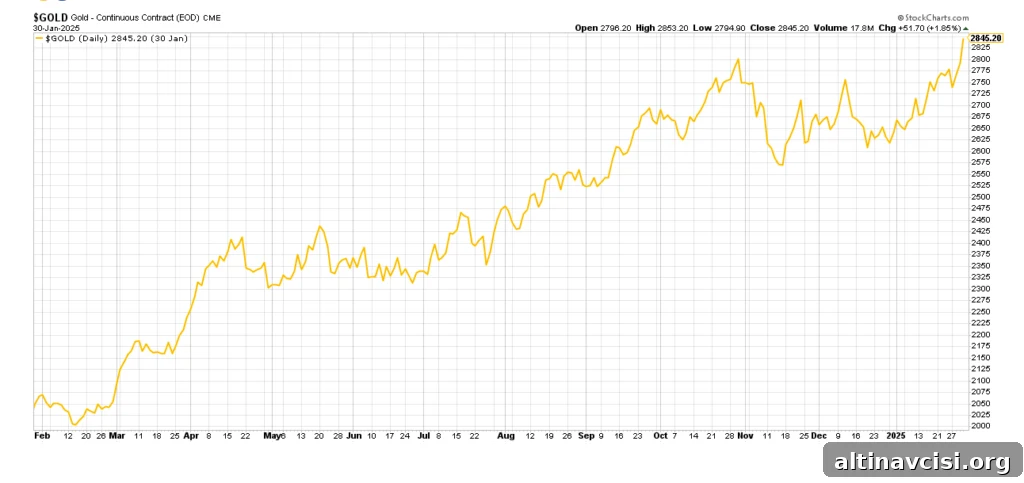

Gold surged to a record above $2,800 as investors moved into safe-haven assets amid rising trade tensions.
The metal rose more than 6% this month after renewed threats of 25% tariffs on imports from Mexico and Canada, increasing uncertainty for global markets.
Market participants, including analysts such as WisdomTree’s Nitesh Shah, say the rally may persist while trade-policy uncertainty remains elevated. Structural support for prices is also coming from ongoing central bank purchases, which have continued to add demand for bullion.
Economic signals are mixed: GDP growth has shown signs of slowing in some regions, while consumer spending in other areas remains resilient. That combination—slower growth alongside persistent inflationary pressures—has increased the appeal of gold as an inflation hedge and portfolio diversifier.
The Federal Reserve is closely watching inflation and employment data, and its policy stance will be a key influence on metals markets. Meanwhile, physical demand in major consumer markets such as India has been temporarily dampened by elevated prices, though longer-term demand patterns remain intact.
Analysts including ActivTrades’ Ricardo Evangelista note that if high inflation persists together with sluggish economic growth, gold could test higher levels, with $3,000 cited as a possible target under those conditions. However, price trajectories will depend on developments in trade policy, central bank actions, and the balance between investment and physical demand.