
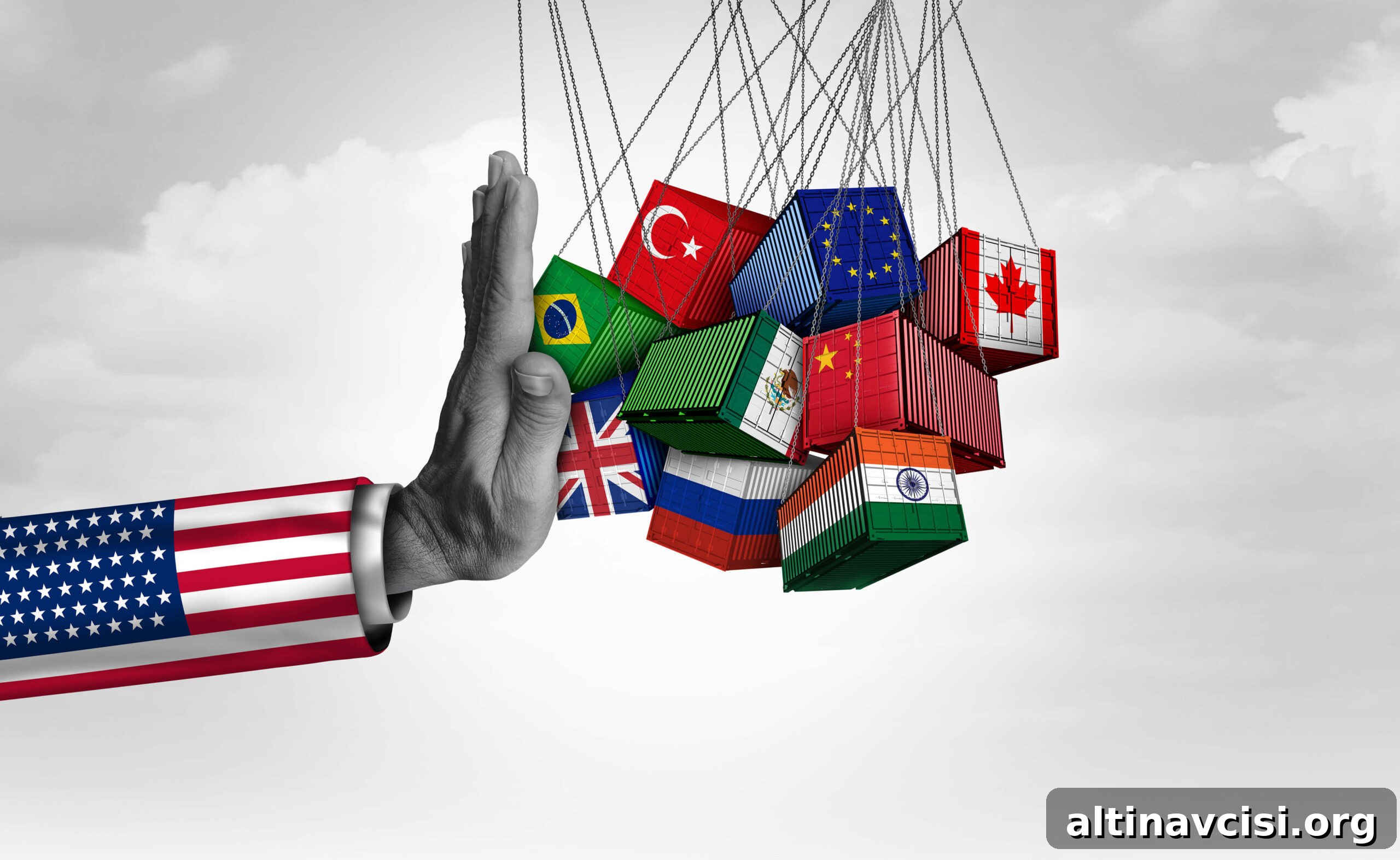
President Trump and European Commission President Ursula von der Leyen announced a new trade framework that would impose a 15% tariff on most European Union goods entering the United States. Mr. Trump described the agreement as “the biggest of them all,” while von der Leyen said the rate was substantial but represented the best achievable outcome under the circumstances.
At the same time, Washington and Beijing are set to extend their tariff truce for an additional three months as high-level trade talks prepare to resume in Stockholm. The extension aims to preserve momentum in negotiations and avoid sudden escalation while both sides seek a more durable settlement.
The administration is also moving to finalize trade arrangements with other key partners. Negotiations with Canada and Japan are advancing, and officials say a recently discussed package with Japan would include a roughly $550 billion U.S. investment component alongside tariff measures that mirror the broader framework.
Beyond those specific deals, the administration is preparing tariff notices for more than 200 trading partners. Proposed rates under consideration range broadly — from about 15% for some partners up to as much as 50% for others — with final levels to be determined based on each country’s economic relationship with the United States and ongoing negotiations.
Officials framing the policy emphasize that the approach is intended to protect domestic industries, reduce trade imbalances, and encourage reciprocal access for American businesses abroad. Supporters argue that uniform tariff floors simplify enforcement and create clearer expectations for trading partners. Critics warn that higher tariffs risk raising costs for U.S. consumers and businesses that rely on imported inputs.
As talks continue with the EU, China, Canada, Japan and numerous other economies, diplomats and trade negotiators say the outcome will depend on detailed discussions over market access, investment commitments, and rules governing digital services and subsidies. Both sides have signaled a willingness to keep negotiating while the temporary tariff pauses remain in effect.
The coming weeks are likely to see intense diplomacy as negotiators work to convert broad framework agreements into legally binding contracts, settle implementation timelines, and address enforcement mechanisms. Businesses and industry groups on both sides of the Atlantic are watching closely, seeking clarity on timing, exemptions, and how tariff revenues might be handled.
For now, the 15% framework with the EU and the extended truce with China represent interim steps in a larger effort to reshape U.S. trade policy. Whether these measures lead to stable, long-term arrangements or to further rounds of bargaining will depend on the progress achieved in the detailed negotiating sessions that follow.