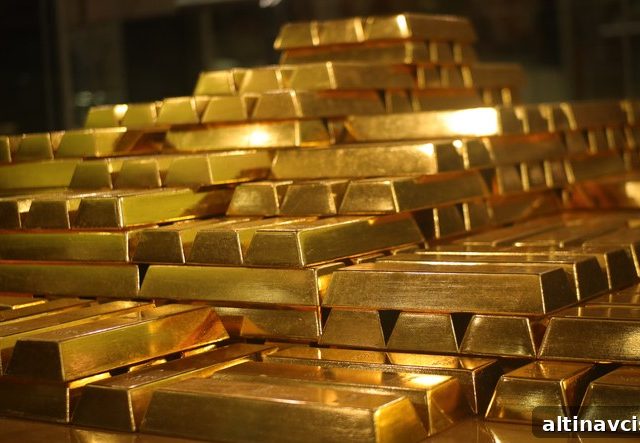
Gold Soars 25% in 2024 as Geopolitical Tensions Drive Rally
Gold held firm at $3,340.83 per ounce even after US Commerce Secretary Howard Lutnick and China’s trade representative Li Chenggang announced a framework agreement aimed at easing trade tensions following talks in London. Typically, progress on US-China trade talks would reduce demand for safe-haven assets such as gold, yet the metal’s resilience highlights investor caution: market participants appear to be treating diplomatic statements as a preliminary step rather than a guarantee of lasting change.
Investors remain focused on concrete follow-through, implementation timelines and measurable outcomes. Until those details are clear, gold continues to benefit from a mix of strategic, macroeconomic and geopolitical drivers. Safe-haven demand is being supported by lingering uncertainty over tariff policies, changing global trade relationships and central bank reserve management. These factors have contributed to a strong rally in the bullion complex throughout 2024, with the metal registering gains of more than 25% so far this year.
Central banks have been among the largest consistent buyers of physical gold, motivated by a desire to diversify reserves and reduce reliance on specific foreign assets. That institutional appetite has helped underpin prices even when headlines suggest diplomatic progress. At the same time, broader investor behavior—ranging from private portfolios rebalancing toward hard assets to inflows into gold-backed funds—has reinforced the metal’s upward trajectory.
Other precious metals have also enjoyed notable strength. Silver has climbed toward a 13-year high, benefiting both from industrial demand and its traditional role as a portfolio diversifier. Platinum has reached levels not seen in roughly four years, driven by supply considerations and sector-specific dynamics. The collective outperformance of these metals underscores a wider reassessment of risk and asset allocation among investors around the globe.
Market participants are closely watching several near-term catalysts that could influence precious metal prices. A key event on the calendar is Thursday’s US Treasury auction; if demand for government debt appears weak, that could depress yields and bolster gold’s appeal as an alternative store of value. Gold typically performs well in environments where real yields are falling or where inflation expectations outpace nominal interest rates, so shifts in fixed-income demand and rate expectations remain important for price direction.
Beyond the immediate headlines, technical market factors and investor positioning will play a role. Traders monitor ETF flows, futures positioning and physical demand from jewelry and industrial sectors to gauge momentum. Price action can also be sensitive to currency moves—especially the US dollar—since a softer dollar generally makes gold cheaper for holders of other currencies and can attract additional buying.
For longer-term investors, the current dynamics reflect more than a short-term reaction to trade developments. The combination of heightened geopolitical tension, evolving trade policies, central bank reserve diversification and macroeconomic uncertainty has created an environment in which precious metals are increasingly viewed as strategic holdings. That perspective helps explain why gold has remained elevated despite occasional positive headlines about de-escalation or diplomatic progress.
In summary, while the London talks and the announced framework between Howard Lutnick and Li Chenggang represent a step toward easing bilateral trade frictions, market participants are treating the news with cautious optimism. Gold’s persistent strength—alongside gains in silver and platinum—signals that investors are still seeking protection against uncertainty and are waiting for tangible policy changes and market-confirmed outcomes before adjusting their allocations away from safe-haven assets.
Popular Topics
Picked from the archive
-
01
 Topics
Apollo Economist Warns Tariffs Make Recession 90% Likely
-
02
Topics
Ray Dalio: Trump’s Policies Could Spark 1930s-Style Collapse
-
03
Topics
Gold Outperforms Stocks, Bonds and Crypto – Barron’s
-
04
Topics
Thieves Sentenced for $6M Golden Throne Heist at Blenheim Palace
-
05
Topics
Gold Price Nears $3,350 Amid Geopolitical Tensions, Weak Dollar
-
06
Topics
Gold Drops to One-Month Low as Geopolitical Risks Ease
-
07
Topics
Gold Gains After Robust U.S. Data Amid Trade Talk Uncertainty
-
08
Topics
Gold Surges Past $3,400 as Trump-Fed Tensions Rattle Markets