Last week’s economic reports delivered a mixed but informative picture. In the United States, retail sales remained robust and corporate earnings were generally solid, even as inflation stayed elevated. Europe saw an uptick in industrial production, indicating some recovery in manufacturing activity. In China, growth momentum picked up, suggesting the world’s second-largest economy is regaining strength after recent soft patches.
Inflation trends varied across major economies. Japan and India experienced easing inflationary pressures, offering some relief to policymakers and consumers. By contrast, the United Kingdom recorded rising inflation, complicating the Bank of England’s task of balancing price stability with growth. These divergent inflation paths underscore the uneven nature of the global recovery.
Global financial markets were relatively calm overall. Equity indices showed little net movement as investors weighed mixed economic signals. Government bond yields drifted lower, reflecting modest demand for safer assets, while the U.S. dollar strengthened versus major currencies. Oil prices declined over the week, pressured by a combination of slower demand expectations and ample supply.
Gold remained in a consolidation phase, trading in a narrow range, but technical indicators suggest it is approaching a breakout level. If gold breaches that resistance, it could trigger a stronger upward move as investors seek a hedge against inflation and geopolitical uncertainty.
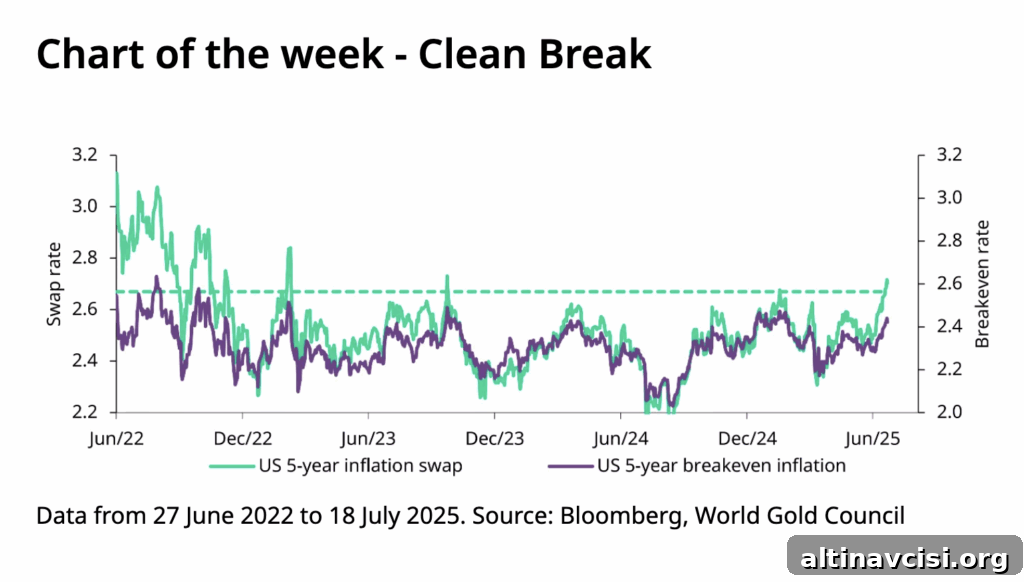
One notable development was the emerging impact of tariffs on inflation data. Higher import costs from tariff measures are beginning to filter into consumer prices, prompting investors and analysts to revise their inflation forecasts and monetary policy expectations. Markets are adjusting to the possibility that tariffs could prolong inflationary pressures in certain sectors, even as other parts of the world see moderation.
The week highlighted several cross-currents shaping the global outlook: resilient consumer demand in the U.S., improving industrial activity in Europe, a pickup in China’s growth, and mixed inflation dynamics across countries. Together, these factors are keeping central banks and investors attentive to incoming data, as small shifts could influence policy stances and asset prices in the weeks ahead.