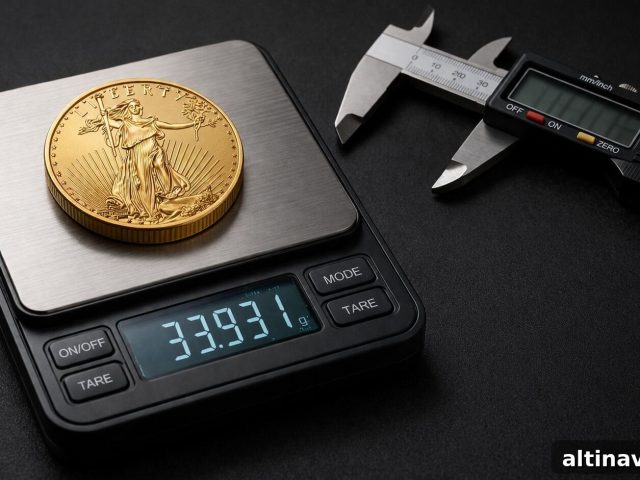
Gold IRA Purity Rule Explained: What the IRS Won’t Say
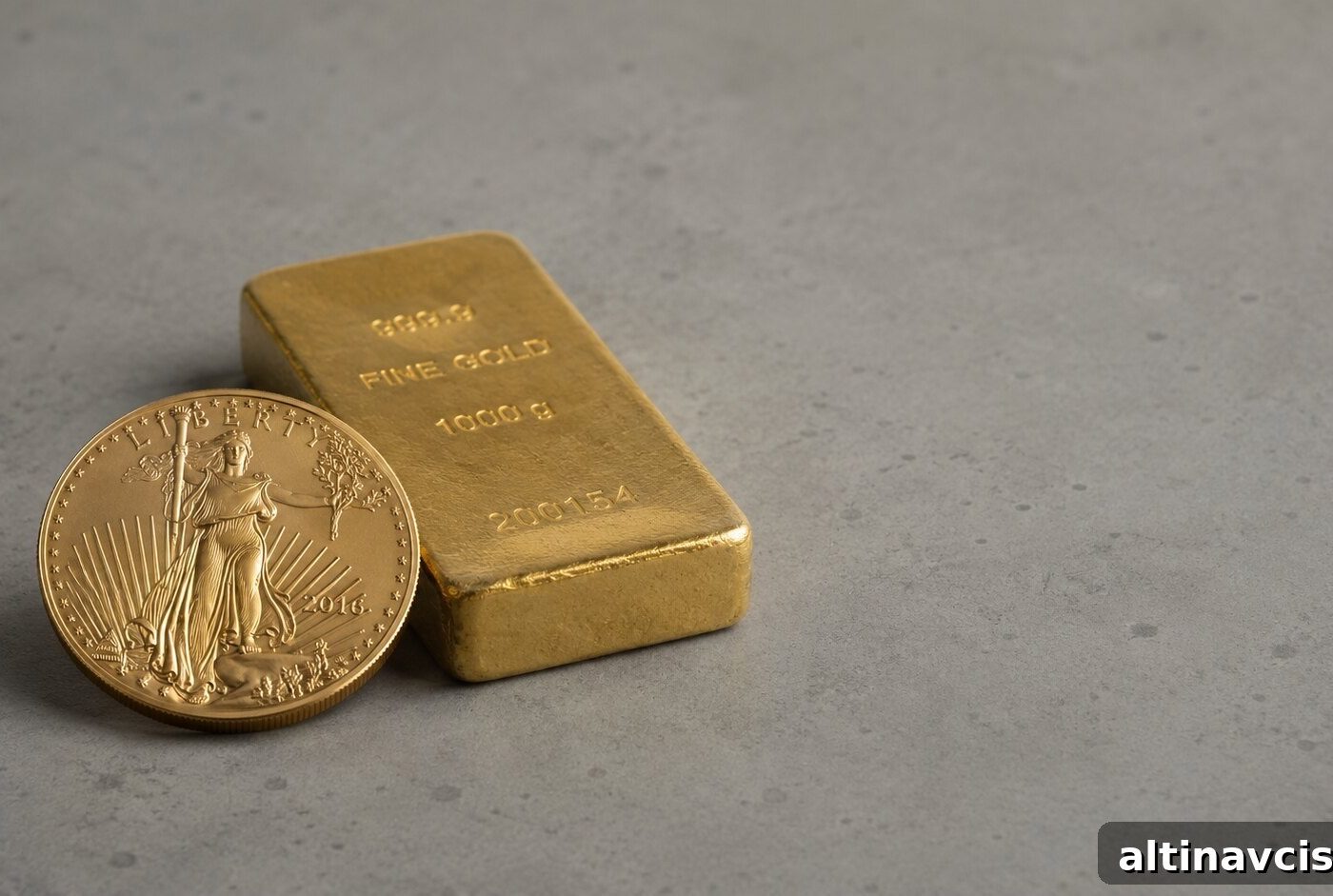
A gold IRA is a self-directed individual retirement account that holds physical precious metals instead of traditional securities like stocks, bonds, or mutual funds. The account’s tax treatment follows the same rules as any other IRA; what changes is the asset class and the custody requirements that govern how those assets must be held.
Many guides repeat a single mistaken claim: that the IRS itself requires gold to be 99.5% pure for IRA eligibility. The IRS does not state that percentage directly. Tracing where the 99.5% figure comes from clarifies how these accounts work and why certain coins and bars qualify.
What makes a gold IRA different from a regular IRA?
Most bank or brokerage IRAs do not accept physical bullion. To hold gold, silver, platinum, or palladium inside a retirement account you need a self-directed IRA, which allows nontraditional assets beyond the standard menu. Self-directed IRAs give owners flexibility over asset selection, but they bring additional administrative and custody rules.
Contribution limits are the same as for other IRAs. For the 2026 tax year the annual contribution limit is $7,500, up from $7,000 in 2025. Savers age 50 and over can contribute an additional catch-up amount—$1,100 for 2026—bringing the total possible contribution to $8,600. That cap applies across all your traditional and Roth IRAs combined, not to each account separately.
The Knowledge That Changes Everything

Two concise guides—free. Learn why gold matters, how fiat currencies behave over time, and what to consider when holding precious metals.
Does the IRS really require 99.5% purity?
No. That is the crucial point to understand.
Section 408(m) of the Internal Revenue Code generally prohibits IRAs from holding collectibles and explicitly defines “any metal or gem” as a collectible (26 U.S.C. 408(m)(2)). Taken alone, that language would seem to rule out any gold held inside an IRA.
But the code creates two separate exceptions in subsection 408(m)(3), and those exceptions operate differently.
The first exception specifically names certain coins, and for gold it includes the U.S. Gold Eagle coins identified in 31 U.S.C. 5112(a)(7)–(10). That provision contains no purity requirement; qualifying by name means these coins are eligible regardless of their exact fineness.
Where the 99.5% figure actually comes from
The second exception covers bullion more broadly and frames eligibility by reference to market delivery standards rather than stating a purity number in the tax code. It exempts bullion that meets or exceeds “the minimum fineness that a contract market requires for metals which may be delivered in satisfaction of a regulated futures contract” (26 U.S.C. 408(m)(3)(B)).
In practice, that means the tax code defers to the standards set by the futures exchanges. For gold, COMEX delivery specifications (COMEX Rulebook Chapter 113) set a minimum fineness of 995—99.5% pure—while COMEX rules for silver require 999 fineness. The 99.5% threshold commonly quoted therefore originates with the exchange’s delivery rules, not directly from the IRS or Treasury.
This distinction also explains why American Gold Eagles qualify: they meet the named-coin exception even though they are 91.67% gold. Their eligibility rests on the statute’s direct listing of those coins, not on a fineness test.
Where must the metal be stored?
Storage rules are one of the most commonly misunderstood parts of a precious metals IRA, and they are essential—not a technicality.
The bullion exception only applies while the metal “is in the physical possession of a trustee described under subsection (a)” (26 U.S.C. 408(m)(3)(B)). Subsection (a) limits trustees to banks or IRS-approved non-bank trustees; the regulatory details appear in Treasury Regulation 26 CFR 1.408-2(e).
Read together, these provisions make custody the prerequisite for the favorable tax treatment. If the metal is not held by a qualifying trustee or custodian, it becomes a collectible again and thus ineligible for IRA ownership.
This means you cannot store IRA-owned metal in your personal safe or in a bank safe-deposit box, because neither arrangement places physical possession under a qualified trustee. Instead, custodians typically pair with approved depositories that provide allocated vault storage—specific, serial-numbered bars or coins are titled to your IRA account rather than pooled into a generic holding.
Owning metal outright and keeping it at home is a legitimate choice, but it is incompatible with holding metal inside an IRA.
What can you actually buy?
Two separate tests determine eligibility, reflecting the two statutory paths described above.
First, the U.S. Gold Eagle coins qualify by name under the statute. Second, for bars and most foreign bullion coins to be eligible they must meet the exchange-referenced fineness thresholds—995 for gold and 999 for silver. In addition, custodians commonly require that bullion come from accredited refiners; that is a custodian policy rather than a statutory mandate.
Numismatic or collectible coins are ineligible regardless of metal content because their value derives from rarity or grading rather than from the metal itself. Any firm attempting to steer IRA funds into graded or “rare” coins is taking the account in a direction that violates the intent of the rules.
A subtler, more common mistake is paying a collector’s premium for an IRA-eligible item. An IRA-eligible bullion product should be priced and traded like a commodity—if you pay a significant premium for rarity or grading, you undermine the tax-advantaged investment objective.
What happens when you retire?
Withdrawals from a traditional IRA are taxed as ordinary income. Early withdrawals before age 59½ are generally subject to a 10% penalty unless an exception applies.
Required minimum distributions (RMDs) deserve careful attention. Under SECURE 2.0, the age rules vary: age 73 applies to many savers (those who reached age 72 after December 31, 2022 and before January 1, 2033), while savers born in 1960 or later reach the RMD age at 75. Missing an RMD can trigger an excise tax—25% of the missed amount, which can be reduced to 10% if corrected within certain timeframes.
A metals IRA adds a practical wrinkle: you satisfy an RMD either by selling metal inside the account or by taking an in-kind distribution of coins or bars. Roth IRAs have no lifetime RMDs for the original owner, so choosing a Roth structure removes that forced decision—another reason to consider account type before funding a metals IRA.
Is a gold IRA worth it?
That depends on your goals. A gold IRA provides tax-deferred or tax-free growth on a tangible asset that carries no issuer or counterparty credit risk, but it comes with trade-offs: you give up direct possession, and you will pay custodian and storage fees. Administrative friction and limits on liquidity can also be higher than with paper investments.
If you want physical metal you can hold and transport, buy it outside an IRA and store it how you prefer. If you want precious metals inside a tax-advantaged retirement vehicle, the trustee and depository requirements are not obstacles to bypass but the mechanism that makes the tax treatment possible.
Why a gold IRA is a long-horizon decision
Over multi-decade horizons, holding assets denominated in dollars exposes you to the currency’s purchasing-power risk. Bullion is one of the few retirement assets without an issuer or credit risk. That said, placing bullion inside an IRA changes only the form and custody of the asset: you retain title, but you accept a custodial relationship and storage fees that private ownership avoids.
Understanding this trade—between direct possession and tax-advantaged ownership—is essential to making a deliberate allocation choice rather than a hopeful one. If you’re considering rolling a workplace retirement plan into a gold IRA, consult guidance on rollover mechanics and review custodian and depository arrangements before you act.
Stay On Top of Gold & Silver Prices
Get important market alerts sent straight to your inbox.
People Also Ask
No. The bullion exception applies only while the metal is in the physical possession of a qualifying trustee. Home storage and safe-deposit boxes do not meet that requirement because they are not held by an approved trustee.
Not directly. The tax code defers to the minimum fineness required by a regulated futures contract market. For gold that market standard is set by COMEX delivery rules at 995 fineness; silver is governed by a 999 fineness standard.
Because it is explicitly named in the statute’s coin exception. The listing of specific coins includes American Gold Eagles and contains no purity requirement for those named coins.
The standard IRA contribution limits apply: $7,500 for 2026, plus a $1,100 catch-up if you are 50 or older, for a combined $8,600 across all traditional and Roth IRAs you own.
Yes. Section 408(m)(3) covers gold, silver, platinum, and palladium bullion under the same delegated-fineness standard and separately names certain qualifying silver and platinum coins.
RMD age depends on your birth year: for many savers the age is 73, while those born in 1960 or later reach RMD age at 75. Roth IRAs have no owner-lifetime RMDs.
You satisfy an RMD either by selling metal within the account to generate cash or by taking an in-kind distribution of coins or bars. That practical choice influences whether a traditional or Roth IRA better fits your plan.
SOURCES
1. Office of the Law Revision Counsel — 26 U.S.C. 408(m)(3), coin and bullion exceptions. Accessed September 3, 2026.
2. Legal Information Institute, Cornell Law School — 31 U.S.C. 5112(a)(7)–(a)(10), American Eagle gold bullion coins. Accessed September 3, 2026.
3. Electronic Code of Federal Regulations — 26 CFR 1.408-2(e), non-bank trustee requirements. Accessed September 3, 2026.
4. U.S. Government Publishing Office — Public Law 117-328, Division T: SECURE 2.0 Act of 2022. Enacted December 29, 2022.
5. Internal Revenue Service — IR-2025-111, 2026 contribution limits (Notice 2025-67). November 13, 2025.
6. Internal Revenue Service — Publication 590-B, IRA Distributions, 2025 edition.
7. Federal Register — Required Minimum Distributions, final regulations (89 FR 58886). Published July 19, 2024.
8. Internal Revenue Service — RMD FAQs. Accessed September 3, 2026.
9. CME Group — COMEX Rulebook Ch. 113, gold delivery fineness (Ch. 112 for silver). Accessed September 3, 2026.
Disclaimer: This article is for informational purposes only and does not constitute investment advice. Past performance is not indicative of future results. Always consult a qualified financial advisor before making investment decisions.
You May Also Like:
- What Is ZIRP (Zero Interest Rate Policy) and How It Changed Gold Forever
- How Much Is a Gold Bar Worth? Every Size, From 1 Gram to 400 Ounces
- What Happens to Your Gold If Your Storage Company Goes Bankrupt?
- Silver Price Prediction: One Bank Cut Its Target 30%, and the Reason Wasn’t the Fed
- Will Gold Go Down for the Rest of 2026? Six Banks Cut Their Targets, and the Cuts Trailed the Price
- SLV Holds Your Silver. It Just Can’t Give It Back to You.
- What Are the IRS Rules for a Precious Metals IRA in 2026?
- Why Your Pension Can Own Gold and Your 401(k) Still Can’t
Popular Topics
Picked from the archive
-
01
 Topics
Federal Reserve Goes Silent: Why Gold Investors Don’t Need It
-
02
Topics
Goldman Cuts Gold Target, JPMorgan Holds: $1,400 Gap Explained
-
03
Topics
PMI Beat Moves Gold Price Two Ways: Markets Priced Only One
-
04
Topics
How to Spot Fake Gold and Silver: Key Tests and Warning Signs
-
05
Topics
Deutsche Bank Identifies Gold Price Floor: Surprise Buyers
-
06
Topics
Gold Pullback Driven by Treasury Buyback, Not ETFs
-
07
Topics
Dollar Devalued 87% Since 1971: Why Central Banks Buy Gold
-
08
Topics
Prediction Market Files to Let Gold Trade 24/7 Forever