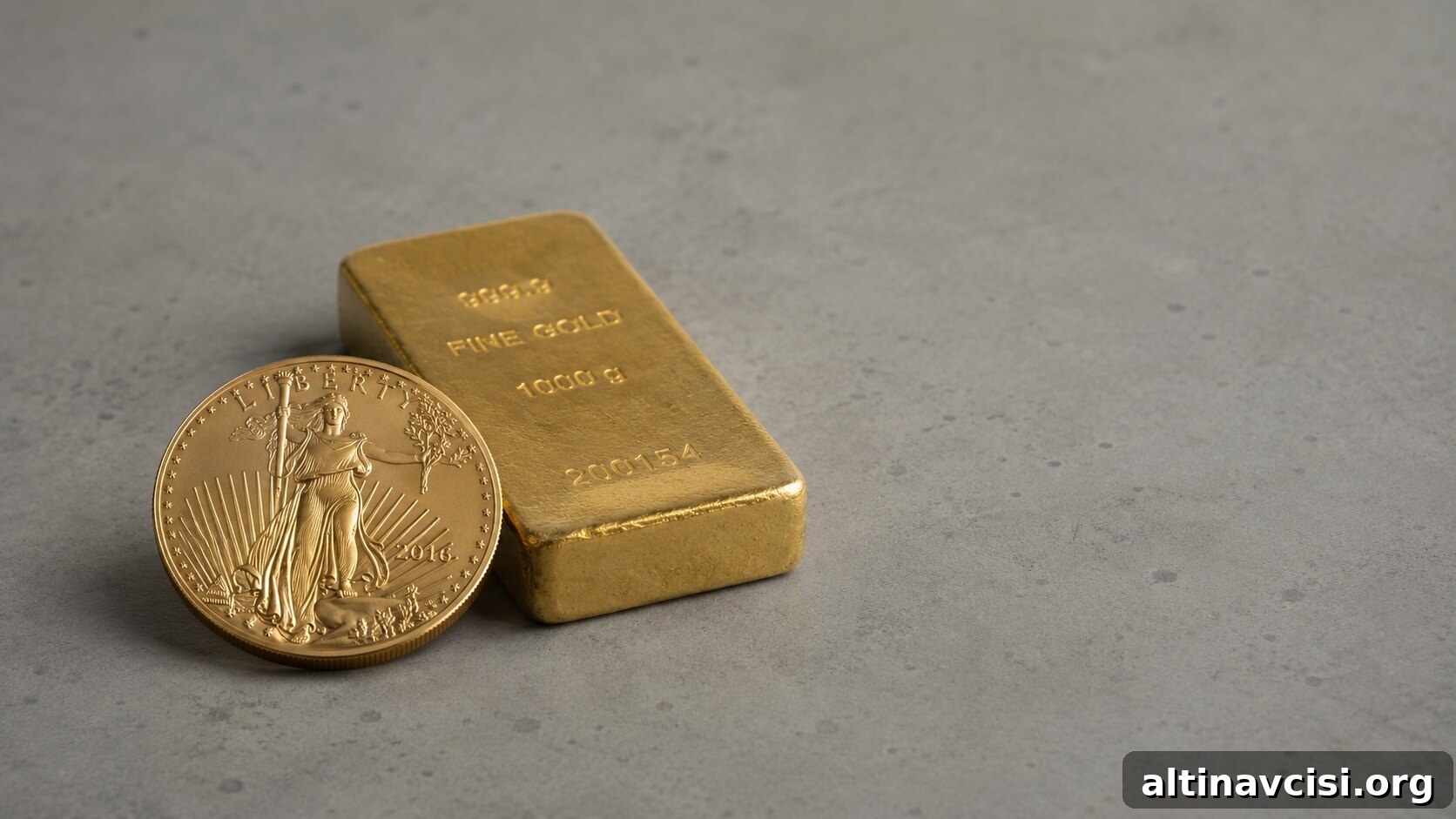
A gold IRA is a self-directed individual retirement account that holds physical precious metals instead of stocks, bonds, or mutual funds. Tax treatment follows the same rules as any other IRA; what differs are the allowed assets and the custody requirements that come with holding physical metal.
Many explanations of gold IRAs repeat an incorrect claim: that the IRS itself requires gold to be 99.5% pure for IRA eligibility. The IRS does not state that number directly. Tracing where the 99.5% standard actually originates clarifies how these accounts work far better than any checklist of approved coins.
What makes a gold IRA different from a regular IRA?
A typical IRA at a bank or brokerage usually holds paper assets and will not accept physical metal. To include bullion or coins inside a retirement account you need a self-directed IRA, which permits nonstandard assets under its rules.
Contribution limits remain the same as for ordinary IRAs. For the 2026 tax year, the annual contribution limit was set at $7,500, up from $7,000 the prior year. Savers aged 50 and over may contribute an additional catch-up amount, which increased to $1,100 for 2026, bringing the total possible contribution to $8,600. That limit applies across all traditional and Roth IRAs combined, not to each account separately.
The Knowledge That Changes Everything

Two essential guides — yours free. Learn why gold matters and how fiat currencies can lose value over time.
Does the IRS really require 99.5% purity?
Short answer: no. This misconception is important to correct.
Section 408(m) of the Internal Revenue Code bars IRAs from holding collectibles and explicitly defines “any metal or gem” as a collectible. Read on its own, that language would ban gold and other precious metals entirely from IRAs.
However, the law creates two separate exceptions that allow certain coins and bullion to be IRA-eligible, and they operate differently.
The first exception specifically lists certain coins by statute. For gold, that includes the American Gold Eagle coins identified in the federal coin statutes. That statutory clause does not include a purity requirement in its text.
Where the 99.5% figure actually comes from
The second exception covers bullion more generally and ties eligibility to the minimum fineness required by regulated futures markets for delivery. In other words, the tax code defers to the delivery standards used by futures exchanges rather than setting a purity threshold itself.
For gold, the commonly cited 99.5% (995 fineness) standard comes from the delivery rules of the COMEX futures contract. Silver follows a different exchange standard, commonly noted as 99.9% (999 fineness). Because the statute references exchange delivery standards, most bars and many foreign bullion coins are measured against those market rules rather than a direct IRS numeric purity requirement.
This distinction also explains why American Gold Eagles, which are 91.67% gold (22 karat), remain IRA-eligible despite falling below 995 fineness: they qualify under the statutory clause that names specific coins, where no purity threshold is written.
Where must the metal be stored?
Custody rules are often misunderstood, but they are central to how a precious metals IRA functions.
The bullion exception applies only while the metal “is in the physical possession of a trustee” that meets IRA trustee requirements. In practice that means a bank or an IRS-approved non-bank trustee must take physical possession via an approved depository. Treasury regulations set out qualifying trustee conditions and the acceptable custody arrangements.
Because of this custody requirement, metal held inside an IRA cannot be stored in a personal home safe or in a private bank safe deposit box. Neither location meets the statutory possession test, so they cannot be used for metal owned inside an IRA.
In practice, a custodian administrates the IRA while a qualified depository provides allocated storage: specific, serial-numbered bars or coins are titled to the account rather than pooled into a general claim. Home storage is still valid for metal you own outright, but it is incompatible with metal held inside a retirement account.
What can you actually buy?
Two distinct tests determine eligibility, reflecting the two statutory exceptions noted earlier.
First, coins named in statute such as the American Gold Eagle qualify by name. Second, bars and most foreign bullion coins qualify if they meet the delegated fineness standard tied to exchange delivery requirements—995 for gold, 999 for silver in common practice. Custodians typically require metal to come from accredited refiners or reputable sources, though those preferences are custodian policies rather than explicit tax-code requirements.
Collectible or numismatic coins do not qualify for IRA ownership, regardless of their metal content. An eligible IRA product must derive value from its metal content rather than rarity, grading, or collector demand. Avoid firms that steer IRA funds toward graded or rare coins that carry collector premiums; an IRA-eligible coin should be priced and treated as a commodity.
What happens when you retire?
Withdrawals from a traditional gold IRA are taxed as ordinary income. Early withdrawals before age 59½ may incur a 10% penalty unless an exemption applies.
Required minimum distributions (RMDs) deserve careful attention. Under recent legislation, the RMD age depends on your birth year: generally age 73 for many current retirees, with age 75 applying to those born in 1960 or later. Missing an RMD can trigger a substantial excise tax, which is higher than many realize unless corrected promptly.
Holding only metal in an IRA creates two practical options for satisfying an RMD: sell metal inside the account to generate cash for distribution, or take an in-kind distribution of bars or coins. Roth IRAs do not require RMDs during the owner’s lifetime, so choosing a Roth structure removes that forced conversion decision and may be worth considering before funding an account.
Is a gold IRA worth it?
That depends on your objectives. A gold IRA offers tax-deferred or tax-free growth on an asset that carries no issuer credit risk and can act as a long-term store of value. The trade-offs include loss of direct possession, ongoing custodian and storage fees, and administrative friction that does not exist when you own and store coins yourself.
If your priority is holding physical metal you can access and inspect, buy it outright and store it personally. If your goal is holding precious metal within a tax-advantaged retirement vehicle, the trustee and depository requirements are not obstacles to be bypassed but the mechanisms that make the tax treatment possible. You retain title to the assets while ceding physical control to qualified custodial arrangements.
Why a gold IRA is a long-horizon decision
Retirement accounts are measured in dollars, which carry purchasing-power risk over decades. Bullion is one of the few widely traded retirement assets without an issuer or credit obligation behind it, which can make it attractive as a partial hedge against currency erosion over long horizons.
Be precise about the trade you are making: you exchange direct possession and immediate physical access for tax advantages and custodial safeguards. That custodial relationship is real and ongoing, and fees and storage arrangements matter for long-term returns. Thinking through custody, liquidity, tax treatment, and distribution rules will turn an allocation decision into a deliberate retirement strategy rather than an impulsive purchase.
Stay On Top of Gold & Silver Prices
Get important market alerts sent straight to your inbox.
People Also Ask
No. The bullion exception applies only while the metal is in the physical possession of a qualifying trustee. Home storage and private bank safe deposit boxes do not meet that condition.
Not directly. The tax code defers to the minimum fineness required by regulated futures markets for delivery. For gold, that market standard has commonly been 995 fineness; silver commonly follows a 999 standard.
Because it is specifically named in the statute as an eligible coin. That statutory exception contains no purity threshold, so the Eagle qualifies despite lower gold content compared with bullion bar standards.
The standard IRA contribution limits apply: $7,500 for 2026, plus a $1,100 catch-up contribution for those aged 50 and over, for a combined $8,600 across all traditional and Roth IRAs.
Yes. The bullion exception covers gold, silver, platinum, and palladium when they meet the delegated fineness test, and certain silver and platinum coins are named separately by statute.
RMD rules vary by birth year under recent law changes. For many current retirees the applicable RMD age is 73, while individuals born in 1960 or later may face an RMD age of 75. Roth IRAs do not require distributions during the owner’s lifetime.
You satisfy an RMD either by selling metal inside the IRA to create a cash distribution or by taking an in-kind distribution of coins or bars. This practical consideration influences the choice between a traditional and a Roth IRA before funding the account.
SOURCES
1. Office of the Law Revision Counsel — 26 U.S.C. 408(m)(3), coin and bullion exceptions. Accessed September 2026.
2. Federal statutes describing American Eagle gold coins. Accessed September 2026.
3. Treasury regulations describing non-bank trustee requirements. Accessed September 2026.
4. SECURE 2.0 Act of 2022 and related guidance on RMD changes. Accessed September 2026.
5. IRS notices and publications on IRA contribution limits and distributions. Accessed September 2026.
6. Exchange rulebooks and delivery standards for precious metals used by regulated futures markets. Accessed September 2026.
Disclaimer: This article is for informational purposes only and does not constitute investment advice. Past performance is not indicative of future results. Always consult a qualified financial advisor before making investment decisions.
You May Also Like:
- What Is ZIRP (Zero Interest Rate Policy) and How It Changed Gold Forever
- How Much Is a Gold Bar Worth? Every Size, From 1 Gram to 400 Ounces
- What Happens to Your Gold If Your Storage Company Goes Bankrupt?
- Silver Price Prediction: Demand Drivers and Market Outlook
- Will Gold Move Lower? Institutional Target Revisions and Market Trends
- Allocated Silver vs. SLV: Custody and Redemption Differences
- What Are the IRS Rules for a Precious Metals IRA in 2026?
- Why Your 401(k) Still Can’t Hold Physical Gold Directly