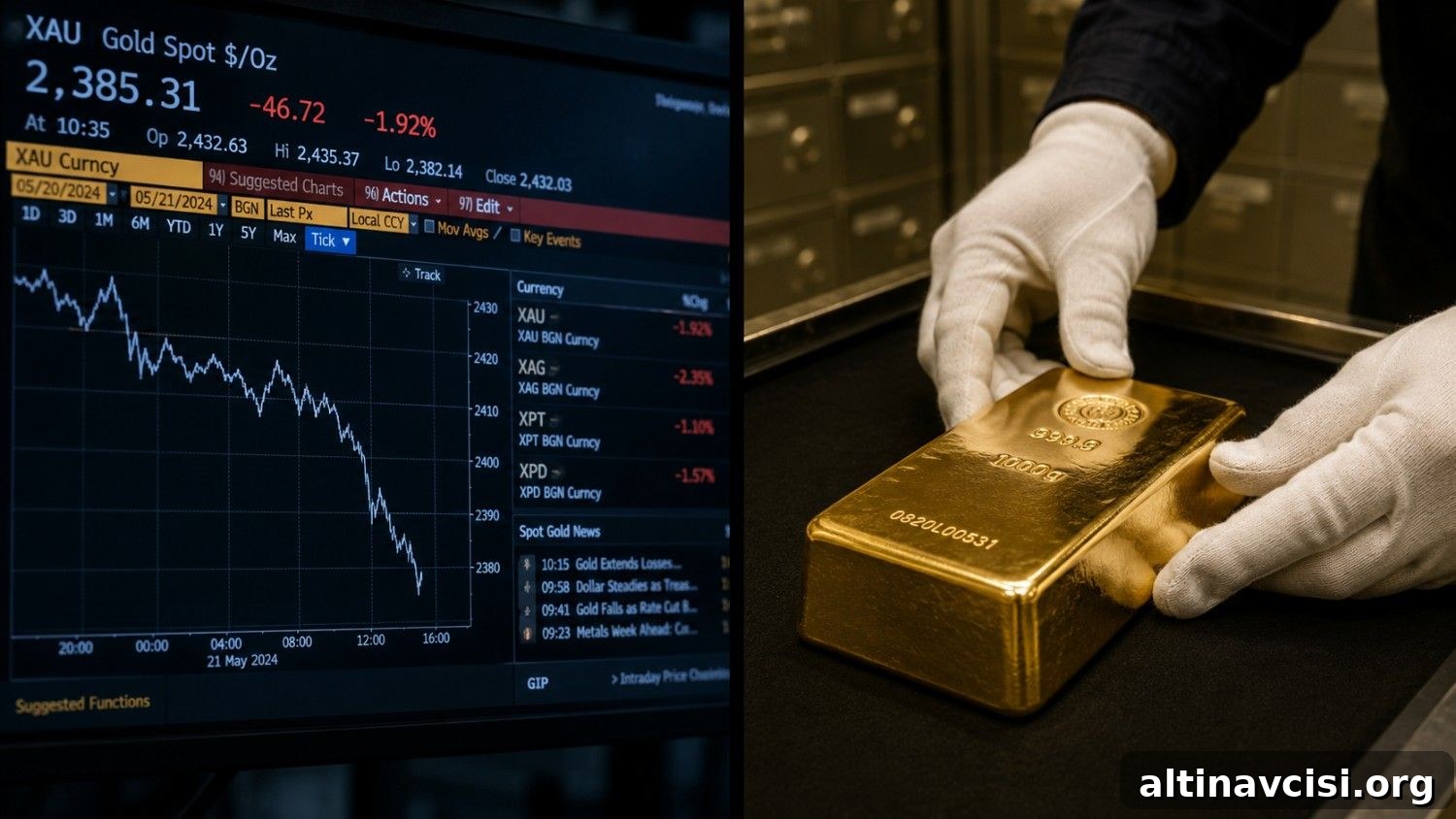
In today’s update: Gold fell 2.62% and silver dropped 8.69% as the dollar rallied, producer prices hit a three-year high, and the Trump‑Xi summit produced no major deal. Behind the gold decline: China’s central bank increased purchases to a 17‑month high.
As of Friday, May 15, 2026, gold trades near $4,530.10 and silver around $76.29. Three forces dominated the week: a stronger dollar, rising bond yields, and a Beijing summit that fell short of concrete agreements. The gold/silver ratio moved up to 59.38 from the mid‑53s earlier in the week. These moves reflect short‑term positioning unwinding and do not alter the longer‑term structural case for precious metals. Below is a clear, concise review of what happened, why it matters, and what long‑term investors should watch.
Why Is a Strong Dollar Pushing Gold Lower?
The US Dollar Index (DXY) climbed to about 99 on Friday — the highest level since early April — and is set for its best weekly gain in two months, up more than 1% over five sessions. Because gold is dollar‑priced, a stronger dollar raises the cost for buyers using euros, yen, or yuan, reducing overseas demand and prompting algorithmic selling.
Dollar strength often follows higher US yields relative to other countries, attracting capital into dollar assets. That is a genuine short‑term headwind for gold, but it’s also a symptom of inflationary pressure — the same environment that underpins gold’s long‑term role as a store of value.
The Edge Every Investor Needs
Smarter precious metals investing starts here. The Nuggets Newsletter delivers market insights, Fed updates, global trends, and educational content to help you stay informed.
What Did the Inflation Data Do to Gold This Week?
Inflation readings built pressure on markets throughout the week. April consumer prices rose 3.8% year‑over‑year, the highest since May 2023, driven largely by energy costs, which surged amid geopolitical disruption in the Strait of Hormuz. Producer prices then printed a 6.0% year‑over‑year gain in April — the largest annual increase since December 2022 — with a monthly jump of 1.4%, far above consensus.
Bond markets reacted quickly. The 10‑year Treasury yield rose to roughly 4.46–4.49%, its highest since mid‑2025. CME Group’s FedWatch tool shows markets have priced out Fed rate cuts for this year, and the probability of another hike by December sits near 28–30%. The US Senate confirmed Kevin Warsh as Federal Reserve Chair, replacing Jerome Powell; markets are parsing his likely policy stance. Such uncertainty tends to be supportive for gold over time, even if it contributes to short‑term volatility.
Did the Trump‑Xi Summit Change Anything for Gold?
The two‑day summit in Beijing ended on May 15 with cordial statements but no major structural agreement. Both leaders emphasized keeping the Strait of Hormuz open — a politically meaningful line but not a full resolution. China committed to buy 200 Boeing aircraft (below the 500 initially discussed). Markets had expected more, so the lack of a breakthrough removed some risk premium that had been priced into gold.
Ahead of the summit, gold carried a geopolitical uncertainty premium. With no decisive outcome, that premium unwound quickly. Nevertheless, broader US‑China tensions over trade, technology, Taiwan, and regional security remain, sustaining the long‑term case for diversifying outside dollar‑only assets.
Why Did Silver Fall Three Times Harder Than Gold?
Silver dropped far more sharply than gold because it had rallied aggressively into the summit. On May 11, silver jumped about 6.15% to $85.36 on bets that a comprehensive US‑China trade deal would boost industrial demand. Roughly half of silver demand is industrial, used in solar panels, electric vehicles, electronics, and semiconductors. When the anticipated trade deal failed to materialize, that exposure unwound quickly, leaving silver down nearly 11% from its May 11 peak.
That short‑term reversal doesn’t change the structural picture. The Silver Institute forecasts a 2026 silver deficit, and stocks have been drawn down for years. One week of positioning reversal does not reverse multi‑year supply‑demand dynamics.
If Gold Is Falling, Why Is China’s Central Bank Still Buying?
China’s central bank continued buying through the dip — a critical signal many investors miss. The World Gold Council’s May 2026 update showed the People’s Bank of China added 8 tonnes in April, the largest monthly purchase since December 2024 and the 18th consecutive monthly increase. Official holdings reached about 2,322 tonnes, roughly 9% of total reserves. China’s net imports have risen sharply, with Q1 2026 imports up substantially year‑over‑year.
Sovereign buyers like the People’s Bank of China act strategically, purchasing to reduce dollar exposure and position for long‑term monetary shifts rather than reacting to week‑to‑week yield moves. That China steps in while prices dip is consistent with strategic reserve management and is notable for long‑term investors.
Five Short‑Term Headwinds. One Long‑Term Case Still Intact.
This week produced five clear short‑term headwinds: a stronger dollar, higher 10‑year yields, hotter‑than‑expected CPI and PPI readings, a new Fed chair amid policy uncertainty, and a summit with no major trade breakthrough. Each is real and meaningful for near‑term trading.
But the structural case for precious metals remains intact. The Fed faces limited scope to cut rates while inflation is running near 3.8% and re‑accelerating. The US fiscal deficit persists. Central banks, led by China, are buying gold at elevated rates. Silver’s supply deficit continues for a sixth consecutive year. Volatile weeks like this can be opportunities for long‑term investors to build positions at more attractive prices.
Key near‑term dates: the May CPI release (June 10, 2026, 8:30 a.m. ET) and the first FOMC meeting under Chair Kevin Warsh (June 16–17, 2026). Progress or setbacks in Iran nuclear negotiations remain the largest swing factor, as they most directly influence energy prices, inflation, and precious metals demand.
Stay On Top of Gold & Silver Prices
Get important market alerts sent straight to your inbox.
SOURCES
1. Bureau of Labor Statistics — Consumer Price Index, April 2026 (released May 12, 2026)
2. Bureau of Labor Statistics — Producer Price Indexes, April 2026 (released May 13, 2026)
3. CME Group — FedWatch Tool, Fed Funds Futures Rate Probabilities
4. Reuters — US Senate Confirms Kevin Warsh as Federal Reserve Chair (May 13, 2026)
5. TradingEconomics — United States Dollar Index
6. TradingEconomics — United States 10‑Year Government Bond Yield
7. NBC News — Trump‑Xi Summit Live Updates (May 15, 2026)
8. CNN Politics — Trump China Visit and Xi Meeting Live Coverage (May 15, 2026)
9. Al Jazeera — Coverage of the Beijing summit (May 15, 2026)
10. Silver Institute / Metals Focus — World Silver Survey 2026 (April 15, 2026)
11. World Gold Council — China Gold Market Update (May 2026)
Disclaimer: This article is for informational purposes only and does not constitute financial or investment advice. Always consult a qualified financial adviser before making investment decisions.
You May Also Like:
- Why Silver Falls Harder Than Gold — And What It Means
- Gold Near $4,700: The Chaos Isn’t a Ceiling. It’s a Floor
- 5 Forces Shaping Gold and Silver at the Beijing Summit
- The Real Reason Gold Falls When Inflation Surges
- CPI Hits 3.8%. Gold Falls. The Mechanism Nobody Explains
- Why the Gold Silver Ratio Is Falling — and What It Means
- What’s Moving Gold Prices This Week: CPI, Seoul & Beijing
- Silver Jumps 6% Before Trump‑Xi Summit. Here’s Why