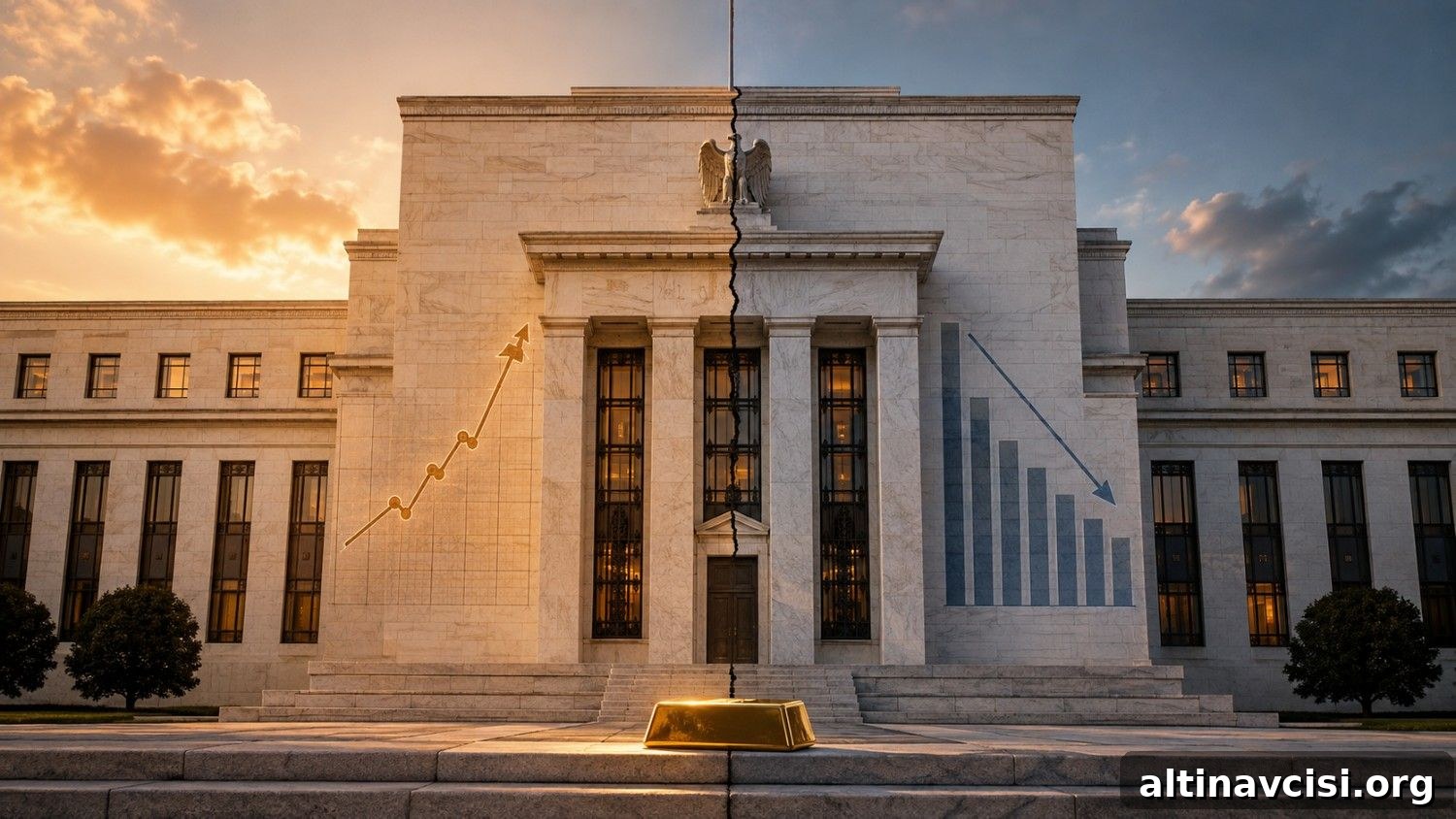
For six months the Federal Reserve focused almost exclusively on one task: bringing inflation under control. This morning, a single economic release forced a broader calculation. After the Bureau of Labor Statistics reported the U.S. economy lost 23,000 jobs in July, the price of gold jumped to $4,355 per ounce — a seven-week high. The market reaction was immediate. The catalyst was not a change in Fed policy, a peace deal, or a central bank announcement; it was a jobs print that reinserted employment into the Fed’s dual mandate and altered investor expectations.
What Happened With the July Jobs Report?
The Bureau of Labor Statistics released the July employment situation at 8:30 a.m. ET on August 7. The headline number: the economy lost 23,000 jobs in July. That result contrasted sharply with consensus forecasts, which had expected a modest gain. In addition, the BLS revised May and June payroll figures down by a combined 103,000 jobs, turning two previously reported gains into a string of weaker readings and making July the first outright monthly job loss after downward revisions.
The unemployment rate edged down to 4.1 percent, but analysts emphasized that this decline reflected a falling labor force participation rate rather than broad-based hiring. As observers noted, when participation falls, the unemployment rate can improve superficially even as the underlying labor market weakens. Taken together with recent soft data, July’s report suggests that the labor market may be cooling more than earlier figures implied.
The Edge Every Investor Needs
Smarter precious metals investing starts here. The Nuggets Newsletter brings essential market insights, Fed updates, global trends, educational videos, and timely commentary.
Why Does a Jobs Miss Push the Gold Price Higher?
The connection runs directly through the Federal Reserve’s dual mandate: price stability and maximum employment. For much of 2026, the employment side of the mandate had been robust enough that the Fed could concentrate primarily on inflation. Strong payrolls and a resilient labor market made a path of steady rate increases politically and economically feasible. The July report changes that balance.
A labor market that is losing jobs cannot tolerate the same degree of restrictive monetary policy as one adding several hundred thousand payrolls each month. Markets quickly repriced the odds for the September meeting: the probability of a 25-basis-point rate hike fell and the probability of the Fed holding rates rose. When rate-hike expectations are scaled back, real yields tend to decline. Lower real yields reduce the opportunity cost of holding non-yielding assets like gold, increasing gold’s relative appeal versus Treasury securities and other yield-bearing instruments. That dynamic explains the rapid move in gold prices following the jobs release.
What Does This Mean for Investors Watching the Fed?
Before today many market participants expected the Fed would continue raising rates to fight persistent inflation because the labor market looked strong enough to absorb additional tightening. The July jobs print undermines that expectation. A Fed facing simultaneous above-target inflation and a weakening labor market faces a policy dilemma: raising rates risks deeper economic pain and job losses, while cutting rates risks reigniting inflation pressures.
That dilemma tends to limit the Fed’s freedom to tighten aggressively. For investors, that is meaningful: gold does not depend on an immediate Fed rate cut to benefit. It only needs the Fed to be constrained in its ability to raise rates further. Today’s labor market weakness makes aggressive hikes less likely, which supports gold over the coming months as real yields stay suppressed.
Investor implication: Gold does not need the Fed to cut rates. It needs only for the Fed to be unable to hike aggressively. The July jobs report moved the policy calculus toward that outcome, establishing a structural floor under the gold price.
The Second Corner: A Two-Variable Problem Is Structurally Different
A key takeaway that may be missed in headline coverage is that the change is structural, not merely tactical. For months, oil-driven inflation pressures and other transitory supply shocks allowed the Fed to treat the situation as a one-variable problem: focus on inflation and accept a resilient labor market as the offset. In that scenario, the path forward was straightforward — keep hiking until inflation comes down.
When employment weakens at the same time inflation remains above target, the situation becomes a true two-variable problem. There is no clean policy solution that fully satisfies both goals. The Fed may pause, shift emphasis, or pursue a more nuanced path to avoid deepening a slowdown while trying to contain price pressure. Any of those responses reduces the urgency for additional hikes and changes the policy backdrop in a way that typically favors gold over a multi-month horizon.
For investors who prefer physical metal as a hedge outside the financial system, the structural case remains intact. Today’s data makes aggressive rate hikes less likely and therefore eases one of the principal near-term headwinds for precious metals.
What Should Investors Watch Next?
Key items to monitor in the coming days and weeks include the July Consumer Price Index due August 12. If CPI remains elevated while payrolls weaken further, the Fed’s policy trade-offs become more acute. Investors should also watch the September FOMC meeting for any change in the committee’s balance of opinion and any shifts in forward guidance. Finally, the 10-year Treasury yield provides a useful barometer: further compression of term premiums and real yields would signal additional room for gold to advance as markets adjust to diminished rate-hike odds.
SOURCES
1. Bureau of Labor Statistics — Employment Situation Summary — July 2026 (BLS release)
2. CNBC — coverage of market reaction to the July jobs report and implications for Fed policy
3. CME Group — FedWatch Tool on FOMC rate probabilities
4. News coverage and market data on gold and Treasury yields
Disclaimer: This article is for informational purposes only and does not constitute investment advice. Past performance is not indicative of future results. Always consult a qualified financial advisor before making investment decisions.
You May Also Like:
- The Jobs Report Did What Iran Couldn’t: Move Gold and the Fed in the Same Direction
- China Has Been Buying Gold for 20 Straight Months. Now It’s Moving It.
- Trump’s Polysilicon Tariff Just Hit Silver’s Biggest Industrial Customer
- Gold Rallied 6% This Week. Tomorrow One Number Decides Whether It Holds.
- Why Is Silver Outperforming Gold? A 6-Year Deficit
- Hormuz. ISM. Hecla. Barrick. Five Things Moved Gold and Silver Today.
- Jobs Missed. Gold Hit $4,200. Silver Hit $62.