
Last verified: September 28, 2026
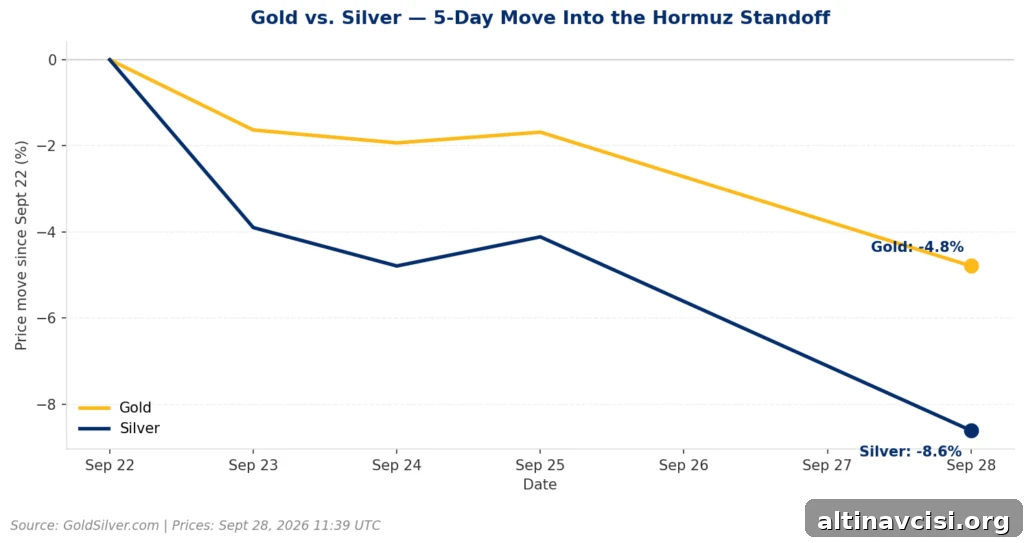
Iran did not secure a ceasefire this weekend, but it did make an offer. Instead of acting as a safe-haven bid, gold fell. Traditionally seen as a hedge against geopolitical risk, gold slid while markets digested developments around the Strait of Hormuz and shifting expectations for U.S. monetary policy.
As of Monday, gold was trading near $4,150 per ounce, down roughly 3.2% from Friday’s close near $4,285 — the steepest single-session decline in weeks. Silver dropped further, falling about 4.7% to near $61.29, which pushed the gold-to-silver ratio to roughly 67.7-to-1.
Key Takeaways:
- Gold fell about 3.2% to roughly $4,150/oz and silver dropped about 4.7% to roughly $61.29/oz on Monday after the U.S. rejected Iran’s weekend proposal relating to the Strait of Hormuz.
- Money markets now put a roughly 66% probability on an additional Federal Reserve rate hike at the October 27–28 meeting, up significantly from recent weeks.
- The Federal Reserve is currently in an active hiking cycle: it raised its target range to 3.75%–4.00% on September 16, 2026.
- Silver’s larger decline reflects higher beta exposure to dollar and yield moves rather than a silver-specific catalyst.
Why Did Gold Fall Today?
At the United Nations General Assembly last week, Iran’s foreign minister proposed reopening the Strait of Hormuz within seven days if the United States lifted a naval blockade, removed sanctions on Iranian oil, and released frozen funds. The U.S. publicly rejected that proposal over the weekend. Following the rejection, oil prices reversed higher — Brent crude climbed toward $107 per barrel on Monday after earlier easing — and that renewed concerns about rising headline inflation.
Higher oil prices feed directly into inflation measures, which in turn influence the Federal Reserve’s policy stance. With inflation pressures and resilient economic data, markets pushed up the odds of another Fed rate increase in October. That shift in expectations — rising real returns on short-term cash and Treasuries — reduces the relative appeal of non-yielding assets such as gold, helping explain the move lower despite geopolitical tensions.
What’s the Real Mechanism Behind the Selloff?
The selloff was driven more by monetary policy expectations than by outright risk-aversion. Rising oil lifts headline inflation and gives policymakers a reason to tighten further. As markets price in higher rates, the opportunity cost of holding gold rises: gold pays no interest, while short-term yields become more attractive.
Analysts pointed to strong U.S. economic data and elevated energy prices as the main forces pushing Treasury yields and the dollar higher, which in turn hurt gold. Several Fed officials have signaled they remain concerned about inflation and are open to additional tightening if prices remain elevated. When policymakers emphasize the need to prevent inflation from becoming “the new normal,” markets respond by repricing rate expectations — and that dynamic tends to pressure rate-sensitive assets.
What’s the Deeper Story for Gold and Silver?
Structurally, gold’s long-term case remains intact: it is finite, outside the banking system, and free of counterparty risk. Those attributes underpin its role as a store of value. However, in the short term, gold’s price competes with the risk-free yield on cash and Treasuries. When rate expectations rise, the competition intensifies and can outweigh safe-haven demand from geopolitical events.
Silver’s heavier slide is consistent with a dollar-and-yields driven move. Silver typically carries higher beta to macro shifts and has more industrial exposure, so it often moves further and faster than gold during broad liquidity or rate-driven adjustments. Monday’s pattern — both metals down but silver down more — looks like a macro liquidity signature rather than a metal-specific story.
For holders of physical metal, a single down day is not a reason to change a long-term position; gold and silver are typically bought for long-term diversification and insurance. For those considering entry, the more relevant question is the cost of waiting while the Fed tightens policy: delays can mean higher prices later if inflation persists or if monetary policy eventually shifts.
What Should Investors Watch Next?
Investors should watch several upcoming data points that will influence Fed expectations and the trajectory for gold and silver:
- The September personal consumption expenditures (PCE) inflation report, the Fed’s preferred inflation gauge.
- Friday’s U.S. nonfarm payrolls report, which will show the labor market’s resilience or softness.
- Whether Brent crude holds above $100 per barrel — sustained higher oil keeps inflation risks elevated and supports the case for additional rate hikes.
A hotter-than-expected inflation print or a strong payrolls report would likely raise the odds of another Fed hike and put further pressure on gold. Conversely, softer-than-expected readings could offer the first meaningful opportunity for gold to recover as rate-hike expectations ease.
Stay On Top of Gold & Silver Prices
Receive market alerts and concise insights about precious metals directly to your inbox.
SOURCES
1. Al Jazeera – Oil prices moved higher after the U.S. rejected Iran’s proposal on the Strait of Hormuz (28 September 2026).
2. CNBC – Coverage of Brent crude and market reaction to Iran-U.S. developments (28 September 2026).
3. FXStreet and FXEmpire – Reports on gold and silver price moves and Fed hike odds (28 September 2026).
4. Investing News Network – Coverage of the September Fed rate hike and market context (16 September 2026).
Disclaimer: This article is for informational purposes only and does not constitute investment advice. Past performance is not indicative of future results. Consult a qualified financial advisor before making investment decisions.
You May Also Like:
- Sentiment Rose to 48.1. Gold Sold Off Anyway. The Number That Mattered Was 4.6%.
- Five Institutions Just Changed How You Can Own Gold and Silver
- Gold and Silver Rebound as the Dollar and Treasury Yields Take a Pause
- India’s Gold Imports Fell 58%. Silver Imports Rose 127%.
- Municipal Bonds Just Broke a 15-Year Record. Gold Doesn’t Have This Problem.
- Washington Sold $70 Billion in Debt. Wall Street Only Wanted Part of It.
- Gold’s Price Barely Moved. Five Institutions Repositioned Anyway.
- Iran Repeated Its Hormuz Demand at the UN. The Market Already Priced It In.
- Today’s PMI Beat Cuts Gold Two Ways. Only One Side Has Been Priced In.