Do Gold ETFs Mean You Own Physical Gold?
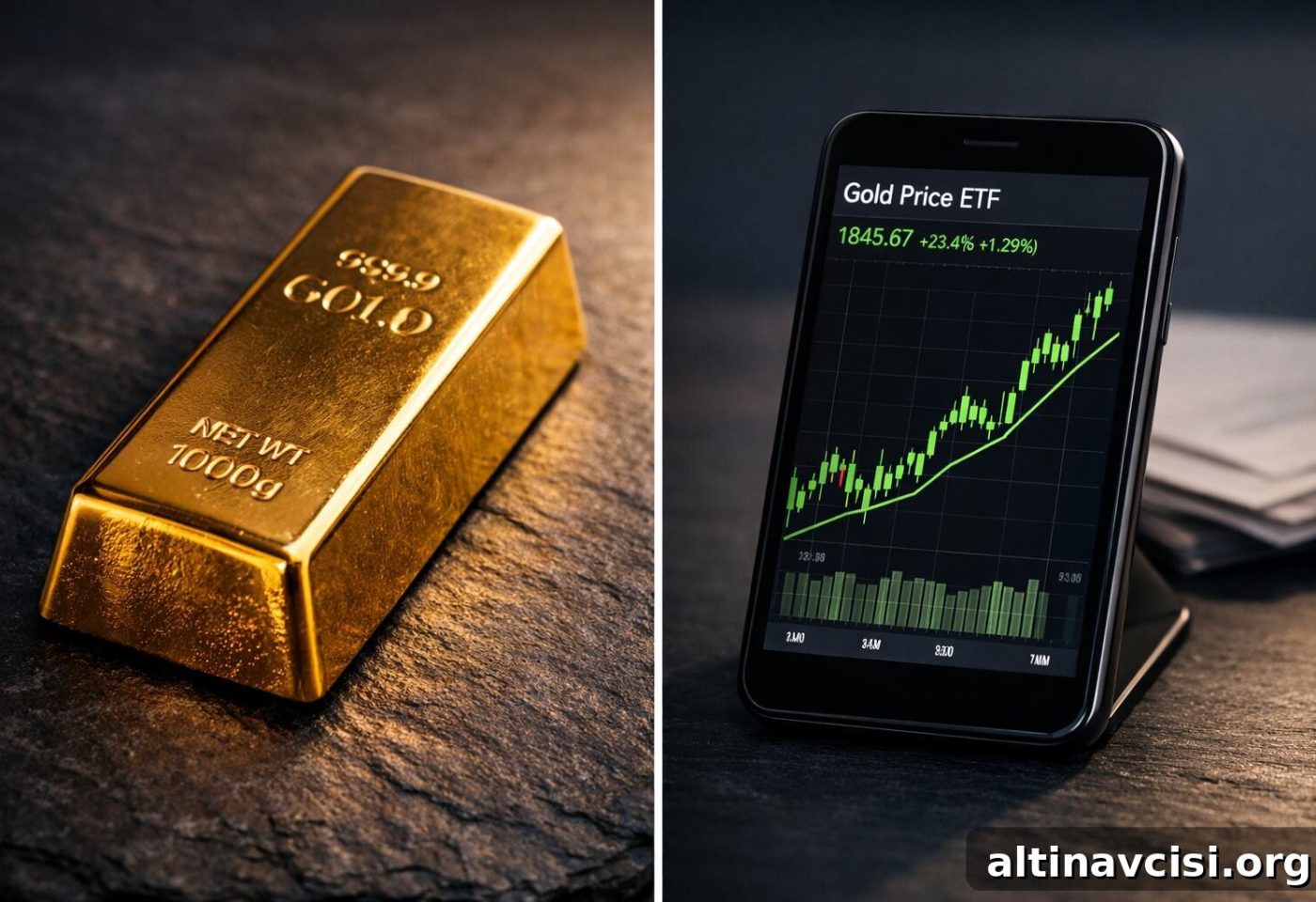
In 2025 global investors poured an estimated $89 billion into gold exchange-traded funds (ETFs), a dramatic increase from roughly $4 billion the year before [World Gold Council, February 2026 Gold ETF Commentary]. In the first two months of 2026 another $24 billion flowed in, pushing global ETF holdings to a record 4,171 tonnes and total assets under management to about $701 billion [World Gold Council].
Those inflows highlight strong demand, but they also raise an essential question many investors overlook: does buying a gold ETF deliver the same protection as owning physical metal? The distinction between exposure and ownership is critical when evaluating gold’s role in a portfolio.
Global gold ETF momentum built early in 2026
Regional gold ETF flows and gold price movement — data noted through February 28, 2026.
North America
Europe
Asia
Other
Gold Price
*As of 28 February 2026. Gold price based on monthly LBMA gold price averages. Source references: Bloomberg, company filings, industry price benchmarks, World Gold Council.
The inflow surge did not slow at the start of 2026. February marked the ninth consecutive month of net ETF inflows — the strongest two-month opening on record. That streak was driven by a combination of elevated geopolitical risk, a softer dollar that lowers the opportunity cost of holding gold, shifting interest-rate expectations, and increased volatility in equity markets. Outside the early ETF adoption period of 2003–2006, North America has seen comparable runs only during the Global Financial Crisis and the COVID-19 pandemic.
Investors generally grasp the macro case for gold. The critical follow-up is less often considered: does the instrument they choose—ETF or physical bullion—actually deliver the protection they expect?
What’s driving the surge in global gold ETF inflows?
Multiple factors converged in early 2026. Analysts and industry data point to geopolitical tensions (notably concerns around Iran), a weaker dollar, policy uncertainty stemming from trade and tariff rulings, and stress in equity markets where stretched valuations—particularly in software and SaaS—created broader index vulnerability. The notable element is not a single cause but the simultaneous elevation of several independent risks, which is precisely the environment where investors turn to gold as protection rather than chasing momentum.
That distinction matters because buying a gold ETF provides market exposure to gold’s price, while owning physical gold means holding the metal itself. Which one you choose determines the reliability of that protection when markets are under stress.
What is the core difference between a gold ETF and physical gold?
Put simply: exposure versus ownership. A gold ETF offers price exposure through a regulated security that is backed by metal held in custodial vaults. Physical gold gives you the metal itself—no intermediary, no reliance on custodians or clearing systems.
An ETF investor’s claim is real, but it exists within a network of custodians, trustees and market infrastructure. That system generally works well in normal conditions, but in a systemic shock those intermediaries can face insolvency, operational failures, or temporary restrictions. Physical gold held outside the financial system carries none of those dependencies; its value does not rest on any counterparty’s balance sheet or continuing operations.
What are the real risks of owning a gold ETF?
Is counterparty risk a concern with gold ETFs?
Yes. Most ETFs hold metal through custodians, and if a custodian or trustee encounters financial distress or regulatory issues, the chain between your ETF share and the physical bullion can be affected. Under common ETF structures, only large institutional authorized participants can redeem ETF shares for physical bullion; retail investors receive cash upon sale. That structure introduces counterparty and operational risk that physical ownership avoids.
Do gold ETFs carry systemic risk?
Because ETFs are embedded within the financial system, they are exposed to system-wide risks: trading halts, liquidity squeezes, redemption pressures, and custodian failures. For example, a concentrated metals selloff can trigger large redemptions in listed ETFs, causing temporary outflows and price dislocations. Physical metal outside the system is not subject to these operational vulnerabilities.
How much do gold ETF fees cost over time?
ETF expense ratios create a drag over time. The two largest U.S.-listed gold ETFs carry expense ratios around 0.40% (SPDR Gold Shares, GLD) and 0.25% (iShares Gold Trust, IAU). Over a decade, those fees can erode several percentage points of returns—roughly 3.9% at 0.40% annually and about 2.5% at 0.25%—before market moves. Smaller funds can be cheaper (some below 0.10%), but ongoing annual fees are a structural cost that physical gold does not carry after purchase.
Can retail investors get physical gold from an ETF?
No. Under standard structures only large authorized institutional participants can redeem ETF shares for physical bullion. Retail investors sell shares for cash and do not take delivery of the metal, regardless of how long they hold the ETF.
What does physical gold offer that ETFs cannot?
No ongoing counterparty dependency. Once you hold physical gold, no custodian or financial intermediary stands between you and the asset.
Protection outside the financial system. Physical metal stored privately or in segregated vaults is not directly exposed to bank failures, exchange halts, or custodian insolvency.
Potentially lower long-term cost for buy-and-hold investors. Physical gold requires a one-time purchase premium (commonly 3–8% over spot for standard coins and bars) plus optional storage and insurance. Over decade-plus horizons, the absence of annual ETF fees can make physical ownership more economical.
Gold ETF vs Physical Gold — cost comparison
| Cost Factor | Gold ETF | Physical Gold |
| Annual fees | Typically 0.09%–0.40% per year | None after purchase (storage/insurance optional) |
| Purchase premium | Close to spot via ETF share price | Commonly 3%–8% over spot for coins and bars |
| Storage | Included in ETF expense ratio | Self-arranged: home safe or vault |
| Insurance | Included in ETF expenses | Separate cost if desired |
| Redemption for metal | Not available to retail investors | You hold the metal directly |
| Counterparty risk | Yes — custodians, trustees, exchanges | No |
For active traders and short-term investors, gold ETFs offer clear advantages: liquidity, low transaction costs, and simplicity through brokerage accounts. For long-term wealth preservation and a crisis hedge intended to operate independently of the financial system, physical bullion typically offers superior structural protection and, over long horizons, a lower total cost of ownership.
Gold ETF or physical bullion: which belongs in your portfolio?
The practical answer for many investors is both, used for different purposes. Physical gold should serve as a core holding for those prioritizing long-term wealth preservation, protection from currency devaluation, and independence from the financial system. Gold ETFs are a tactical tool: efficient for gaining price exposure, managing short- to medium-term positions, or accessing liquidity through a brokerage account.
Between 2025 and the start of 2026 roughly $113 billion flowed into gold ETFs (the $89 billion in 2025 plus $24 billion in the first two months of 2026), which underscores the strong macro demand for gold. Whether that demand translates into the protection investors expect depends on whether their holdings are structured to perform in the scenarios they plan for.
The bottom line: don’t confuse price exposure with ownership
An ETF can track gold’s price very effectively, and ETFs have a clear role in many portfolios. But an ETF is not the same as owning metal outright. Physical gold does not depend on custodial arrangements or market infrastructure to retain its value, and that independence is often the very reason investors buy gold in the first place. Make sure the form of gold you own aligns with the protection you are buying.
Stay on top of gold & silver prices
Receive timely market alerts delivered to your inbox.
People also ask
What is the difference between a gold ETF and physical gold?
A gold ETF provides regulated financial exposure to gold’s price backed by metal held in custodial vaults. Physical gold means direct ownership of bullion or coins. The key distinction is that ETF holders rely on intermediaries to maintain the claim, while physical holders have the asset outright and carry no ongoing counterparty risk.
Are gold ETFs safe during a financial crisis?
Not completely. ETFs are part of the financial system and can be affected by trading halts, redemption limits, or custodian issues during severe disruptions. Physical gold held outside banks and custodial systems avoids those particular operational risks and is often treated as a more resilient form of ownership in crisis scenarios.
How large were global gold ETF inflows in 2025?
Global gold ETF inflows totaled about $89 billion in 2025, compared with roughly $4 billion in 2024. By the end of February 2026 an additional $24 billion had entered ETFs, marking an exceptionally strong start to the year and record-high ETF holdings and assets under management.
Is physical gold cheaper than a gold ETF over the long term?
For buy-and-hold investors, physical gold often becomes cheaper over long holding periods once you factor in ETF expense ratios that compound annually. Physical ownership involves an initial premium—commonly a few percent above spot for coins and bars—and optional storage or insurance costs, but it avoids recurring annual fees.
Sources
World Gold Council, Gold ETF Commentary: February 2026; World Gold Council, Gold ETF Commentary: January 2026; World Gold Council, Gold ETF holdings & flows data.
This article is for informational purposes only and does not constitute financial or investment advice. Consult a qualified financial advisor before making investment decisions.
You may also like:
- Silver Demand by Sector: Industry, Jewelry & Investment
- Small Market, Big Swings: Why Silver Is More Volatile Than Gold
- Is Now a Good Time to Swap Silver for Gold?
- Should I Buy Gold Now? What Most Investors Get Wrong
- Silver Price Floor: Why the Market Has Reset to $70
- 87% Dollar Devaluation Since 1971: Why Central Banks Keep Buying Gold
- How to Roll Over Your 401(k) Into a Gold IRA
Popular Topics
Picked from the archive
-
01
 Topics
Gold Price Tops $4,700 Amid Global Turmoil
-
02
Topics
Russian Central Bank Cuts Rates by 2% as Inflation Slows
-
03
Topics
Harvard 51B Endowment Sells Tech, Buys Gold and Crypto
-
04
Topics
Gold vs. Stocks 2026: Q1 Returns Investors Need to Know
-
05
Topics
Hormuz Crisis and Fed Policy: Markets Race to Gold and US Dollar
-
06
Topics
Silver Price Falls on Index Rebalancing Ahead of Jobs Report
-
07
Topics
Trump’s No-Tariff Pledge Calms Gold Prices
-
08
Topics
Gold Rally 2026: Why Prices Are Set to Rise