Gold vs Silver: Why Gold Stabilizes Markets, Silver Amplifies
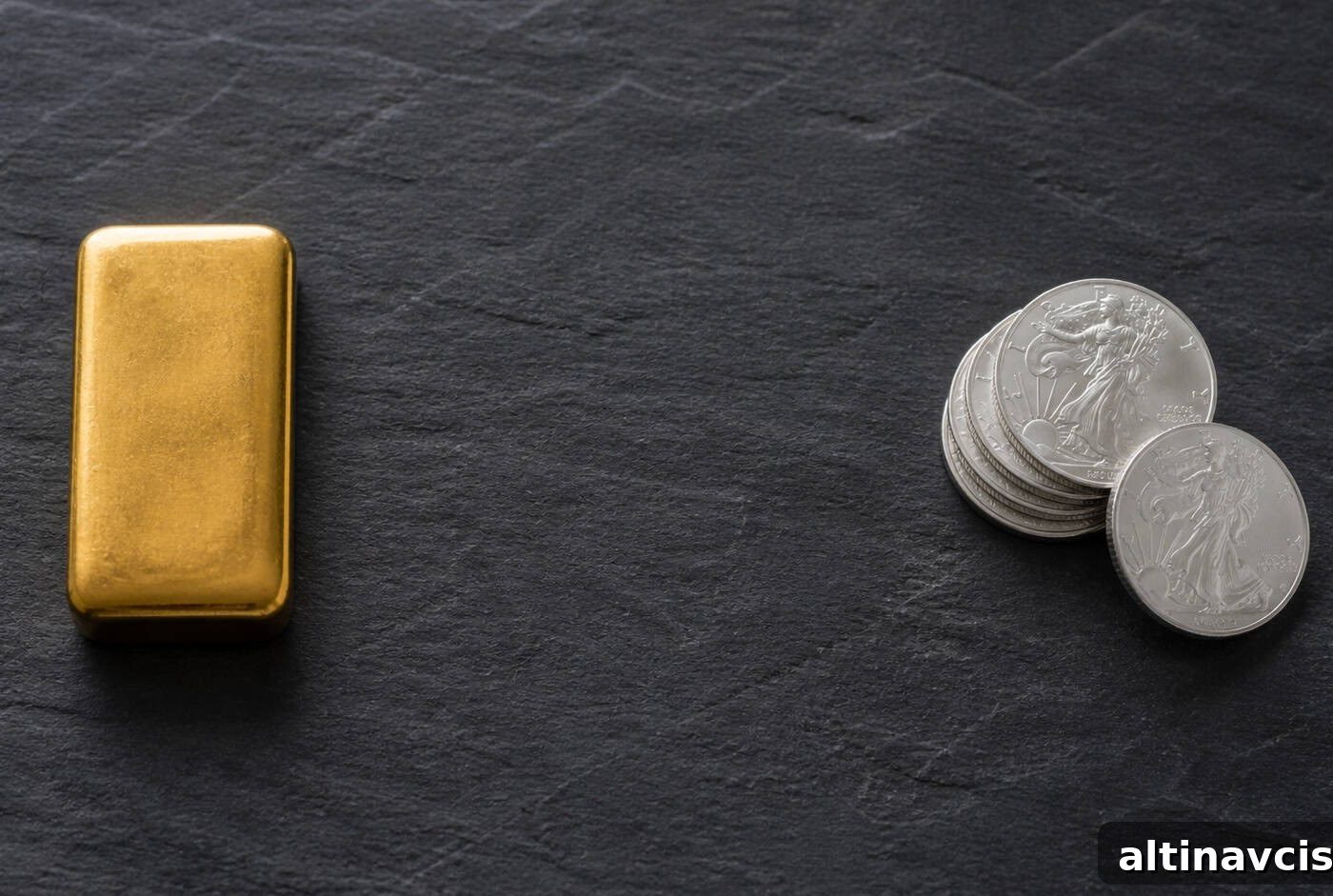
Gold and silver are not interchangeable. Gold acts as a portfolio stabilizer—historically showing a negative correlation to equities and holding up during market stress. Silver is a high‑beta amplifier—more than half of its demand is industrial, which makes it more volatile and tied to economic cycles. When used together with clearly defined roles, they complement each other: gold as the anchor, silver as the growth‑oriented complement.
They may sit side by side at a bullion dealer and appear on the same brokerage statement under “precious metals,” but they behave very differently inside a portfolio. Treating them as identical is a common mistake that undermines risk management and return expectations.
Gold stabilizes; silver amplifies. Recognizing that distinction changes how you allocate, protect, and pursue wealth creation.
Are You Asking the Wrong Question?
Many investors begin with: “Should I buy gold or silver?” That framing misses the point. A better question is: “What role do I need this metal to play right now?”
Gold and silver differ in demand composition, market liquidity, and behavior under stress. Once you view them through the lens of specific portfolio objectives—stability, inflation protection, tactical upside—the choice of allocation becomes deliberate instead of arbitrary.
Your Gold Buying Guide Many investors overpay when they buy gold and again when they sell. This guide explains what to own, why it matters, and how to avoid common mistakes.
Why Does Gold Stabilize a Portfolio?
Gold’s stabilizing power stems from the diversity and scale of its demand.
It functions as jewelry for consumers, an input in technology, an investment asset through ETFs, bars and coins, and a reserve asset held by central banks around the world. That mix prevents any single factor from dominating price formation. When investment demand softens, central bank purchases and consumer and industrial demand can help absorb the excess supply.
Because of that breadth, gold behaves more like a financial asset than a typical industrial commodity. It reacts to interest rates, currency moves, and credit conditions—the same macro drivers that move bonds and currencies. Historically, during sharp equity drawdowns, gold has often moved differently from stocks and sometimes in the opposite direction.
This negative correlation during crises is what makes gold a practical hedge—not only on paper but in real portfolios. [World Gold Council, March 2026]
The practical result is lower overall portfolio volatility, deeper liquidity in stressed markets, and more consistent behavior across economic cycles. Gold is the metal you hold when you want an anchor during turbulent times.
Why Does Silver Amplify Market Moves?
Silver has a very different structural profile. Industrial uses—electronics, solar panels, medical devices and a rising array of green energy technologies—account for well over half of annual silver demand. [Silver Institute, World Silver Survey 2025]
Because much of silver’s demand is tied to manufacturing and technology, it has a pronounced pro‑cyclical bias. Economic expansion lifts industrial activity and silver consumption, pushing prices higher. Conversely, in recessions silver tends to fall harder and faster than gold.
That cyclicality makes silver a high‑beta metal. Its price volatility has historically been substantially higher than gold’s, and its typical intraday bid‑ask spread is wider—meaning higher transaction costs, especially when markets become stressed. When liquidity dries up, selling silver can be more costly than selling gold. [World Gold Council, March 2026]
Silver’s upside in bull markets can be significant, but those gains come with steeper drawdowns and higher trading friction. In short: silver amplifies returns in both directions.
Does the Supply Picture Change the Calculation?
Yes. Supply characteristics reinforce the different roles each metal plays.
Gold: Stable Supply with a Built‑In Buffer
Gold is primarily mined as a dedicated product across many regions. Recycling supplies roughly 28–30% of annual gold production, creating a natural buffer that expands when prices rise and mined output weakens. That responsiveness helps stabilize available physical supply. [World Gold Council, Full Year 2024]
Silver: Concentrated, Dependent, and Harder to Forecast
By contrast, about 70–80% of silver production is a by‑product of copper, lead and zinc mining. A handful of countries—Mexico, China, Peru, Bolivia and Chile—account for more than half of global mine output. Disruptions in those base‑metal sectors can tighten silver supply irrespective of silver’s own market fundamentals.
Recycling covers only around 19% of annual silver supply because so much silver is embedded in electronics and industrial components, where recovery is often uneconomic. [Silver Institute, World Silver Survey 2025]
The net effect: silver’s physical market is structurally tighter and less predictable than gold’s, adding another source of price volatility.
How Should Gold and Silver Fit in a Portfolio?
They should be assigned distinct, complementary roles.
Gold belongs in the strategic, long‑term portion of a portfolio. It delivers stability, crisis protection and wealth preservation. Because its correlation to equities tends to drop when markets fall, gold provides diversification that matters during drawdowns—not just on paper but in practice.
Silver is best used as a tactical, growth‑oriented complement. It suits investors seeking exposure to industrial demand and willing to accept higher volatility. The practical discipline is to size silver positions significantly smaller than gold to achieve comparable portfolio risk, since silver is roughly twice as volatile.
Used together with defined roles—gold as the anchor, silver as the accelerator—they can enhance a portfolio’s resilience and upside potential. Each metal adds value when it is clear what job it is expected to do.
Stay On Top of Gold & Silver Prices
Receive timely market alerts straight to your inbox.
People Also Ask
Why does gold stabilize a portfolio during market downturns?
Gold often shows a negative correlation to equities during sharp drawdowns. Because its demand is diversified across investment, jewelry and central bank reserves, no single economic factor dominates its price—making it a reliable hedge when stocks fall.
Is silver a good substitute for gold in a portfolio?
No. Silver is not a like‑for‑like substitute. Its heavy industrial demand ties it to economic cycles, so it tends to amplify market moves rather than offset them—opposite to the function of a crisis hedge.
Why is silver more volatile than gold?
Silver’s market is smaller, much of its demand is industrial, and a large portion of supply is a by‑product of other base‑metal mining. These factors result in wider bid‑ask spreads and larger historical price swings compared with gold.
Should I hold both gold and silver in my portfolio?
Yes—if each has a distinct role. Gold should serve as the stable, long‑term foundation; silver as a higher‑beta exposure for tactical upside. Given silver’s greater volatility, its allocation should typically be smaller than gold’s to avoid outsized risk.
What drives the gold‑to‑silver ratio?
The ratio reflects differences in industrial demand, liquidity and investor sentiment. It moves widely—falling during strong silver cycles and rising during stress events—illustrating how differently the two metals react to the same macro environment.
Knowing the Difference Is Half the Battle
Most investors lose not because they picked the “wrong” metal, but because they expected the wrong outcome—buying silver expecting crisis stability, or buying gold expecting rapid bull‑market gains.
The simple framework: gold is your anchor; silver is your accelerator. Neither is inherently superior. Both perform better when assigned a clear purpose within a strategy.
If you want to refine allocations or learn practical buying strategies, look for reputable research and guides that explain the mechanics of ownership, storage and transaction costs so you understand what you own—not just that you own it.
SOURCES
1. World Gold Council — Gold the Safe Haven versus Silver the Wildcard
2. Silver Institute — World Silver Survey 2025
3. World Gold Council — Gold Demand Trends: Full Year 2024
Disclaimer: This article is for informational and educational purposes only and does not constitute investment advice. Consult a qualified financial adviser before making investment decisions.
You may also like:
- COMEX Silver Coverage Ratio: Is Your Paper Silver Real?
- What the Gold Price Per Ounce Really Tells You
- The Gold Inflation Paradox Most Investors Miss
- Insurance vs. Upside: Balancing Your Portfolio with Gold and Silver
- Gold Bullion vs. Jewelry: Why Serious Investors Choose the Bar
- Gold & Silver IRA: Why Starting Early Costs You Less
- Silver Fair Value: What the Data and History Show
- Gold or Silver Price Dip: Temporary Correction or Trend Reversal?
Popular Topics
Picked from the archive
-
01
 Topics
Inside the Fed’s Most Contentious Jackson Hole Meeting
-
02
Topics
Why Americans Are Missing Out on Gold’s 60% Rally
-
03
Topics
Wall Street Whiplash: Stocks Rally on CPI, Plunge on PPI Shock
-
04
Topics
US Jobless Claims Jump to 3-Month High, Point to Labor Softening
-
05
Topics
What’s Moving Gold and Silver Prices This Week
-
06
Topics
What’s Driving Gold Demand from Washington, D.C. to Mumbai
-
07
Topics
Gold Price Tops $3,600 After $1,000 Rally This Year
-
08
Topics
Gold Price Drops Below $5K After Jobs Revisions Roil Markets