When to Sell Gold During a Bull Market Pullback

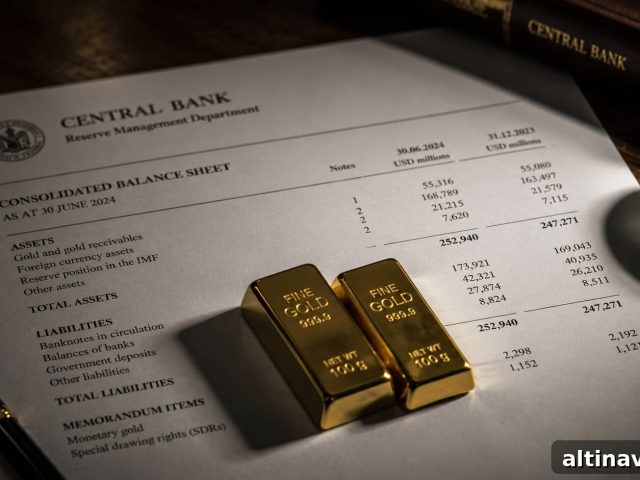
For most long-term investors, holding gold remains the prudent choice. At roughly $4,700 per ounce in late April 2026 — about 16% below its January 2026 record near $5,600 — this pullback is typical behavior inside a bull market. Historically, selling into corrections often means missing the next major advance. The core drivers that support gold — inflation, monetary debasement, and sustained central bank appetite — are still intact. Decisions to sell should be motivated by your personal finances, not short-term price moves.
Gold traded near $4,700 an ounce as of late April 2026, down from its January peak around $5,600, the highest level on record (CBS News). That decline has many investors wondering whether to lock in gains now or to hold through the correction. The right choice depends less on the current quote and more on the role gold plays in your portfolio.
Why Do Most Investors Hold Gold Rather Than Sell It?
Gold is not a growth stock and it pays no income. Its value lies in preserving purchasing power, hedging currency debasement, and acting as a refuge during financial stress.
Those fundamental reasons have not changed. Since the end of Bretton Woods in 1971, the U.S. dollar has steadily lost purchasing power. Central bank balance sheets expanded sharply after 2008, and government debt levels across developed economies remain historically high. These structural conditions have not reversed, so selling simply because the price dipped is often shortsighted — like cancelling fire insurance because a house fire hasn’t happened yet.
Investors who purchased gold at $1,500, $2,000, or $3,000 per ounce have seen substantial gains, but profit-taking is only one consideration. The critical question is what you would buy instead and whether that asset fulfills the same protective role that gold does.
Your Gold Buying Guide Many investors overpay when buying gold — and again when selling. This guide explains which forms of gold to consider and why they may fit your portfolio.
What Are the Legitimate Reasons to Sell Gold?
There are valid reasons to sell, but they are typically personal or structural rather than purely price-driven.
A true financial emergency is the clearest reason to liquidate. Gold is highly liquid relative to many other assets, and converting it to cash for urgent needs like medical expenses or unexpected job loss is exactly what liquid assets are meant for.
Strategic rebalancing is another sound motivation. If gold’s appreciation has pushed it to an outsized portion of your portfolio — for example, growing to 30%–40% when your target is 10%–15% — trimming back to your target allocation is disciplined portfolio management rather than a rejection of gold’s thesis.
A genuine, durable change in macro fundamentals would also justify selling. If real interest rates turned sharply positive for an extended period, if government deficits fell sustainably, and if monetary policy normalized in a lasting way, the environment that has favored gold could change. Today, however, there is little evidence that such a reversal has occurred.
Conversely, short-term volatility, a modest price pullback, or the emotional urge to “take profits” are poor reasons to exit a position that was purchased for protection.
What Does History Say About Selling Gold at a Peak?
History shows the risk of selling at a perceived peak. Investors who sold near the 2011 gold peak around $1,921 per ounce saw prices fall to roughly $1,054 by December 2015, a decline close to 45% (World Economic Forum). Many felt validated by that downturn, only to watch gold later surpass the 2011 high in 2020 and continue higher to reach near $5,600 by January 2026. Those who sold in 2011 and remained out of the market missed a very large subsequent advance.
Decisions based on the sense that a price looks “too high” sever the choice from the original rationale for owning gold. Peaks only become obvious in hindsight; calling a top in real time is unreliable.
Is Now a Good Time to Sell Gold — or Hold It?
The structural case for holding gold is arguably stronger now than a year ago.
At roughly 16% below its January 2026 record near $5,600, the current pullback reflects short-term forces such as energy-driven inflation linked to geopolitical tensions in the Strait of Hormuz. Those conditions tend to reinforce, not weaken, gold’s long-term role as an inflation hedge and store of value.
Central banks bought 863 tonnes of gold in 2025, one of the largest annual totals on record and far above the 2010–2021 average of 473 tonnes (World Gold Council). Gold ETF holdings also expanded, with assets under management rising to record highs. Major financial institutions have revised year-end targets higher, reflecting ongoing central bank and investor demand rather than a belief that gold has peaked.
How Should You Decide Whether to Sell or Keep Your Gold?
Before acting, answer these three questions candidly.
1. Why did I buy it? If your reasons were to protect against inflation, currency debasement, or systemic financial risk, ask whether those reasons still hold. If they do, the logic behind your position remains intact.
2. Has my financial situation changed? A genuine need for liquidity is a valid reason to sell a portion of your holdings. If your finances are stable, patience is often an advantage.
3. Am I overweight relative to my target allocation? If gold has grown well beyond your intended allocation, trimming back to your target is a portfolio-management decision rather than a market-timing call. If you are unsure what your target should be, consider working with a financial adviser to define an appropriate allocation for your goals and risk tolerance.
Let those answers guide your choice — not yesterday’s price chart. A level that looks expensive compared to the past may still be reasonable relative to future risks and macro trends.
Stay On Top of Gold & Silver Prices
Receive timely market alerts and updates in your inbox.
People Also Ask
Is it a good idea to sell gold right now?
For most long-term investors, selling during a bull market pullback means stepping away while the structural drivers remain in place: inflation, central bank buying, and currency debasement. Unless you face a specific financial need or must rebalance to maintain your asset allocation, history suggests holding is usually the better option.
How do I know when gold has peaked?
You generally cannot identify a peak in real time. Major highs are clear only after the fact. Instead of attempting to time a top, experienced investors focus on allocation targets and the underlying reasons for owning gold.
Should I sell gold if I need cash?
Yes. Gold is a liquid asset and was purchased in part to provide that liquidity when needed. If possible, evaluate other liquid holdings first and sell only what you must to address the need.
Does gold lose value over time?
Not in terms of purchasing power. While dollar-denominated prices fluctuate, an ounce of gold has historically held value relative to real goods over long periods. By contrast, fiat currencies have lost significant purchasing power over recent decades.
Is physical gold better to hold than a gold ETF?
Physical gold carries no counterparty risk and can act as a crisis-proof core holding. Gold ETFs provide liquidity and ease of trading but are financial instruments with different operational considerations. Many investors use a mix: ETFs for flexibility and physical metal for long-term security. The right combination depends on your priorities for access, storage, and risk tolerance.
The Case for Holding Gold Has Not Weakened
A 16% pullback from a record high is not, by itself, a signal to sell. Pullbacks are normal in every gold bull market. The key reasons to hold — currency debasement, persistent inflation risks, and systemic uncertainty — remain present. Central bank purchases and rising ETF holdings in recent years underscore continued institutional demand. Selling makes sense when your personal circumstances require it or when the macro case changes meaningfully — neither of which appears true today.
If you want to explore how gold fits into a long-term portfolio, consider seeking in-depth guidance from trusted industry resources or a qualified financial adviser.
SOURCES
1. CBS News — What is the highest gold price in history? Here’s how it changed from 2025 to 2026.
2. World Economic Forum — A brief history of gold.
3. World Gold Council — Gold Demand Trends: Full Year 2025 — Central Banks.
4. J.P. Morgan Global Research — Gold price perspectives and targets.
5. World Gold Council — Gold ETF Holdings and Flows: Full Year 2025.
Disclaimer: This article is informational and educational only. It does not constitute investment advice. Consult a qualified financial adviser before making investment decisions.
You may also like:
- Silver Bullion Buying Guide 2026: Coins, Bars, and Rounds Compared
- Is Gold Still a Strategic Asset for Your Portfolio?
- Best Gold Investment in 2026: Bars, Coins, IRA or ETF?
- What Happens to Gold When the Dollar Crashes?
- Gold Fell During a War. So Is It Really a Safe Haven?
- Is Gold at Fair Value? What Three Models Say — and Where They Disagree
- Silver Price Predictions for the Next 5 Years: Data-Backed Scenarios
- Tariff Refunds, Dollar Weakness, the AI Bust: Gold’s Case
Popular Topics
Picked from the archive
-
01
 Topics
Federal Reserve Pauses While Debt Soars: Gold Outlook
-
02
Topics
Treasury Secretary Urges Fed Rate Cut After Revised Jobs Report
-
03
Topics
Why Metals Led Markets in 2025 and What It Means for 2026
-
04
Topics
Numismatic vs Bullion Coins: Which Should You Buy?
-
05
Topics
How the Current Gold Rally Compares to Past Bull Markets
-
06
Topics
World Gold Council: Gold Nears Technical Break as Markets Stall
-
07
Topics
Central Bank Gold Sales and Their Impact on Prices
-
08
Topics
Gold at $3,400 as Markets Await Aug 28, 2025 PCE Data