How to Buy Silver Bullion 2026: Coins, Bars and Rounds Compared
As of April 2026, silver trading near $79 per ounce stands about 34% below its January record high of $121.64. For long-term investors the key choice is not whether to own silver, but which form to buy. Coins, bars, and rounds all contain the same .999 fine silver (or better), yet they differ materially in premiums, liquidity, IRA eligibility, and resale characteristics. This guide explains those differences so you can choose the format that fits your goals.
Silver reached a nominal high of $121.64 on January 29, 2026, before retracing to roughly $79 by late April. That pullback follows a dramatic advance in 2025, when silver rose roughly 144–147%—its strongest yearly gain since 1979 (source: BlackRock). Even after the correction, underlying market pressures persist: the silver market is forecast to enter its sixth straight annual supply deficit in 2026, with demand expected to outstrip supply by about 46.3 million ounces—a roughly 15% wider shortfall than the previous year (source: Silver Institute, World Silver Survey 2026).
Given these conditions, many investors have already decided to hold silver. The remaining practical question is which physical form to buy. Below we outline the pros and cons of coins, bars, and rounds so you can match format to objective, whether that objective is lowest cost per ounce, instant liquidity, or IRA eligibility.
What Are Silver Coins, Bars, and Rounds?
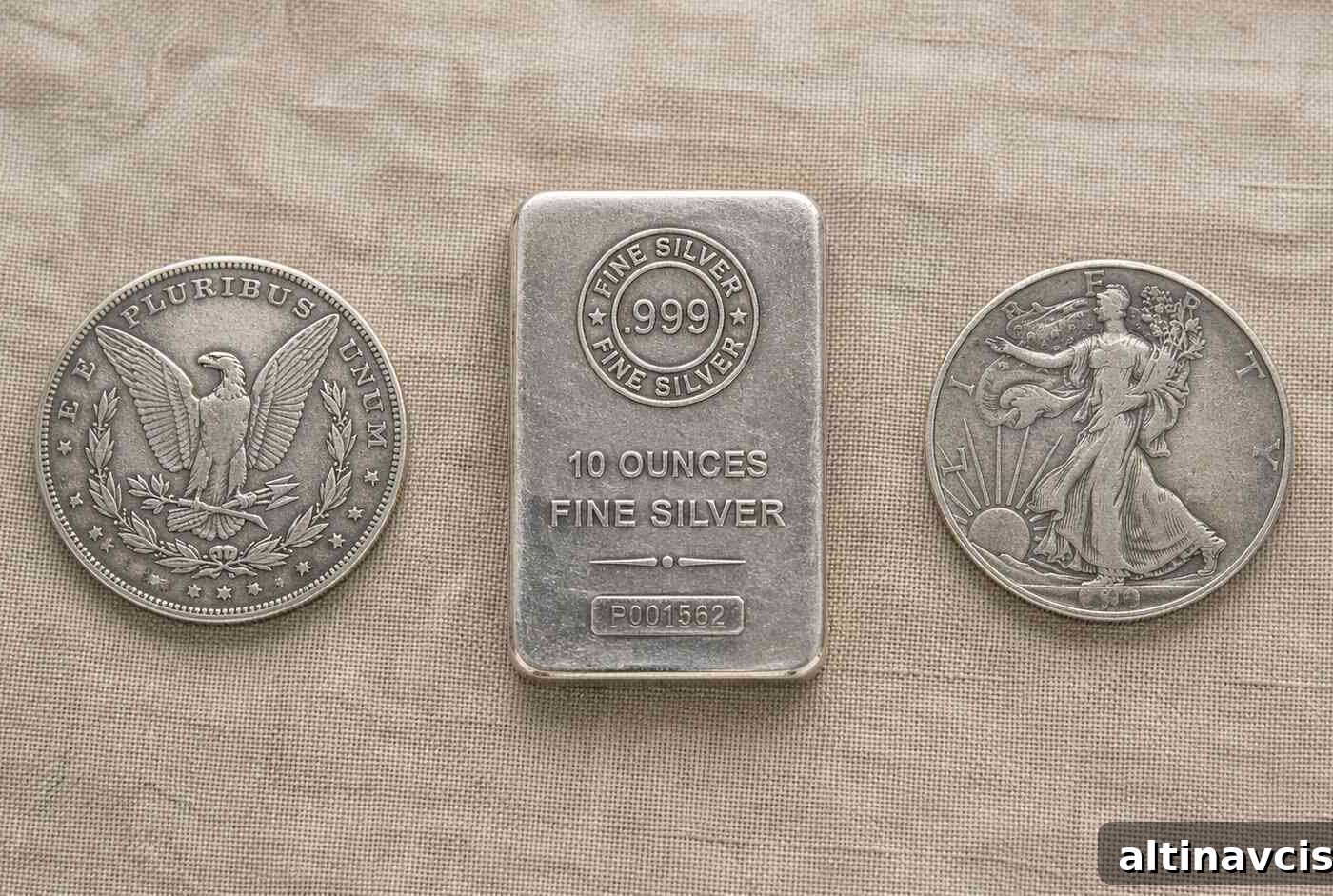
Physical silver is sold primarily in three formats. Although the metal content can be identical, each format carries distinct costs and uses:
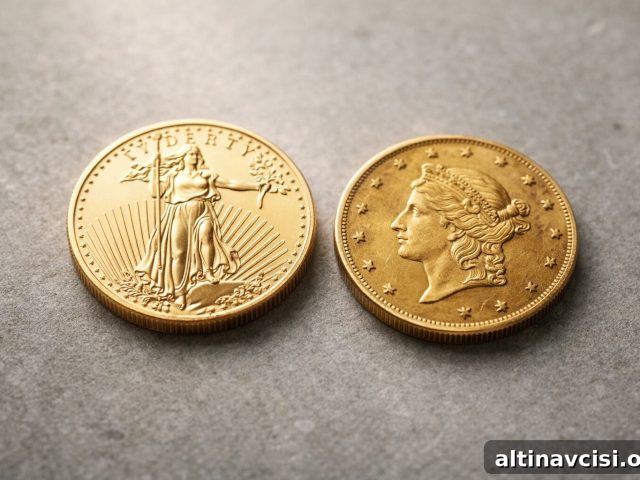
Silver coins are produced by sovereign government mints (for example, the U.S. Mint, Royal Canadian Mint, Perth Mint). They carry a nominal face value and legal-tender status—features that boost recognition and ease of resale. Popular bullion coins include the American Silver Eagle, Canadian Silver Maple Leaf, and Austrian Vienna Philharmonic. That government association is largely symbolic from a value perspective; you would not spend a Silver Eagle at its $1 face value when spot silver is near $79/oz.
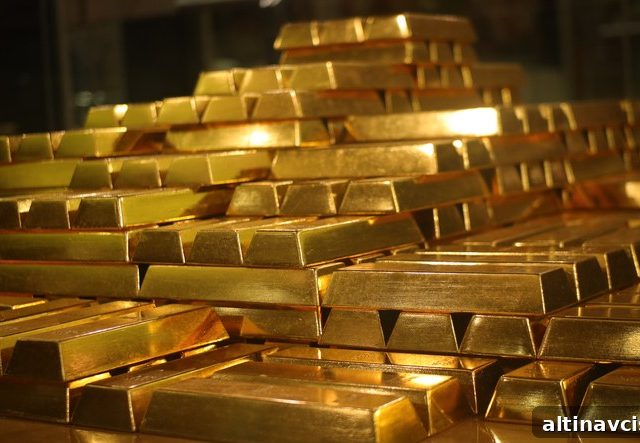
Silver bars are refined, rectangular pieces stamped with weight, purity (often .999 or .9999), and the refiner’s mark. Major refiners include names like Valcambi, PAMP Suisse, Asahi, and the Royal Canadian Mint. Bars come in sizes from 1 oz up to 1,000 oz (Good Delivery) and generally offer the lowest per-ounce premium, especially in larger sizes.
Silver rounds are privately minted, coin-shaped pieces without legal-tender status. They match coins in appearance and purity but usually carry lower premiums because private mints have lower production costs. Rounds can be a cost-efficient way to build ounces if you prioritize price over automatic IRA eligibility or universal recognition.
How Much Over Spot Will You Pay?
Premiums—the markup above spot—are the most important factor when buying physical silver. They cover minting costs, dealer margins, and market demand. Although the metal is the same, premiums vary dramatically by format. Typical premium ranges in April 2026 were approximately:
- American Silver Eagles: 20–25% over spot (roughly $95–$99/oz at $79 spot).
- Canadian Maple Leafs and other sovereign coins: 15–20% over spot (around $91–$95/oz).
- Silver rounds (private mint): 5–10% over spot (about $83–$87/oz).
- 1 oz silver bars: 3–8% over spot (roughly $81–$85/oz).
- 10 oz silver bars: 3–6% over spot per ounce—bulk discounts typically apply.
- 100 oz silver bars: 2–4% over spot per ounce—the lowest cost-per-ounce option for retail buyers.
These premium differences compound over time. On a $5,000 purchase, choosing 100 oz bars over American Silver Eagles could yield roughly 8–12 more ounces for the same investment. Over multiple purchases and years of accumulation, that gap becomes significant.
Are Silver Coins Worth the Premium?
If you value liquidity and quick resale more than absolute cost efficiency, yes.
Sovereign coins are instantly recognizable to dealers worldwide. That recognition usually translates into faster transactions and better recovery of premium when you sell—especially during market stress. Coins also tend to retain a higher percentage of their original premium at resale than bars or rounds. For investors building positions under about $10,000, or those funding a precious metals IRA, government coins often make the most practical sense.
Common IRA-eligible coins include the American Silver Eagle (1 oz, .999 fine), the Canadian Silver Maple Leaf (1 oz, .9999 fine), the Austrian Vienna Philharmonic (1 oz, .999 fine), and various Perth Mint issues such as the Silver Kangaroo or Kookaburra.
Do Silver Bars Give You the Most Metal Per Dollar?
Yes. Bars—especially large ones—offer the lowest cost per ounce and therefore deliver the most metal for a given investment.
A 100 oz bar from a reputable refiner often carries a 2–4% premium, while an American Silver Eagle can run 20–25% over spot. On a $20,000 purchase, that difference can translate into dozens of extra ounces in favor of bars. That makes bars attractive for long-term accumulation when you do not need to sell in small increments.
Size choices matter:
- 1 oz bars: Easy to sell in small lots; moderate premium.
- 10 oz bars: Popular for stacking—lower per-ounce premium than 1 oz bars.
- 100 oz bars: Lowest per-ounce premium; best for large positions but less liquid and often subject to dealer verification.
- 1,000 oz Good Delivery bars: Institutional standard and impractical for most retail investors without professional storage and handling.
For IRAs, bars must typically be .999 fine or better and come from an accredited refiner to qualify.
What Are Silver Rounds Good For?
Rounds offer a coin-like shape at near-bar prices, making them a practical middle ground for stacking.
Well-known privately minted rounds (from established brands) trade with low premiums and are easy to sell to reputable dealers. Generic or obscure rounds, however, can be harder to move and may recover less of their purchase premium. Rounds are generally not IRA-eligible unless issued by an approved refiner, so they work best for non-IRA accumulation layered on top of a coin position that provides liquidity.
Coins, Bars, or Rounds — Which Should You Buy?
Your budget, time horizon, and whether you need IRA eligibility determine the optimal mix:
- Bars are best for large purchases ($10,000+), long-term holding, and maximizing ounces per dollar.
- Coins are best for liquidity, smaller positions, international resale, and IRA funding.
- Rounds are a cost-efficient middle layer when IRA rules don’t apply and you want coin-shaped pieces at lower premiums.
Many experienced buyers combine all three: a coin layer for instant liquidity, a bar layer for cost efficiency, and rounds when their premiums represent clear value.
Where Should You Store Physical Silver?
Storage choice depends on the size of your holding and whether it sits inside an IRA.
Home storage can work for smaller stacks (a few hundred ounces or less). Invest in a high-quality, floor-bolted, fire-resistant safe and verify insurance coverage—standard homeowner policies often cap metals coverage and may require a rider.
Professional vault storage is appropriate for larger positions. Reputable custodians offer segregated storage (your metal identified separately) and charge annual fees typically in the range of 0.5–1% of value. For IRAs, metal must be held by an IRS-approved custodian; home storage is not permitted.
IRA rules are specific
Silver held in a self-directed precious metals IRA must meet a minimum fineness of .999 (99.9%) and come from an approved government mint or accredited refiner. American Silver Eagles and Canadian Maple Leafs typically qualify automatically. Most private-mint rounds do not meet IRA requirements unless issued by an accredited refiner, and all IRA metals must be stored with an approved custodian.
People Also Ask
What is the best silver to buy for investment in 2026?
A combination: sovereign coins for liquidity and IRA eligibility, plus 10 oz or 100 oz bars from accredited refiners for cost-efficient accumulation. Rounds can supplement non-IRA holdings when premiums are attractive.
How much over spot should I pay for silver?
Reasonable 2026 ranges: 3–8% for bars, 5–10% for rounds, and 15–25% for government coins. Premiums rise during heavy buying; buying in calmer markets reduces cost.
Is now a good time to buy silver?
Silver was trading near $79/oz in April 2026, about 34% below its January high. The market still faces structural deficits and growing industrial demand, so whether to buy depends on your time horizon and risk tolerance.
What purity does silver bullion need to be for an IRA?
Minimum .999 fine (99.9%) and produced by an approved government mint or LBMA/COMEX-accredited refiner. The metal must be held by an IRS-approved custodian.
Which silver refiners are most trusted?
Widely accepted, accredited refiners include PAMP Suisse, Valcambi, Asahi Refining, Johnson Matthey, and the Royal Canadian Mint; their products typically qualify for IRA inclusion and are broadly accepted in the market.
Choose Your Format
Coins for instant liquidity, bars for the best metal-per-dollar, and rounds for a cost-efficient middle ground. The metal itself is the same; the format affects cost, ease of sale, and account eligibility. Match format to your objectives, control premiums, store appropriately, and let the market fundamentals—which continue to show a multi-year supply deficit—work over your investment horizon.
SOURCES
1. BlackRock — Gold & Silver: Prices, Volatility, What’s Next
2. Silver Institute — World Silver Survey 2026: Global Silver Investment Outlook and Market Deficit
3. CBS News — Coverage on silver bars vs. coins
4. GoldSilver — How to buy silver bars and related investor guides
Disclaimer: This content is informational only and is not investment advice. Consult a licensed financial adviser before making investment decisions.
You may also like:
- Is Gold Still a Strategic Asset for Your Portfolio?
- Best Gold Investment in 2026: Bars, Coins, IRA or ETF?
- What Happens to Gold When the Dollar Crashes?
- Gold’s Role as a Safe Haven: Historical Perspective
- Is Gold at Fair Value? Comparative Model Analysis
Popular Topics
Picked from the archive
-
01
 Topics
Federal Reserve Pauses While Debt Soars: Gold Outlook
-
02
Topics
Treasury Secretary Urges Fed Rate Cut After Revised Jobs Report
-
03
Topics
Why Metals Led Markets in 2025 and What It Means for 2026
-
04
Topics
Numismatic vs Bullion Coins: Which Should You Buy?
-
05
Topics
How the Current Gold Rally Compares to Past Bull Markets
-
06
Topics
World Gold Council: Gold Nears Technical Break as Markets Stall
-
07
Topics
Central Bank Gold Sales and Their Impact on Prices
-
08
Topics
Gold at $3,400 as Markets Await Aug 28, 2025 PCE Data