How to Buy Gold in 2026: Step-by-Step Guide for Beginners
Gold is trading near $4,800 per ounce in April 2026 — about 14% below its all-time high of $5,589.38 set on January 28, 2026. For first-time buyers, the safest route is to purchase recognised bullion coins or bars from a reputable dealer and then store them in an insured professional vault or securely at home. The structural drivers behind gold’s value — persistent inflation, central bank buying, and currency debasement — remain in place. This guide walks you through every step.
Buying gold for the first time is easier than it appears. After the January 2026 peak, prices corrected roughly 14% and now sit near $4,800 per ounce — a gap many investors view as a buying opportunity. But the more important issue is the process: coins or bars, physical or paper, home storage or vault? This guide answers those questions so you can buy gold safely and confidently.
Why Should Beginners Buy Gold Right Now?
Gold plays three key roles in a portfolio: an inflation hedge, crisis insurance, and a long-term store of value. Each remains relevant in 2026.
Inflation has been resilient despite central bank tightening. When fiat currency loses purchasing power, an asset that cannot be printed becomes more attractive. In 2025 gold rose about 67% — its strongest annual gain since 1979, according to industry commentary. Institutional demand is also significant: many central banks continue to acquire large quantities of metal, signaling concern about currency debasement and geopolitical risk.
Unlike interest-bearing assets, gold does not pay dividends or coupons. Its value lies in preserving purchasing power and providing a tangible store of wealth during periods when paper currencies face pressure.
Your Gold Buying Guide Most investors overpay when they buy gold, then overpay again when they sell. This guide explains exactly what to own — and why.
What Types of Gold Can You Buy?
Gold investment divides into two main categories: physical gold and paper gold. Many beginners underestimate how different these are, and that misunderstanding often leads to costly errors.
Physical Gold — Coins, Bars, and Rounds
Physical gold means holding the metal itself. The common forms are:
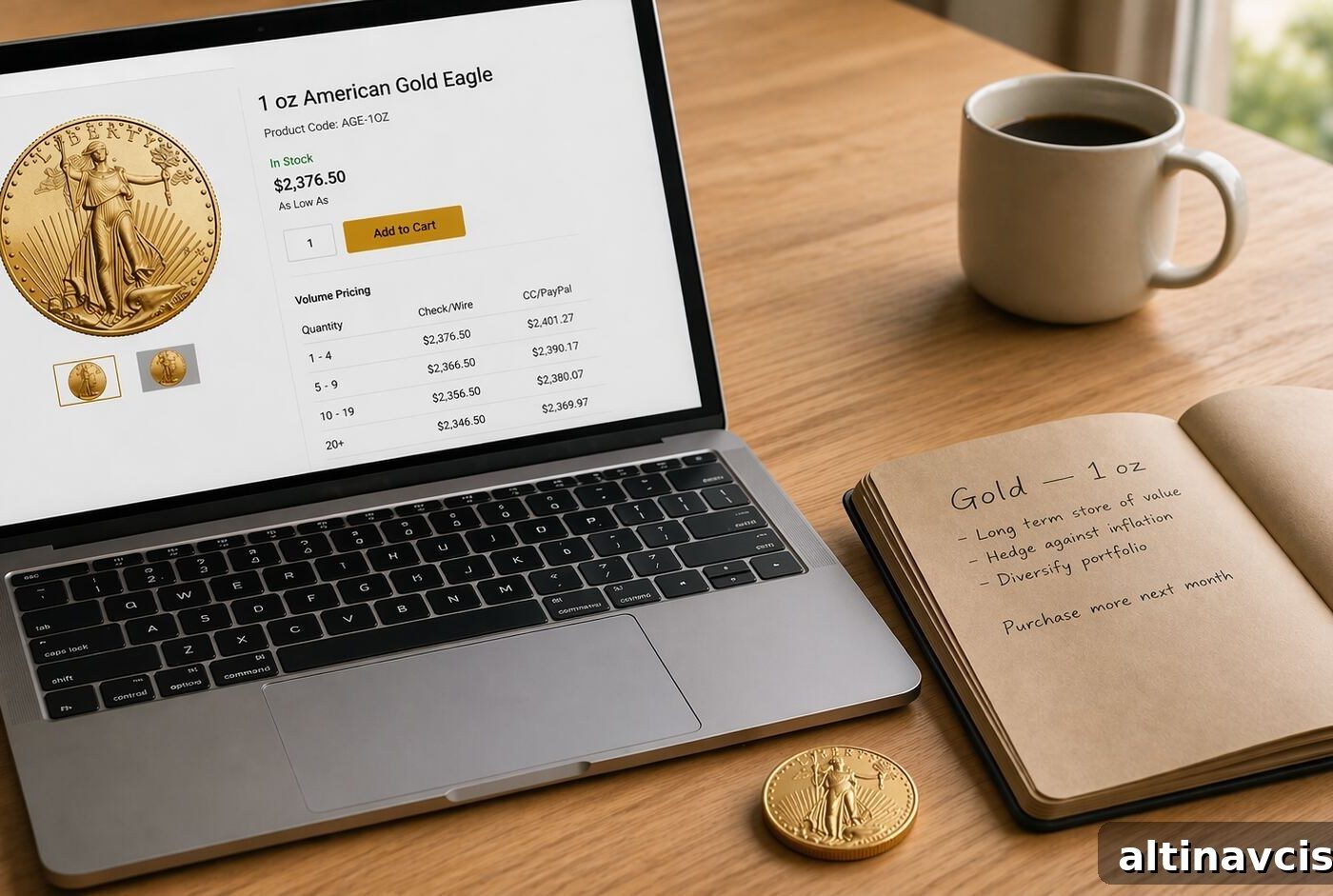
- Sovereign coins: Examples include the American Gold Eagle, Canadian Maple Leaf, and South African Krugerrand. These government-backed coins are widely recognised for weight and purity and are highly liquid for first-time buyers.
- Gold bars: Bars come in sizes like 1 oz, 10 oz, and 1 kilogram. Bars usually carry lower premiums over spot price than coins, making them more cost-effective for larger purchases.
- Private mint rounds: These are typically cheaper than sovereign coins but are less recognised in secondary markets. Rounds are better for experienced buyers who accept the liquidity trade-off.
For most beginners, sovereign coins are the best start. The American Gold Eagle is especially familiar and easy to resell globally.
Paper Gold — ETFs, Futures, and Mining Stocks
Paper gold provides price exposure without owning physical metal. Exchange-traded funds (ETFs) track the gold price, futures contracts derive value from the commodity, and mining stocks represent ownership in extraction companies. With paper gold you own a financial claim rather than the metal itself. In normal markets this can be sufficient, but in a systemic crisis tangibility and custody matter.
How Do You Buy Gold? Step by Step
The process is straightforward: choose a reputable dealer, pick the product, pay, and decide on storage. Once familiar, the purchase flow can take under ten minutes.
Step 1 — Choose a Trusted Dealer
Look for transparent pricing, a clear buyback policy, and a verifiable track record. Verified third-party reviews, a listed phone number, and premium disclosure on product pages are positive signs. Beware of high-pressure sales tactics, unusually low premiums, or evasiveness on storage and buyback terms.
Step 2 — Select Your Product
Beginners should consider a 1 oz American Gold Eagle or Canadian Maple Leaf — both are government-backed, widely accepted, and easy to resell. For investments of $10,000 or more, bars typically offer lower premiums per ounce and are more efficient at scale.
Step 3 — Pick Your Payment Method
ACH bank transfers and wire transfers are common and generally the lowest-cost options. Credit cards are convenient but often add a 3–4% processing fee. If buying through a retirement account, use a self-directed IRA process as described later.
Step 4 — Choose Storage or Delivery
Decide whether to take physical delivery or use professional vault storage before you buy. This choice affects insurance, liquidity, and security — and should be planned in advance.
Where Should You Store Your Gold?
Home storage and professional vault storage are the main options. Both have valid use cases, but many long-term investors prefer institutional vaults for insurance, security, and ease of liquidation.
Home Storage
Pros: Immediate access, full personal control, no recurring storage fee.
Cons: You assume the security burden. Standard homeowner or renter insurance often excludes bullion without a specific rider. For holdings above a few thousand dollars, a high-quality safe is the minimum, and even then theft, fire, and flood remain risks. Home storage suits smaller positions or investors who want immediate possession.
Professional Vault Storage
Professional vaults store metals allocated and segregated in your name inside institutional facilities, with insurance and audited custody. Many established logistics firms operate such vaults, keeping holdings separate and identifiable. For larger allocations, vault storage reduces the practical risks of physical ownership.
Should You Try to Time the Gold Market?
No. Timing markets consistently is difficult, even for professionals. Dollar-cost averaging — buying a fixed dollar amount on a regular schedule — is a superior strategy for most investors. It removes emotion and smooths entry prices over time. In volatile bull markets, the cost of waiting for a perfect entry often exceeds the cost of imperfect timing.
For example, gold reached $5,589 in January 2026 and later corrected about 14%. Investors who bought during earlier lows saw substantial gains. Regular, disciplined purchases help capture long-term trends without attempting to time each swing.
Can You Buy Gold in an IRA?
Yes. A self-directed IRA allows holding physical gold inside a tax-advantaged account. The IRS requires minimum purity standards for eligible metals: bars generally must be .995 fine or better, and most qualifying coins meet similar standards. The American Gold Eagle is a statutory exception that qualifies despite being .9167 fine; that exception does not automatically apply to other .9167 coins.
The typical process: open a self-directed IRA, fund it by rollover, select approved products, and have the metals delivered directly to an IRS-approved depository rather than to your home. Tax treatment depends on account type: traditional IRAs defer tax on growth, while Roth IRAs offer tax-free qualified withdrawals.
What Mistakes Do First-Time Gold Buyers Make?
Common, avoidable mistakes usually stem from impatience or poor research:
- Buying from unverified dealers. Stick to dealers with long histories, transparent pricing, and independent reviews.
- Overpaying for collectible coins. Numismatic premiums can be 50–300% above spot and rarely add investment value; bullion is the safer investment choice.
- Choosing illiquid products. Obscure rounds or unusual bar sizes are harder to resell; sovereign coins and major-brand bars have deep secondary markets.
- Skipping storage planning. Decide on home or vault storage before buying.
- Trying to time the market. Consistent purchases typically outperform attempts to pick precise tops and bottoms.
- Confusing paper gold with ownership. ETFs and other financial claims differ from holding physical metal — in extreme scenarios, that distinction can be crucial.
Stay On Top of Gold & Silver Prices
Get important market alerts sent straight to your inbox.
People Also Ask
Is it safe to buy gold online?
Yes, if you use a reputable dealer that publishes transparent pricing, offers insured shipping, and has a clear buyback policy. Verify independent reviews and avoid dealers who hide premiums or fees.
What is the best gold coin for beginners?
The American Gold Eagle is the common recommendation: widely recognised, liquid, and government-backed for weight and purity, making it easy to resell.
How much does it cost to buy 1 oz of gold in 2026?
As of April 2026, gold trades near $4,800 per ounce. Expect a dealer premium on top of spot — typically $50–$150 per ounce for sovereign coins and lower premiums for bars. Check current dealer prices before ordering.
Is physical gold better than a gold ETF?
They serve different goals. An ETF provides price exposure and liquidity, while physical gold gives direct ownership and no counterparty risk. For true crisis protection and tangibility, physical metal is stronger.
Where is the safest place to store gold?
A professional allocated vault run by an established security company offers the highest standard: holdings are segregated, identifiable, and insured. For many investors, allocated storage in an institutional facility is the preferred option for larger positions.
Gold Rewards the Investor Who Starts
Buying gold does not need to be complicated. Choose recognised bullion — sovereign coins for beginners and bars for larger allocations. Use a dealer with a verifiable track record and a clear buyback policy. Arrange storage before the metal arrives, and focus on long-term time horizons rather than short-term market timing.
The case for gold remains intact: central bank buying and persistent inflation continue to support demand. The trend that took gold from roughly $2,624 in early 2025 to $5,589 in January 2026 rests on solid macro drivers rather than a speculative spike.
When you decide to act, rely on reputable dealers, understand the fees and storage choices, and build your position with discipline.
SOURCES
1. World Gold Council — Gold Market Commentary, December 2025
2. J.P. Morgan Global Research — Gold Price Predictions 2026
3. GoldSilver — Vault Storage information (company resource)
4. IRS — Publication 590-A (eligibility rules for retirement accounts)
5. U.S. Code, Title 26, Section 408 (retirement account rules)
This article is informational only and is not investment advice. Precious metals investing involves risk, including potential loss of principal. Price data referenced is from April 2026. Consult a qualified financial advisor before making investment decisions.
You May Also Like
- Silver Price Forecast 2026–2027: The bull case and bear case
- How to Buy Silver Bars: The Investor’s Guide
- Why Silver Falls While Gold Rises: What It Means for You
- Why Are BRICS Countries Buying So Much Gold?
- Gold Price Forecast 2026–2027: Key Predictions from Top Analysts
- Is Now a Good Time to Buy Gold? The Macro Case
- Is Gold a Better Investment Than Bitcoin Right Now?
- What the Silver-to-CPI Ratio Reveals That Spot Price Hides
Popular Topics
Picked from the archive
-
01
 Topics
Money Manager Sues Fed Chair Powell to Force Public Rate Talks
-
02
Topics
Kansas City Fed President Urges Steady Rates Amid High Inflation
-
03
Topics
Industrial Demand Sends Silver and Platinum 28% Ahead of Gold
-
04
Topics
Swiss Precious Metals Association Warns on 39% US Gold Tariffs
-
05
Topics
Gold Pulls Back as US and China Sign New Trade Deal
-
06
Topics
Gold Drops on Trade Optimism; Dollar, Fed Cuts Lend Support
-
07
Topics
Gold Price Today: Why This Week Could Spark a Rally
-
08
Topics
Why Gold Is Outperforming Nvidia in 2025