Gold Price Down 10% From War Peak but Up 46% This Year
This morning the U.S. Bureau of Labor Statistics released the Producer Price Index (PPI) for March 2026 — the first wholesale inflation reading since the U.S. naval blockade of Iranian oil through the Strait of Hormuz. The headline: final demand rose 4.0% year‑over‑year, the strongest annual producer inflation rate since the conflict began. That reading shows inflation pressures moving through the supply chain and signals additional cost pressure for consumers ahead.
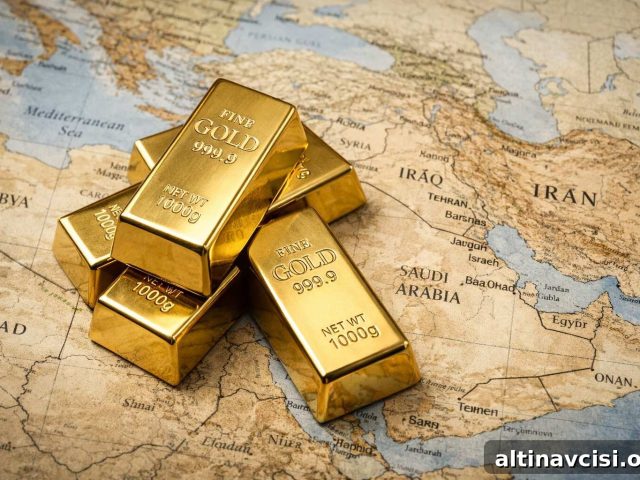
Gold is trading around $4,761. Headlines that say “gold is falling” miss the nuance. The apparent contradiction between rising inflation and a pullback in gold is worth unpacking: different forces act on gold over different time horizons.
Why is gold falling when inflation is rising?
Higher inflation typically pushes expectations for monetary policy: it can strengthen the dollar and delay expected rate cuts. Both of those outcomes are short‑term headwinds for a non‑yielding asset like gold, which can see price pressure when rates look set to stay higher for longer. At the same time, rising inflation erodes the purchasing power of cash and paper savings over months and years — precisely the structural justification many investors have for holding gold. In short, short‑term price dynamics and the long‑term case for gold are not mutually exclusive; they simply operate on different timelines.
What the PPI actually tells us
The Producer Price Index measures price changes at the business or producer level — effectively the costs companies face before they pass prices along to consumers. When producer costs spike, firms may absorb part of the increase briefly, but sustained cost pressures are generally passed through to consumer prices. In this cycle, the gasoline surge that helped push March’s Consumer Price Index (CPI) to 3.3% was preceded by moves at the producer level. Today’s PPI reading acts as a pipeline indicator: it shows what’s likely to arrive in consumer inflation data in the coming weeks and months.
In March, final demand rose 0.5% for the month and 4.0% year‑over‑year, up from 3.4% in February. Goods prices jumped 1.6% on the month, confirming energy pass‑through through goods and transportation sectors. Services held broadly flat in March, which is the only real silver lining: for now, inflation remains concentrated in energy and goods rather than broadly embedded across the service economy. That distinction is important because once services begin to trend higher, inflation becomes much harder to dislodge.
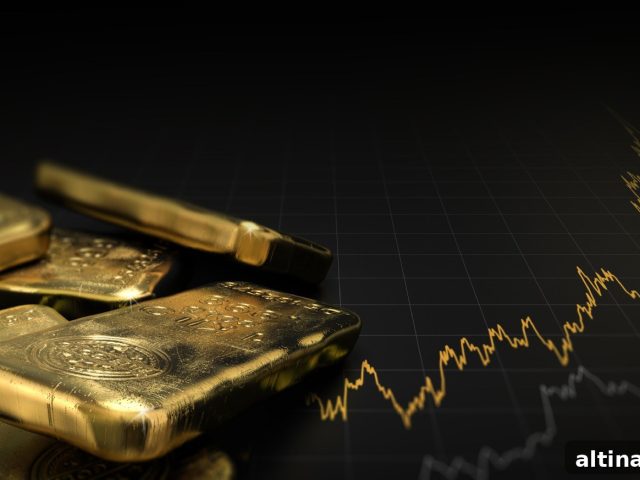
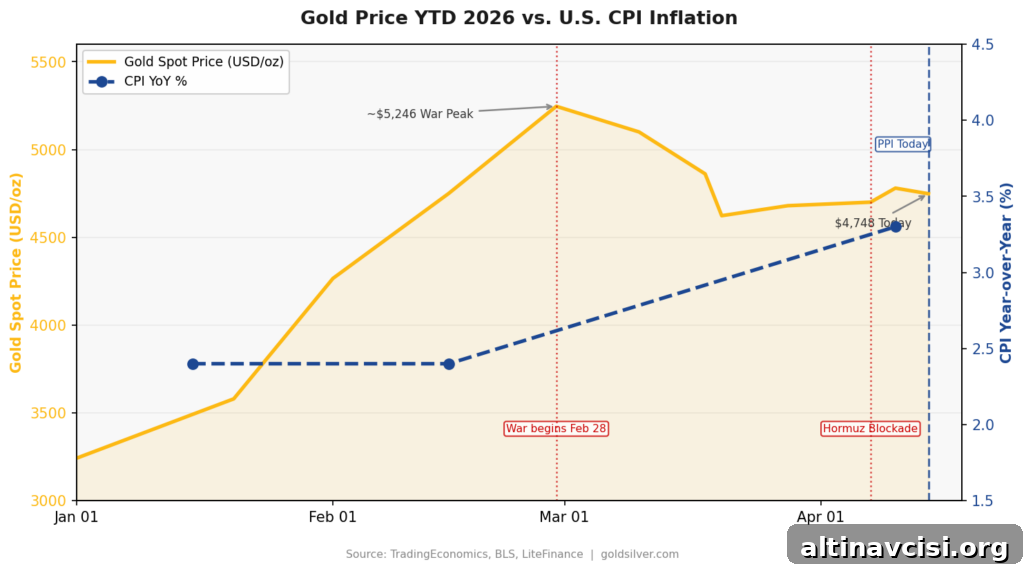
Gold rallied aggressively earlier in the year — surging roughly 60% from January to its conflict‑era peak before retreating about 10% as ceasefire hopes and dollar strength took hold. CPI rose from lower levels into the mid‑3% range in March, and the producer pipeline now shows additional near‑term pressure.
Economists continue to expect some additional hot inflation prints as energy costs filter through transportation and durable goods. That dynamic supports the view that producer inflation remains an active risk to headline consumer inflation and monetary policy assumptions.
Is the gold correction a bear signal or a buying opportunity?
Gold at $4,761 is below its recent peak near $5,300. That pullback is not necessarily a broken thesis; much of the money leaving the market was speculative and short‑term in nature. Momentum traders and performance chasers entered during the rapid 2025–2026 surge. When volatility rises or short‑term drivers shift, those players often exit first, amplifying price swings.
By contrast, structural buyers — long‑term investors, central banks, and institutions focused on preservation of purchasing power — have been steady. Years of above‑target inflation have permanently eroded the real value of dollar savings, and no temporary rate pause restores that lost purchasing power. For investors focused on long‑term wealth preservation, gold’s role is unchanged.
Are central banks still buying gold?
Yes. Central bank demand for gold continues, though monthly totals can fluctuate. In January 2026, global central banks added net purchases, and the list of buyers has broadened to include countries resuming accumulation after gaps. Sovereign buyers typically do not chase short‑term momentum; they accumulate gold to diversify reserves and reduce exposure to conditional, dollar‑denominated assets. The geopolitical events of recent years — including sanctions and asset freezes — reinforced the case for holding unencumbered physical gold in national vaults.
What happens at the April 29 Fed meeting?
Markets expect no policy change at the April 29 meeting. With producer inflation running at a 4.0% annual pace, the Federal Reserve faces limited room to cut rates without risking further upside in inflation. At the same time, raising rates too aggressively risks tipping an already war‑stressed economy toward recession. The Fed is therefore likely to hold policy steady in the near term, leaving a policy rate that satisfies neither growth advocates nor disinflation proponents. That uneasy balance creates a slow‑burn pressure that can support the long‑term case for gold as an inflation hedge.
The bottom line
A short‑term correction in gold does not invalidate the larger case for owning precious metals. The 4.0% annual PPI print underscores that inflationary pressure remains present in the pipeline, reinforcing the rationale for assets that preserve purchasing power. Speculative flows amplify price volatility, but structural demand from long‑term investors and central banks remains an important foundation under gold prices.
In market cycles like this, the “tourists” — momentum‑driven traders — often leave first. Patient capital typically waits and watches for the next phase. For investors focused on inflation protection and reserve diversification, the fundamental story for gold remains intact.
SOURCES
TradingEconomics — Gold Price, April 14, 2026; APMEX — Gold Price Today; U.S. Bureau of Labor Statistics — Consumer Price Index, March 2026; U.S. Bureau of Labor Statistics — Producer Price Index, March 2026; CNBC and other reporting on March 2026 inflation developments; World Gold Council — Central Bank Gold Statistics and related commentary.
This article is for informational purposes only and does not constitute financial or investment advice. Always consult a qualified financial advisor before making investment decisions.
You may also like
- Gold Outranks the Dollar at Central Banks — What It Means for Your Savings
- Hormuz Blockade Sent Gold Down 2% — Why That Could Be Bullish
- Gold Jumps as Geopolitical Risk Spurs Safe‑Haven Demand
- Why U.S. Debt Dynamics Matter for Gold Prices
- CPI Hits 3.3% and the Debate Over Stagflation
- War Risk and Long‑Term Gold Price Scenarios
Popular Topics
Picked from the archive
-
01
 Topics
Money Manager Sues Fed Chair Powell to Force Public Rate Talks
-
02
Topics
Gold Safe-Haven Demand Returns After 9-Day Selloff
-
03
Topics
ETF Inflows Propel Gold Demand to Highest H1 Levels Since 2020
-
04
Topics
Top Economist Warns of U.S. Recession as Fed Options Shrink
-
05
Topics
10-Year Treasury Yield Rises After Tariff News, Services Data
-
06
Topics
Gold Demand in China Drops 3.5% in H1 2025
-
07
Topics
Should You Buy Gold Now During a Dip? Timing and Risks
-
08
Topics
Gold Tops $5,300 as Fed Meeting Sends Dollar Tumbling