Stagflation and Gold: What the Selloff Means for Investors
🌅 Morning News Nuggets | Today’s top stories for gold and silver investors
March 23rd, 2026 | Brandon Sauerwein, Editor
Gold fell nearly 4% today and silver is trading around $68 after a roughly 17% drop in five days. The current market is putting the relationship between stagflation and precious metals to a rigorous test — and recent Fed commentary has added complexity to that picture.
Is the U.S. Heading Into a Stagflation Trap?
The Federal Reserve left its policy rate unchanged this week, holding the federal funds target at 3.50%–3.75%. But the central bank adjusted its outlook in a way that matters: it trimmed its 2026 rate‑cut forecast from two reductions to one, and raised its core PCE inflation projection to 2.7%. One policymaker even signaled a possible rate hike in 2027—an outcome that warrants attention.
Markets reacted quickly. The 10‑year Treasury yield jumped to about 4.2% and the dollar strengthened toward the 99.9 level. Both moves increase the headwinds for gold and other non‑yielding assets by raising the opportunity cost of holding them.
At the same time, geopolitical developments — especially the conflict involving Iran — have produced a familiar stagflation mix: an oil‑driven supply shock that lifts inflation while eroding consumer purchasing power. Economists have already trimmed growth expectations for 2026; for example, Oxford Economics revised its U.S. growth forecast down from 2.5% to 1.9%.
That combination — sticky inflation alongside weakening growth — creates a dilemma for the Fed. Inflation that is persistently above target complicates the case for cutting rates, while fragile economic activity makes tighter policy riskier. Historically, when this kind of tension resolves it has often shifted in favor of monetary easing, and such shifts have been among the more reliable long‑term drivers for gold.
The inflationary pressure is visible to consumers today in a place everyone notices: the gasoline pump.

The Edge Every Investor Needs
Smarter precious metals investing starts here. The Nuggets Newsletter delivers concise market analysis, Fed updates, trend briefs, and educational content so you can stay informed.
Sign up for concise market alerts and analysis (form removed for this edition).
Americans Are Paying $370 Million More a Day on Gas
If it feels like everyday expenses are squeezing household budgets, the numbers back that up. Gasoline prices have risen by more than a dollar since the start of the Iran conflict, with the national average reaching about $3.94 per gallon. That rise acts like a stealth tax on consumers — a price increase they cannot avoid.
Wilmington Trust chief economist Luke Tilley has described the effect as being “like a tax, very similar to a tariff” because it leaves households with less discretionary income. The timing compounds the sting: tax cuts and other policy changes had been expected to support a strong refund season, but higher energy costs can offset that benefit.
Research cited by economists suggests that sustained gas prices near $3.60 per gallon would add roughly $60 billion in consumer energy spending, potentially erasing the boost households might otherwise receive. The impact extends beyond passenger vehicles. Diesel is at a multiyear high, and because about 70% of U.S. goods move by truck, higher fuel costs raise input costs throughout the economy — a burden that tends to fall hardest on lower‑income households.
When inflation is elevated while growth softens, the resulting stagflation dynamics are exactly what central banks fear. The Fed is monitoring these developments, and so far a straightforward policy response has been elusive. Meanwhile, the same forces pushing up the dollar and Treasury yields are applying pressure to precious metals markets.
Is Gold’s Worst Week Since 1983 a Warning — or a Buying Opportunity?
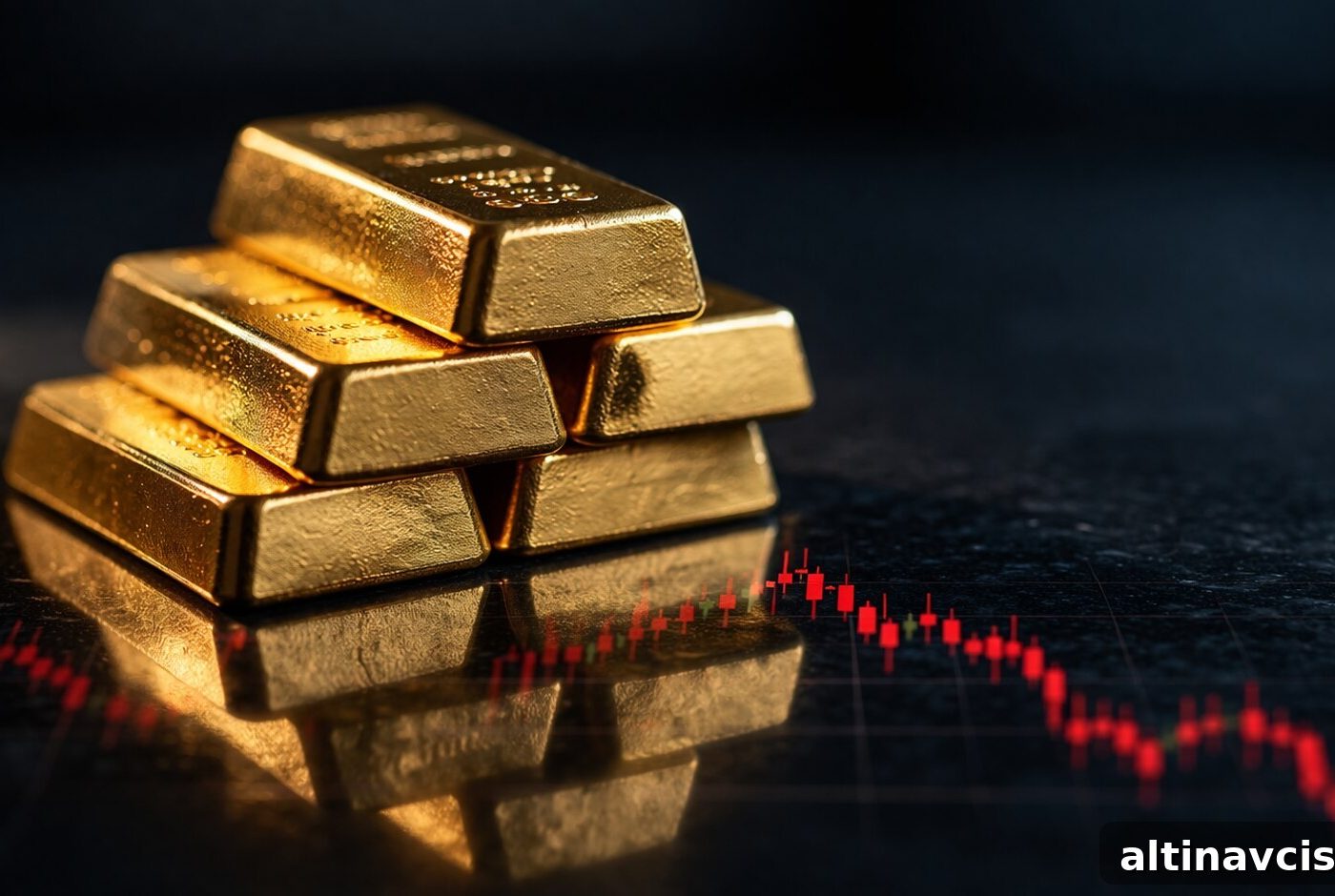
Gold has suffered a sharp selloff over the past week. Spot gold fell to roughly $4,288 per ounce on Monday, completing a decline of more than 10% in a single week — the worst weekly performance since 1983. A modest rebound has moved prices back toward $4,400, but the recent losses remain significant.
This drop does not necessarily reflect a long‑term loss of faith in gold as a store of value. Instead, it looks like a classic liquidity and deleveraging event: when markets panic, investors sell whatever they can access quickly. Non‑yielding assets like gold are not immune from forced selling if holders need cash or are unwinding positions across portfolios.
The chain of events is familiar: higher oil prices lift inflation expectations and push out the timeline for rate cuts, which strengthens the dollar and lifts Treasury yields — all of which are negative for gold in the short term. Yet many major banks and analysts continue to view recent weakness as a repricing rather than a fundamental reversal of gold’s long‑term case, especially if energy disruptions continue.
If Silver Is a Safe Haven, Why Is It Crashing During a War?
Silver’s recent collapse has surprised many investors. The metal plunged to a low near $61 last week before recovering to about $68, representing roughly a 17% fall in five days. Gold also fell more than 10% over the same period.
Geopolitical crises often boost demand for safe havens, and after Russia’s invasion of Ukraine in 2022 gold rallied swiftly. What’s different now is the dominant role of oil. The supply shock from the conflict involving Iran has pushed crude higher, fueling inflation concerns that in turn strengthen the dollar and drive up yields. That sequence has absorbed much of the immediate safe‑haven demand that might otherwise have flowed into metals.
The result is an unusual, temporary negative correlation: as oil climbs, silver and gold have weakened. Most market participants see this as a liquidity and leverage‑driven repricing, not a definitive reassessment of silver’s structural value. Until oil stabilizes or the dollar and yields retreat, however, precious metals will face headwinds.
Did You Know All U.S. Precious Metals Vaults Are Clustered Near New York City?
Physical storage of precious metals is an underappreciated market vulnerability. Currently, most exchange‑approved precious metals vaults in the United States are located within roughly 150 miles of New York City. That geographic concentration creates a systemic risk: a major local disruption — whether natural, cyber, or security‑related — could produce outsized effects on market functioning.
To address that risk, lawmakers recently introduced the SILVER Act — the System Integrity through Licensed Vault Expansion and Resilience Act. The proposal aims to require at least two approved depositories in each U.S. time zone, promoting geographic diversification of storage and better alignment between market infrastructure and the nation’s mining and refining footprint, much of which is in the West.
Industry voices support the change. As one executive observed, the legislation is fundamentally about aligning market infrastructure with real‑world supply chains. Given the recent volatility in precious metals trading, momentum for structural reform is understandable and timely.
Stay On Top of Gold & Silver Prices
Get important market alerts sent straight to your inbox.
Live price widget removed for this edition.
Enter your email on the publishers’ site to receive alerts (form disabled here).
You May Also Like
- Gold and Silver Prices Today: Metals Slide as Central Banks Hold Firm
- Gold Price Drop Today — War Rages as the Debt Hits $39 Trillion
- Gold Price Outlook: Fed Holds, PPI Climbs
- Gold Price Today Holds at $5,000 — What’s Driving It
- Gold Price Forecast 2026: Fed, Iran, and the $6,000 Question
Popular Topics
Picked from the archive
-
01
 Topics
Inflation Jumps 2.7% in June as Tariff Impacts Emerge
-
02
Topics
Gold Prices Slip as Tariff Tensions Rattle Markets
-
03
Topics
Why Big Banks Predict Gold Prices Over $6,000
-
04
Topics
Gold and Silver Prices Today: Fed Moves, Stagflation Outlook
-
05
Topics
Silver Price Jumps 7% as Bulls Gain Momentum
-
06
Topics
How to Take RMDs from a Precious Metals IRA
-
07
Topics
Investors Flock to China Gold ETFs as Inflows Hit Record
-
08
Topics
Gold Price Drops 0.7% as Markets Weigh Trade Truce