How to Take RMDs from a Precious Metals IRA
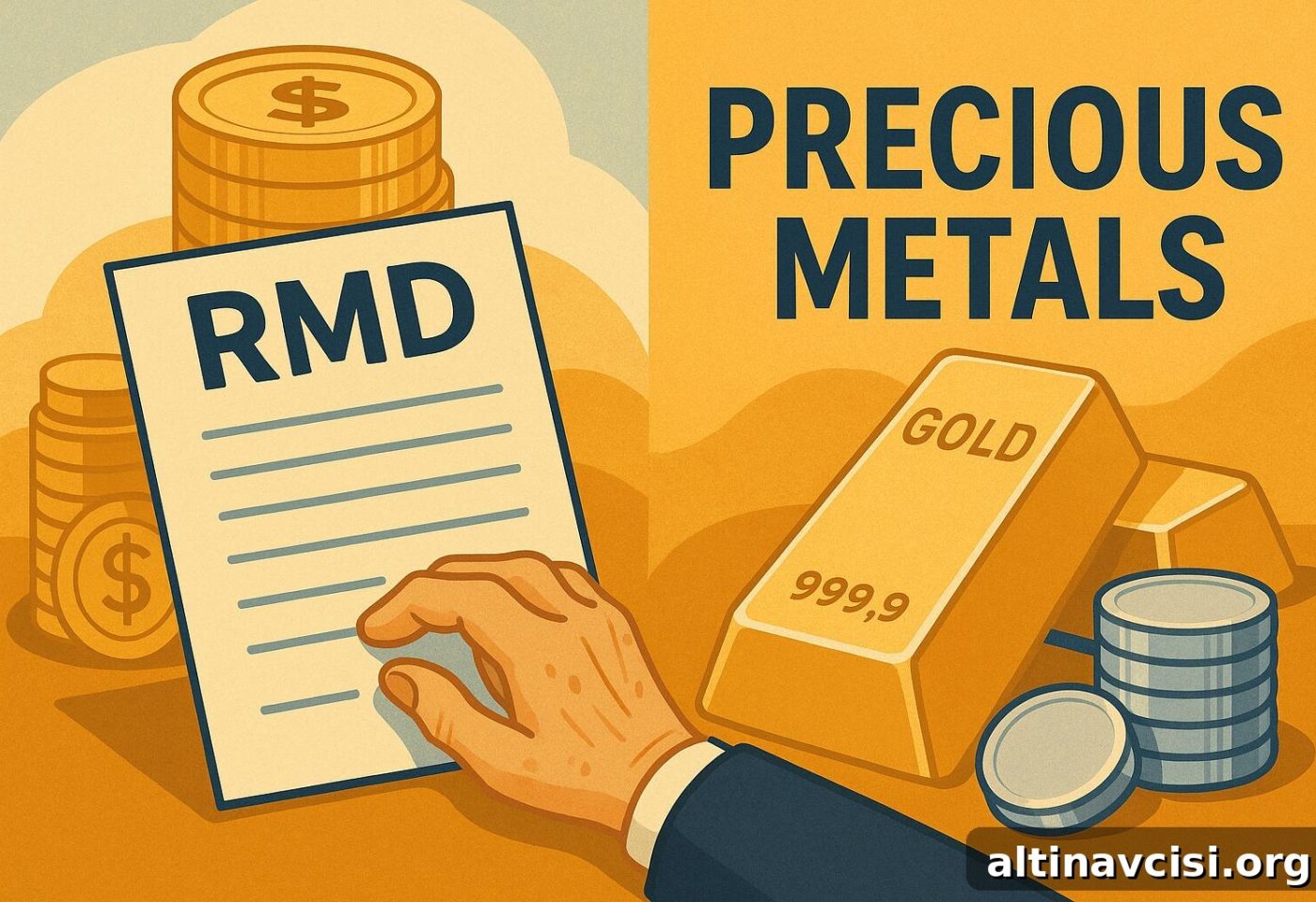
If you are turning 73, it’s time to review your Required Minimum Distributions (RMDs), especially if part of your retirement savings is held in a Gold IRA. Knowing how RMDs interact with precious metals helps you meet IRS requirements while preserving your retirement strategy. Whether you plan to take a cash withdrawal or receive an in-kind distribution of physical gold or silver, this guide explains what to expect and how to plan.
Understanding RMD Requirements for Gold IRAs
If you were born in 1951–1959, the IRS requires you to begin taking RMDs from traditional retirement accounts, including Gold IRAs. RMDs ensure that tax-deferred savings eventually generate taxable income.
How your RMD is calculated:
- Your RMD is based on your IRA’s December 31 value from the previous year divided by your life expectancy factor from the IRS Uniform Lifetime Table.
Example:
- If your Gold IRA was worth $200,000 on December 31, 2024, and your life expectancy factor is 26.5, your 2025 RMD would be approximately $7,547.
Key deadlines:
- First RMD: April 1 of the year after you turn 73.
- Subsequent RMDs: December 31 of each year.
- Penalty for missing an RMD: 25% of the amount not withdrawn.
Can You Take RMDs in Physical Gold or Silver?
Yes. You may satisfy your RMD with an in-kind distribution, which means receiving physical gold or silver from your IRA rather than cash. This option appeals to investors who prefer to hold metals personally while meeting their mandatory withdrawal requirement.
How in-kind distributions work:
- Ownership transfer: Your IRA custodian transfers specified coins or bars from the IRA to you personally.
- Valuation: The metals’ fair market value on the distribution date counts toward your RMD and is the taxable amount for that distribution.
- Tax basis and taxation: The fair market value on the date of distribution becomes your taxable distribution amount and your cost basis for any later sale of those exact metals. Metals that remain inside the IRA are not taxable until distributed.
- Delivery and storage: After distribution, you can take physical delivery, arrange private storage, or place the metals in a secure third-party vault. You will typically be responsible for shipping and insurance costs associated with delivery or storage.
Note: Even when you take an RMD in physical gold or silver, you owe income tax on the distributed value in cash; the distribution itself is reported as taxable income.
Tax Implications of Precious Metals RMDs
Withdrawals from a traditional Gold IRA—whether cash or physical metals—are taxed as ordinary income at your current tax rate. For in-kind distributions, the taxable amount is the metals’ fair market value on the distribution date.
Additional tax considerations:
- If you later sell the distributed metals, any appreciation above the distribution value may be taxed as collectibles, which are subject to different capital gains treatment (with a maximum rate that can be higher than standard long-term capital gains rates).
- Plan distributions during lower-income years when possible to reduce tax impact.
- Consider qualified charitable distributions or other tax-aware strategies to offset taxable income if appropriate for your situation.
Strategic Ways to Manage Your RMD Precious Metals
You can satisfy RMD requirements while maintaining precious metals exposure by using these practical strategies:
- Partial cash distributions: Sell only the amount of gold or silver needed to meet your RMD and keep the remainder invested for potential growth.
- Rebalance your portfolio: Use the RMD as a chance to realign your holdings. If gold has outperformed, taking distributions from that portion can restore your intended allocation.
- Aggregate RMDs: If you have multiple IRAs, calculate your total RMD across accounts and withdraw from one or more accounts as you choose, giving flexibility to preserve a Gold IRA if desired.
- Consider Roth conversions before RMD age: Converting some funds to a Roth IRA prior to turning 73 can reduce future RMDs, since Roth IRAs have no lifetime RMDs for the original owner.
Work with a qualified custodian and tax advisor to select the mix of distributions and timing that best matches your tax and retirement goals.
Step-By-Step: Taking Your RMD
Follow this timeline to stay organized and compliant:
- January: Calculate your RMD using your prior year-end account value and the IRS life expectancy table.
- February–March: Decide whether to take cash, sell a portion of your metals for cash, or request an in-kind distribution.
- 60 days before your deadline: Contact your IRA custodian to begin the distribution process. Metal transactions and secure delivery arrangements may require additional lead time.
- If taking physical metals: Arrange secure delivery or third-party storage and confirm any shipping and insurance arrangements.
- Keep records: Maintain documentation of valuations, distribution details, and tax forms (such as Form 1099-R) to support tax reporting and future sales.
Planning Ahead for RMDs in Precious Metals
Successful management of RMDs that involve precious metals starts with foresight. Work with a trusted custodian and tax advisor to:
- Integrate RMDs into your broader retirement income plan.
- Minimize taxes while preserving important holdings of gold and silver.
- Stay proactive about deadlines, documentation, and valuation methods.
Investing in Physical Metals Made Easy
Conclusion
RMDs do not need to derail a precious metals strategy. With careful planning—choosing between cash and in-kind distributions, timing withdrawals to manage tax brackets, and keeping clear records—you can meet IRS rules while preserving the benefits of holding gold and silver in retirement.
Disclaimer: GoldSilver is not a tax advisor. This information is provided for educational purposes only and should not be construed as tax or financial advice. Always consult a qualified tax professional for guidance specific to your situation.
People Also Asked
Can I take my RMD in physical gold or silver instead of cash?
Yes. Custodians can process in-kind distributions that transfer specific coins or bars to you personally. The metals’ fair market value on the distribution date counts toward your RMD and is the taxable amount to report.
What are the IRS rules for RMDs from a Gold IRA?
RMDs generally begin at age 73, with the first distribution due by April 1 following the year you turn 73 and subsequent distributions due by December 31 each year. These rules apply to Gold IRAs just as they do to other traditional IRAs. A missed distribution can trigger a substantial penalty.
How do I calculate the amount of my RMD for a Gold IRA?
Divide your Gold IRA’s December 31 market value from the previous year by your life expectancy factor from the IRS Uniform Lifetime Table. For example, $200,000 ÷ 26.5 = about $7,547.
What are the tax implications of taking RMDs from a Gold IRA?
RMDs from a traditional Gold IRA are taxed as ordinary income. For in-kind distributions, taxes are due on the fair market value of the metals when distributed. If you later sell those metals, any appreciation above the distribution value may be subject to collectibles capital gains treatment.
What strategies can I use to preserve my gold holdings while meeting RMD requirements?
Strategies include partial cash distributions, aggregation across multiple IRAs, timing Roth conversions before RMD age, and rebalancing as part of a broader retirement income plan. Discuss options with your custodian and tax advisor to determine the best approach for your situation.
Get Gold & Silver Insights Direct to Your Inbox
Join thousands of investors who receive market analysis, updates, and offers delivered weekly.
Popular Topics
Picked from the archive
-
01
 Topics
Gold Price Outlook: ING Says Market Needs a New Catalyst
-
02
Topics
How the IRS Taxes Gold vs Silver
-
03
Topics
Senate Tax Bill Adds 3.3 Trillion to Deficit, Raising Alarm
-
04
Topics
Gold Price Jumps Amid Fed Chair Uncertainty
-
05
Topics
US Dollar Falls to Multi-Week Lows as Fed Cut Nears in September
-
06
Topics
Gold Surges to Record High as $5,000 Target Nears
-
07
Topics
Citi Predicts Gold Price to Reach $3,100 to $3,500 in Q3
-
08
Topics
Gold Surges 11% in September Amid Washington, DC Shutdown