Gold in Recessions: Historical Performance for Investors
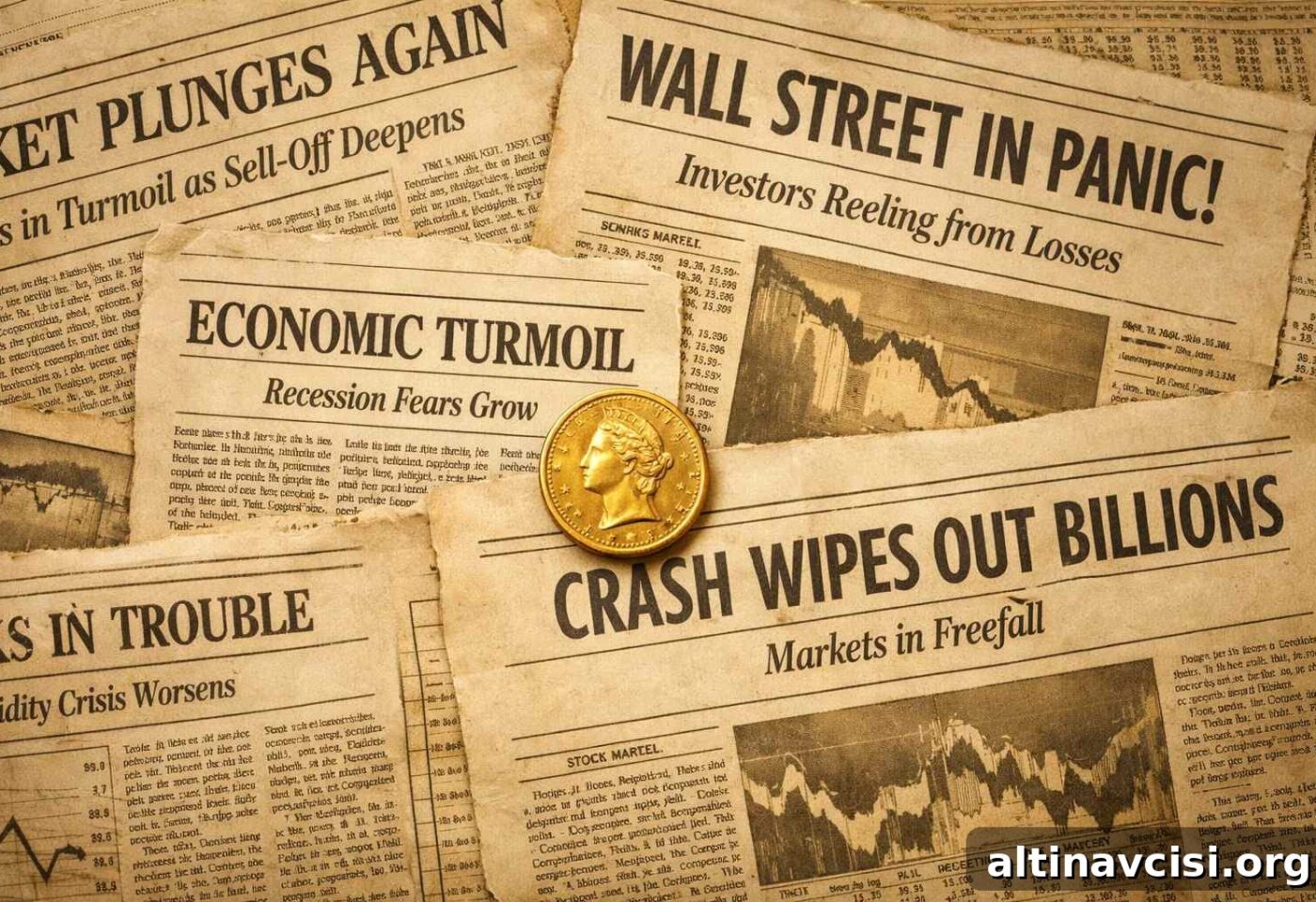
When the U.S. stock market lost nearly 90% of its value during the Great Depression, one asset stood out: gold. It didn’t merely hold its value — the government repriced it upward by 69% as authorities acknowledged what markets had already signaled: paper money had become overvalued relative to gold. That episode established a pattern repeated across major economic downturns and remains vital context for investors preparing for the next recession.
Gold vs. the Stock Market: A Side-by-Side View
Gold
S&P 500
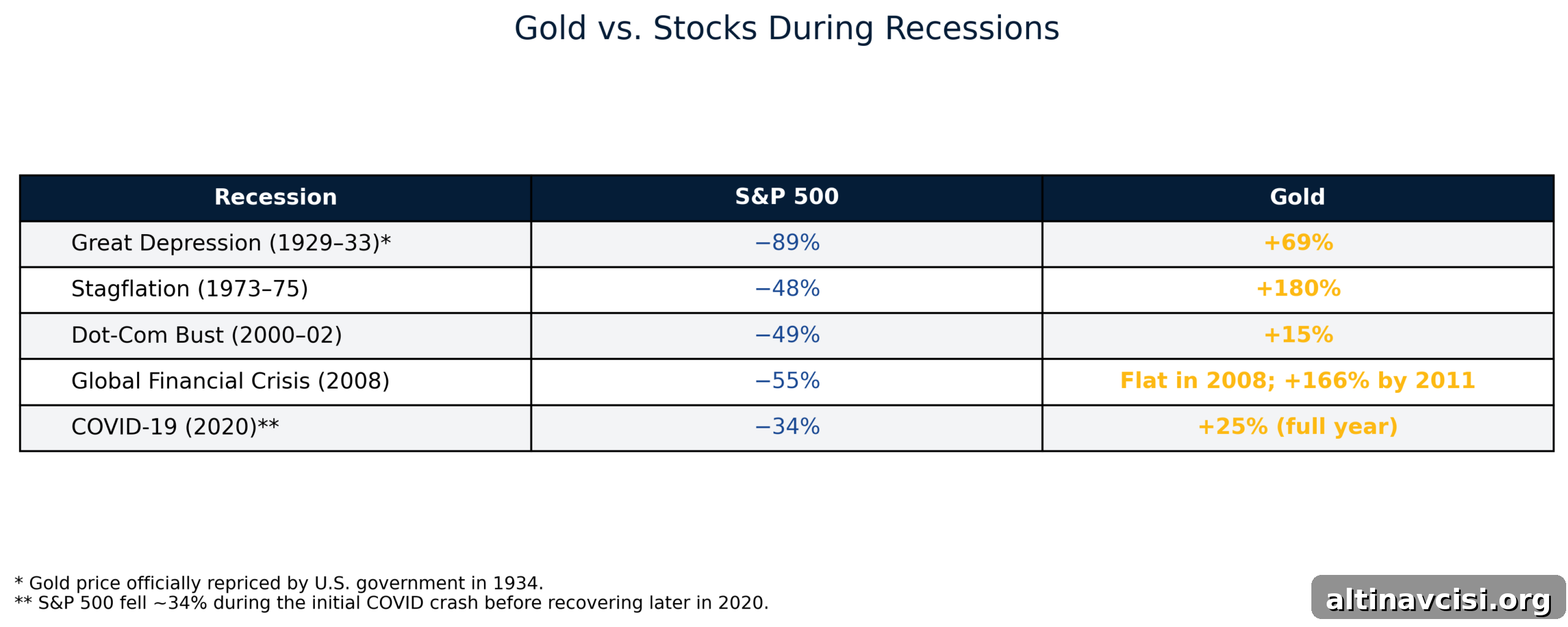
Gold shows resilience or gains in most major recessions while equities have often declined sharply. See the section breakdowns below for context.
Gold returns are shown as peak recession-period performance. The 2008 S&P figure reflects peak-to-trough loss; gold was essentially flat for the 2008 calendar year. The 1929–33 gold figure reflects government repricing.
Does gold’s reputation as a safe haven stand up to scrutiny, or is it largely folklore? To answer that, it helps to look at what actually drives gold during downturns and why the relationship with broader markets is more dependable than many investors expect.
The Financial System Isn’t Safer — And You Know It
As systemic risks grow, gold and silver are expected to remain attractive stores of value in 2026 and beyond.
Subscribe for practical insights on adding crisis-resistant holdings to your portfolio. No forms are embedded here — check the bottom of the page for ways to stay informed.
What Actually Drives Gold During Recessions
Start by looking at the mechanics behind gold’s price movements. A recession is commonly defined as two consecutive quarters of negative GDP growth, though official determinations often consider a broader set of indicators. Three consistent forces push gold during downturns:
- Currency debasement and stimulus: Governments typically respond to recessions with fiscal stimulus and central banks with easier monetary policy. Those measures can erode the purchasing power of fiat currencies, making a non‑issuable asset like gold comparatively more attractive.
- Lower interest rates: Recessions prompt central banks to cut rates, reducing the opportunity cost of holding a non‑yielding asset. When cash and bonds pay little or nothing, gold’s lack of yield matters less.
- Fear and safe‑haven demand: Market stress increases demand for assets perceived as safe. Gold benefits from risk aversion and the flight to capital preservation.
These forces interact and reinforce one another, creating a recurring historical pattern: gold tends to preserve purchasing power and sometimes appreciate meaningfully during severe downturns.
The Great Depression (1929–1933)
Between 1929 and 1932 the U.S. stock market lost nearly 90% of its value. At the time gold was fixed by law at $20.67 per ounce. The Roosevelt administration later raised the official price to $35 per ounce under the Gold Reserve Act of 1934 — a government‑mandated increase of about 69% that reflected the effective debasement of the dollar. Investors with exposure to gold or gold mining equities fared far better than holders of most other asset classes during this period.
The 1970s Stagflation Crisis
The 1970s combined an oil shock with rising inflation and stagnant growth — stagflation. After the dollar’s formal link to gold ended in 1971, gold became free to trade at market prices. Over the 1970s it rose dramatically: by 1980 the metal was trading at many times its early‑decade levels. During the 1973–1975 recession, gold appreciated sharply while equities fell, helping cement the metal’s modern role as an inflation and recession hedge.
The 2001 Dot‑Com Recession
When the tech bubble burst, the S&P 500 fell substantially between 2000 and 2002. Gold, already in the early stages of a multi‑year bull market, rose roughly 15% in that period as equities weakened. Geopolitical shocks such as the September 11 attacks added to safe‑haven demand, showing that gold’s appeal extends beyond pure financial crises into broader uncertainty.
The 2008 Global Financial Crisis
The collapse of Lehman Brothers in 2008 plunged markets into panic, and the S&P 500 lost more than half its value from peak to trough. Gold’s behavior was mixed: during the acute liquidity squeeze in late 2008 it dipped briefly as investors sold assets to raise cash, but it finished the calendar year essentially flat. As central banks deployed quantitative easing and kept rates near zero, gold resumed a powerful advance, peaking much higher in subsequent years. The temporary late‑2008 decline was a liquidity event rather than a permanent failure of gold as a hedge.
The COVID‑19 Recession (2020)
The pandemic triggered the sharpest GDP contraction in recent memory. Gold reacted quickly: from the start of 2020 to its August peak it rose more than 36%, and for the full year it gained roughly 25%. Silver also saw large moves. This episode showed how fast precious metals can respond to crisis conditions and how their gains can persist beyond the immediate shock.
What the Data Actually Tells Us
Across nearly a century of recessions, gold has shown four recurring characteristics:
- Preserves purchasing power: Even when not surging in nominal terms, gold tends to hold value relative to depreciating currencies during periods of heavy stimulus and loose monetary policy.
- Benefits from rate cuts: Central bank easing reduces the opportunity cost of owning a non‑yielding asset, which often supports higher gold prices.
- Responds to fear: Recessions generate risk aversion and safe‑haven demand that favor gold.
- Low correlation with stocks: Gold’s imperfect correlation with equities makes it useful as a diversification tool, not a direct substitute for growth assets.
Temporary liquidity crunches — such as those seen in late 2008 and March 2020 — can cause short‑term drops in gold alongside other assets. Investors who tolerate these temporary dislocations and remain patient historically have captured the metal’s longer‑term recovery and upside.
How Much Gold Should You Hold Before a Recession?
Financial advisers commonly recommend allocating a portion of a diversified portfolio to precious metals, often between 5% and 15% depending on risk tolerance. Conservative investors may favor 8–10% in gold with a modest silver allocation to prioritize capital preservation. Moderately risk‑tolerant investors might split allocations more evenly between gold and silver, while aggressive investors may allocate more to silver for higher volatility and upside potential, while still keeping a core gold position.
Timing is difficult: by the time a recession is officially declared, markets may have already priced in risk. Dollar‑cost averaging—buying fixed amounts at regular intervals—lets investors build exposure over time without trying to time exact peaks or troughs.
The Bottom Line
History does not guarantee future returns, but it does establish reliable patterns. From the Great Depression through the COVID‑19 contraction, gold has repeatedly shown the ability to preserve wealth when other assets face severe pressure. Its role in a portfolio is not to deliver rapid riches but to provide stability and downside protection when the financial system is stressed. For investors considering whether to include gold before the next recession, the historical record supports its use as a defensive allocation in a diversified portfolio.
Stay On Top of Gold & Silver Prices
Receive timely market alerts and price updates delivered to your inbox.
Sign up with your preferred news or market service to get alerts. This page does not host a signup form directly.
People Also Ask
Does gold go up during a recession?
Gold frequently holds its value or rises during recessions. For example, during the 2008 financial crisis gold was essentially flat while equities plunged, and it then rallied strongly in the years that followed. In 2020, gold delivered roughly 25% for the year amid the pandemic shock.
Why does gold increase in value during economic downturns?
Three main forces support gold during downturns: central bank rate cuts reduce the cost of holding non‑yielding assets; fiscal stimulus raises inflation and currency‑debasement concerns; and investor fear increases demand for safe havens.
What was the gold price during the 2008 recession?
Gold began 2008 near $850 per ounce and ended the year around $870, making it essentially flat in a year when many other assets suffered severe losses. It rose substantially afterward as monetary easing took effect.
How does gold compare to stocks during a recession?
Gold and equities often move in different directions during major downturns. This low correlation is why advisors commonly recommend a modest allocation to gold as a portfolio diversifier rather than a growth substitute.
Is gold a reliable investment during a recession?
Based on decades of recession data, gold has consistently preserved purchasing power and often outperformed equities during major downturns. Short‑term volatility can occur, but the historical record supports gold’s role as a defensive allocation in diversified portfolios.
This article is for informational purposes only and does not constitute financial or investment advice. Past performance is not indicative of future results. Consult a qualified financial advisor before making investment decisions.
You May Also Like:
- Gold vs Inflation: What long-term data reveals about purchasing power
- Why silver tends to be more volatile than gold and what that means for investors
- Silver bars vs. silver coins: considerations for collectors and investors
- Gold vs. silver: roles, risks, and portfolio strategy
- Short-term noise vs. long-term signal: interpreting precious metals price moves
Popular Topics
Picked from the archive
-
01
 Topics
Gold Price Could Reach USD 5,000 by 2026: Institutional Forecast
-
02
Topics
Silver Squeeze Pushes Silver Prices Above $51
-
03
Topics
Gold Rises as Bitcoin Slips and Bubble Fears Grow
-
04
Topics
Bessent Urges 1.5% Rate Cut, Boosting Gold Prices
-
05
Topics
Tariff Deadline Fears Push Gold Prices Up as Other Metals Slide
-
06
Topics
Gold Fields Urges Major Miners to Boost Gold Exploration
-
07
Topics
Tech Giants Drive 90% of Earnings Growth Despite Trade War Fears
-
08
Topics
Brazil Threatens Retaliation After Trump Imposes 50% Tariff