Metal Price Surge Undermines Confidence, Widens Affordability Gap

Daily News Nuggets | Today’s top stories for gold and silver investors
February 25th, 2026 | Brandon Sauerwein, Editor
Trump Shrugs Off Affordability Fears in State of the Union
In his State of the Union address, President Trump reiterated his economic priorities and emphasized strong job growth and increased investment while largely downplaying widespread voter concerns about affordability. He highlighted headline measures of economic strength, but provided few concrete proposals to address mortgage costs, rising insurance premiums, and the everyday expenses that continue to squeeze middle-income households.
Markets are watching closely. Consumer sentiment has been fragile for months and affordability remains a central political and economic issue as the year progresses. When households feel stretched, discretionary spending falls, which feeds into corporate earnings, growth forecasts and ultimately monetary policy decisions. That slow-burn dynamic can be easy for markets to overlook until it starts to bite.
The clearest manifestation of this pressure is the housing market, where disparities between wages and ownership costs are becoming more pronounced.
The Housing Affordability Crisis in One Chart
Despite robust headline GDP and employment figures, housing affordability tells a different story. Federal Reserve Bank data show prospective buyers now must earn substantially more than the average U.S. household just to afford a typical home. The gap between actual median household income and the income required to meet standard mortgage-payment-to-income benchmarks has widened since 2020.
Actual Median Household Income and Qualified Income
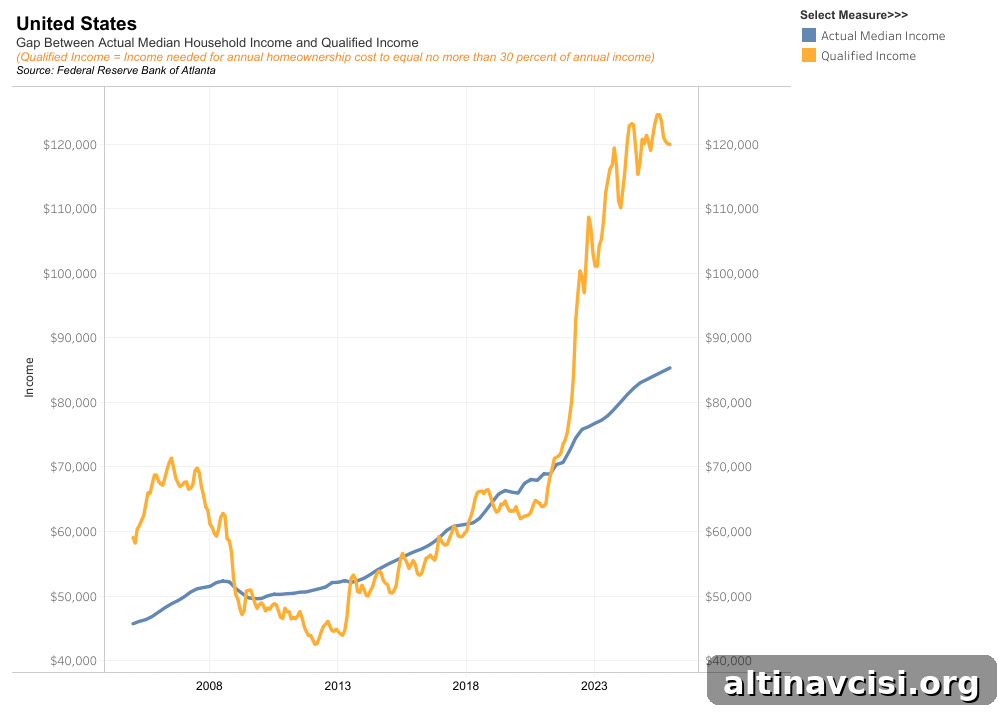
The term “qualified income” denotes the income a household would need to keep mortgage, taxes and insurance under the conventional 30%-of-income affordability threshold. Since 2020, that required income has surged while median household earnings have only inched up, leaving many potential buyers priced out. Though recent modest declines in mortgage rates offer some relief, home prices remain historically high and available inventory is limited. For many families the arithmetic simply doesn’t work.
Housing is the largest recurring expense for most households, so when ownership becomes markedly less affordable it colors consumer confidence and spending patterns in ways that headline job or GDP numbers cannot easily erase.
There is a small silver lining: easing mortgage rates could help nudge demand, but they are not a cure-all for an affordability problem rooted in supply constraints and cumulative price gains.

The Edge Every Investor Needs
Smarter precious metals investing starts here. The Nuggets Newsletter brings market insights, Federal Reserve updates, global trend analysis, educational videos and more.
Subscribe to receive timely market alerts and analysis on gold and silver.
When Lower Rates Raise Bigger Questions
U.S. mortgage rates have eased from recent peaks, offering a modest reprieve for buyers and sellers. The average 30-year mortgage rate has fallen to levels not seen in months, and five-year adjustable rates are more affordable than they were late last year. These moves reflect lower Treasury yields and growing market bets on Federal Reserve rate cuts later in the year.
Lower borrowing costs can stimulate buyer interest heading into spring, but they don’t address the supply shortage and elevated prices that keep ownership out of reach for many households. Importantly, the reason rates fall matters: if yields decline because growth is weakening rather than because inflation is firmly under control, market sentiment shifts toward caution. That distinction can send capital toward safer assets and change the risk calculus for investors.
For consumers, even small shifts in mortgage rates matter. For markets, the broader economic context — growth momentum, inflation persistence and policy uncertainty — determines whether lower rates are a genuine positive or an early warning sign.
Recession Warning Signal Flashes for 13th Straight Month
Consumer mood has improved marginally: the Conference Board’s consumer confidence index inched higher in February, rebounding from a sharper drop in January. But the expectations component — which gauges short-term outlook for jobs, income and business conditions — has remained below a critical threshold for the thirteenth consecutive month. Historically, that sustained low reading has often preceded economic slowdowns.
Survey comments point to prices and cost-of-living pressures as the dominant concerns deterring households from making large discretionary purchases. Instead, spending plans for 2026 favor necessities and small, lower-cost indulgences. That pattern matters for retailers, manufacturers and service sectors that rely on stronger discretionary spending to drive growth.
In short: headline confidence may tick up, but underlying worries about inflation and affordability persist.
While Nobody Was Watching, Silver Climbed 25%
Amid political headlines and trade chatter, silver has quietly staged a sharp rally. Since an early February low, silver has risen more than 25%, reclaiming levels above $90 per ounce. Gold has also advanced, supporting the broader precious metals complex, but silver’s move has been particularly striking.
Several factors are behind the surge: a softer dollar, renewed safe-haven demand amid geopolitical and trade concerns, and changing expectations about Fed policy. When growth worries rise and policy direction becomes uncertain, investors often rotate toward defensive assets — a dynamic that can boost both gold and silver. For metals-focused investors, the recent moves underscore the importance of monitoring macro risks, currency trends and real yields when assessing precious metals exposure.
You May Also Like
- Gold Up 21%, Silver 25% YTD as AI and Inflation Risks Build
- Gold Hits $5,000. Is This the Next Leg Higher?
- Gold Support Levels Firm as Washington Backs Minerals
- Gold Slips Below $5K as Jobs Revisions Rattle Markets
- Gold Near $5,000 as Fed Faces Sticky Inflation
Stay On Top of Gold & Silver Prices
Get important market alerts sent straight to your inbox.
Sign up for price alerts and concise daily analysis focused on precious metals and macro trends.
Popular Topics
Picked from the archive
-
01
 Topics
Gold Price Could Reach USD 5,000 by 2026: Institutional Forecast
-
02
Topics
Silver Squeeze Pushes Silver Prices Above $51
-
03
Topics
Gold Rises as Bitcoin Slips and Bubble Fears Grow
-
04
Topics
Bessent Urges 1.5% Rate Cut, Boosting Gold Prices
-
05
Topics
Tariff Deadline Fears Push Gold Prices Up as Other Metals Slide
-
06
Topics
Gold Fields Urges Major Miners to Boost Gold Exploration
-
07
Topics
Tech Giants Drive 90% of Earnings Growth Despite Trade War Fears
-
08
Topics
Brazil Threatens Retaliation After Trump Imposes 50% Tariff