Gold Price Nears $5,000 as Silver Approaches $100
Daily News Nuggets | Today’s top stories for gold and silver investors
January 23rd, 2026
Precious Metals Close in on Historic Milestones
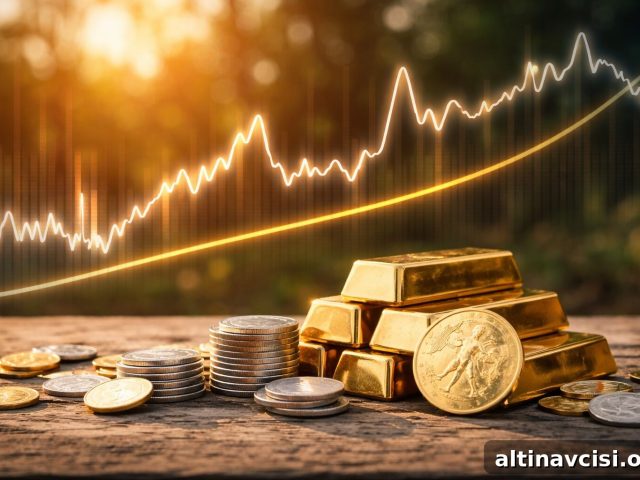
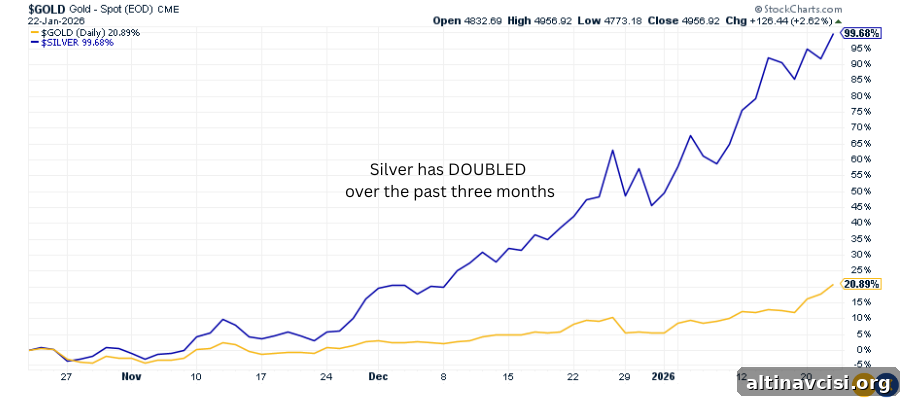
Precious metals are rapidly approaching two major psychological price levels that could reshape investor attention. The gold price is closing in on $5,000 per ounce while silver is pushing toward the $100 mark. Both gold and silver have staged powerful rallies: over the past three months gold has gained more than 20% and silver has nearly doubled. These moves put both metals at or near all-time highs and reinforce their role as central pieces of many portfolios.
When assets approach large round numbers, they naturally attract broader media coverage and retail interest. Headlines amplify the momentum, and conversations on social and financial platforms accelerate. History shows that a meaningful portion of retail capital often arrives after institutional players have already repositioned — which can intensify short-term volatility even as longer-term flows continue.
Analysts and market strategists expect billions of dollars of new retail capital to be drawn into precious metals if those psychological thresholds are crossed. These milestones act as attention magnets that can catalyze fresh inflows from savers, investors, and institutions looking for a store of value amid uncertainty. While momentum is currently strong and both metals remain within striking distance of their targets, investors should weigh entry points, time horizons, and risk tolerance before committing new capital.
Gold and Silver Returns, 3 Months
Bitcoin’s “Digital Gold” Narrative Tested as Precious Metals Surge
As gold approaches $5,000 and silver nears $100, Bitcoin has remained roughly around $89,000, a level nearly 26% below its all-time highs. The divergence between traditional safe-haven metals and Bitcoin raises questions about the extent to which Bitcoin functions as “digital gold” during periods of geopolitical stress and elevated inflation expectations.
In January alone, gold rose about 14% and silver roughly 38%, while Bitcoin traded relatively flat. Market prediction platforms and major institutions have placed odds on gold hitting certain benchmarks sooner than digital assets like Ethereum reaching comparable thresholds. Notably, some large banks have adjusted year-end gold forecasts higher, reflecting stronger demand and tightened supplies.
Geopolitical tensions, central-bank diversification away from the dollar, and persistent inflation concerns are steering capital into proven stores of value. In such conditions, many investors default to assets with long histories of preserving purchasing power. That preference is helping to explain the recent strength in precious metals while testing narratives around new asset classes.

The Financial System Isn’t Safer — And You Know It
As global risks rise, gold and silver are widely expected to remain central to balanced portfolios through 2026 and beyond.
Subscribe for concise market alerts and analysis on gold, silver, and macro drivers. (Form removed for privacy and performance.)
Investors “Quiet Quit” US Assets as Capital Flows to Emerging Markets
Global investors are reallocating capital away from US assets in a trend some strategists call a “quiet-quitting” of American bonds and equities. Emerging market equities have outpaced the S&P 500 so far this year, and the largest emerging-market ETF recorded significant inflows in January. Currencies across parts of Latin America and Asia have also shown renewed strength.
Several factors are driving this reallocation: geopolitical tensions in strategic regions, renewed questions about fiscal sustainability in advanced economies, and the perception that dollar dominance might be less absolute than in prior decades. Emerging markets are attractive because they combine stronger growth prospects, improved fiscal management in many cases, and exposure to sectors—like AI infrastructure—that are expanding globally.
As capital looks for higher returns and diversification, central banks and institutional investors are adjusting reserves and portfolios. Some central banks have announced additional gold purchases, underscoring how official sector demand can dovetail with private flows into precious metals.
Copper Shortage Looms as AI and Electrification Collide
Copper is under growing supply pressure at a time when demand drivers are set to accelerate. Analysts expect demand to rise significantly over the coming decades due to data centers, electric vehicles, renewable energy projects, and elevated defense and infrastructure spending. The International Copper Study Group has projected a notable deficit for 2026, reversing earlier surplus expectations.
Supply-side constraints are structural: mine production growth has slowed, ore grades are declining, accidents and operational setbacks have impacted output, and the lead time to develop new large-scale mines remains long. These dynamics have pushed copper prices to record levels, and S&P Global has warned of the broader economic risks posed by a persistent shortfall in a metal so central to electrification and industrial activity.
Inflationary pressures in commodities rarely remain isolated. Central banks and policymakers are monitoring these trends, since surging input costs can feed through to broader price levels and influence monetary decisions.
Bank of England May Diverge From Fed as Rate Cuts Risk Fueling UK Inflation
A member of the Bank of England’s Monetary Policy Committee has signaled willingness to diverge from the Federal Reserve’s path on interest rates. If the Fed eases policy aggressively, that move could lower global yields, lift equities, and stimulate demand — changes that might put upward pressure on UK inflation and force the BoE to be more cautious on cuts.
UK inflation has been running above the Bank’s 2% target, and forward-looking measures such as wage growth and inflation expectations remain closely watched by policymakers. A divergence in central bank policy stances typically increases cross-border volatility in currencies, bond markets, and commodity prices, which has implications for investors managing global portfolios.
You May Also Like
- Gold Eases on Greenland News, But Banks See $5,400+
- Gold Hits New Record; $5,000 Target in Sight
- Gold Clears $4,700 on Global Turmoil
- Central Banks Keep Buying Gold at Record Prices
- Silver Eyes $100 as Geopolitical Tensions Explode
Popular Topics
Picked from the archive
-
01
 Topics
Job Market Falters as Gold Nears $3,600
-
02
Topics
Trump Threatens EU With 250% Tariffs on Pharmaceuticals
-
03
Topics
US Treasury Yields Rise Ahead of Major Bond Auction
-
04
Topics
Trump $2,000 Stimulus Checks, Auto Loan Crisis and Silver Rally
-
05
Topics
10-Year Treasury Yield Falls Below 4.21% During Holiday Week
-
06
Topics
Gold and Silver Prices: Short-Term Volatility, Long-Term Trend
-
07
Topics
Gold Prices Rise on Fed Policy, Debt Concerns and Asian Demand
-
08
Topics
Gold at $3,400 as Markets Await Aug 28, 2025 PCE Data