Silver Surges Past $70 Amid Conflicting GDP Data
Daily News Nuggets | Today’s top stories for gold and silver investors
December 23rd, 2025
Silver Breaks $70 as Industrial Demand Roars Back
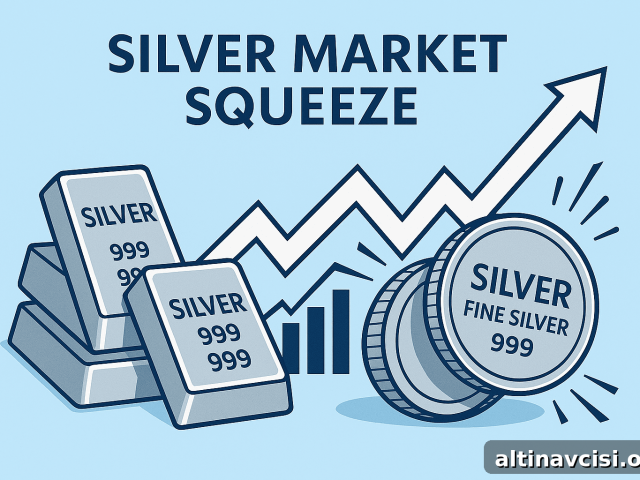
Spot silver surged past $70 per ounce for the first time ever, capping a multi-week rally driven by tight supply and surging industrial demand. Growth in solar panel manufacturing, electric vehicle components, and consumer electronics has pushed refiners to full capacity while many miners, after years of underinvestment, struggle to increase output.
Silver is acting less like a traditional safe-haven metal and more like a high-beta industrial barometer. When robust manufacturing demand meets safe-haven buying amid currency volatility, rapid price moves can follow. If silver sustains levels above $70, expect heightened volatility and continued attention from traders and industrial buyers alike.
This rally underscores how physical demand from industry can quickly alter precious-metals markets. While investors watch price action closely, manufacturers are racing to secure supply for near-term production needs.

The Financial System Isn’t Safer — And You Know It
As risks mount, learn why gold and silver are expected to remain attractive through 2026 and beyond.
Free guide: practical strategies for adding crisis-resistant assets to your portfolio and preserving purchasing power amid market uncertainty.
Gold Buying Shifts as Investors Move Beyond ETFs
A notable shift is underway in how investors accumulate gold. Large funds and family offices are increasingly reducing ETF exposure and opting for allocated bars, coins, and vaulted products. This trend reflects a growing preference for direct ownership and mistrust of intermediary counterparty risk. At the same time, central banks—especially across Asia and the Middle East—remain significant, steady buyers.
Why it matters: Physical demand provides a durable price support for gold. When sophisticated investors prioritize tangible metal over paper instruments, it signals broader concern about financial-system resilience. Historically, such shifts have mattered for gold’s long-term performance and market structure.
The move toward physical ownership complements other macro forces supporting metals, not least a weakening U.S. dollar.
Dollar Suffers Its Worst Slide Since 2017
The U.S. dollar is in the midst of its steepest multi-month decline in nearly a decade. Market participants are pricing in a likely rate-cut cycle in 2026 and adjusting to heightened political uncertainty, rotating into the euro, yen, and several emerging-market currencies. The dollar index has reached its lowest level in eight years.
What to watch: A weaker dollar tends to boost dollar-priced commodities, particularly gold and silver. Continued weakness could extend the current metal rally and complicate the Federal Reserve’s efforts to tame inflation. Currency shifts also amplify the appeal of tangible assets as stores of value.
Dollar weakness is not limited to precious metals; it is supporting a broad range of industrial commodities as well.

Copper Rockets to $12,000 on Supply Crunch Fears
Copper prices surpassed $12,000 per ton as traders reacted to mounting supply concerns. Disruptions in major producing regions and surging demand from data centers, electric vehicles, and grid expansion have depleted inventories to multi-year lows. With stockpiles on exchanges near 15-year troughs, shortages are prompting sharp price moves.
Copper is often viewed as a real-time gauge of industrial activity. Today’s spike reflects structural scarcity more than simple cyclical growth, signaling persistent inflationary pressure in commodities that could spill over into broader price measures and support precious metals as hedges.
U.S. GDP Pops to 4.3% — But the Details Tell a More Complicated Story
The U.S. economy posted a stronger-than-expected 4.3% annualized growth rate—the fastest pace in two years—easily beating forecasts. On the surface, this appears to signal renewed momentum.
Digging into the components reveals a more nuanced picture. The headline gain was driven by stronger consumer spending, increased government outlays (partly reflecting delayed activity after the fall shutdown), and a sharp drop in imports that mechanically lifted the GDP calculation.
Why the headline may overstate momentum: The labor market is cooling, business sentiment is weakening, and tariff uncertainty persists. Falling imports can indicate softer domestic demand even though they boost GDP mathematically. And one-off government spending can make the quarter look stronger than the trend that is likely to carry into 2026.
The takeaway for investors: The strong GDP headline complicates the market’s risk assessment. When headline indicators diverge from underlying fundamentals, the signal-to-noise ratio deteriorates. That environment tends to favor hard assets like gold and silver, which investors often choose when uncertainty rises and financial market signals are mixed.
Popular Topics
Picked from the archive
-
01
 Topics
Gold Price Could Reach USD 5,000 by 2026: Institutional Forecast
-
02
Topics
Silver Squeeze Pushes Silver Prices Above $51
-
03
Topics
Gold Rises as Bitcoin Slips and Bubble Fears Grow
-
04
Topics
Bessent Urges 1.5% Rate Cut, Boosting Gold Prices
-
05
Topics
Tariff Deadline Fears Push Gold Prices Up as Other Metals Slide
-
06
Topics
Gold Fields Urges Major Miners to Boost Gold Exploration
-
07
Topics
Tech Giants Drive 90% of Earnings Growth Despite Trade War Fears
-
08
Topics
Brazil Threatens Retaliation After Trump Imposes 50% Tariff