Gold Hits 3-Week High After JPMorgan Forecasts $5,000 in 2026
Daily News Nuggets | Today’s top stories for gold and silver investors
November 11th, 2025
Government Shutdown Nears End After 42 Days
A record 42-day government shutdown appears to be headed for resolution after the Senate passed a temporary funding measure backed by centrist Democrats. The House is expected to vote as soon as Wednesday, which would bring an end to the longest shutdown in U.S. history.
The agreement removes a major source of uncertainty that had weighed on markets, averting further disruption to federal services and short-term confidence. That said, the broader fiscal picture remains unsettled. Political gridlock that delayed essential functions for more than a month underscores the risk that another funding standoff could arise at the next deadline.
With one near-term political risk easing, market focus is shifting back to underlying economic data — and the recent readings suggest the recovery’s momentum is slowing. Investors should note that the removal of funding uncertainty does not eliminate the economic headwinds already evident in labor and consumer indicators.
Private Sector Sheds Jobs in Late October
New weekly ADP data show the U.S. private sector lost jobs in the final week of October, a sign that the labor market may be cooling faster than some monthly payroll reports indicate. Job losses during a period that is typically stable for employment point to underlying weakness rather than seasonal fluctuation.
Labor-market softness matters for monetary policy and markets. A sustained deterioration in employment could prompt the Federal Reserve to move sooner than expected toward rate cuts, while also weighing on consumer spending and corporate earnings. For investors, a weakening jobs backdrop raises questions about revenue growth for consumer-facing companies and the potential for a more pronounced economic slowdown.
Beyond headline numbers, the trend has a real-world impact: households facing job uncertainty or stagnant wages tend to retrench on discretionary purchases, affecting sectors from restaurants to retail and services. That dynamic is already affecting market positioning as investors evaluate exposure to cyclical risk.
The Chipotle Bowl Indicator Flashes Red
Chipotle’s recent sales weakness highlights shifts in consumer behavior. The chain—whose stock has fallen roughly 50% this year—has cited tightening household budgets as a drag on demand. What was once a routine on-the-go meal has increasingly become a discretionary weekly treat for many consumers.
Young households are being hit hardest by rising housing costs, a sluggish jobs market for some cohorts, and muted wage growth. When consumers cut back on relatively modest discretionary items like $12 fast-casual bowls, it can signal broader financial strain. For markets, these consumption shifts raise recession risk and add pressure on policymakers to consider supportive measures if the slowdown deepens.
Investors watching consumer trends should pay attention to traffic and same-store sales metrics at restaurants and retailers, because they serve as early indicators of broader spending patterns. A sustained drop in such metrics generally pushes portfolios toward more defensive allocations.
Precious Metals Climb as Rate Cut Bets Grow
Gold pushed to a near three-week high on Tuesday, rising about 0.5%, while silver gained roughly 1.5% as traders increased bets on Federal Reserve rate cuts amid signs of economic weakness. The rally was supported by the easing of government funding uncertainty, which helped lift risk appetite and reposition flows across asset classes.
The precious metals move reflects shifting expectations: with job losses mounting and consumer spending under pressure, markets are pricing in a higher probability of near-term rate reductions. Lower real interest rates typically benefit non-yielding safe-haven assets like gold and silver. Silver’s stronger performance relative to gold also hints at some continued industrial demand or at least a view that industrial consumption won’t collapse, which supports silver’s mixed safe-haven and industrial profile.
As investors reassess macro risks, many are adopting more defensive allocations that include gold and silver as portfolio hedges against lower real yields, inflation persistence, and geopolitical uncertainty.
JPMorgan Sees Gold Reaching $5,000 in 2026
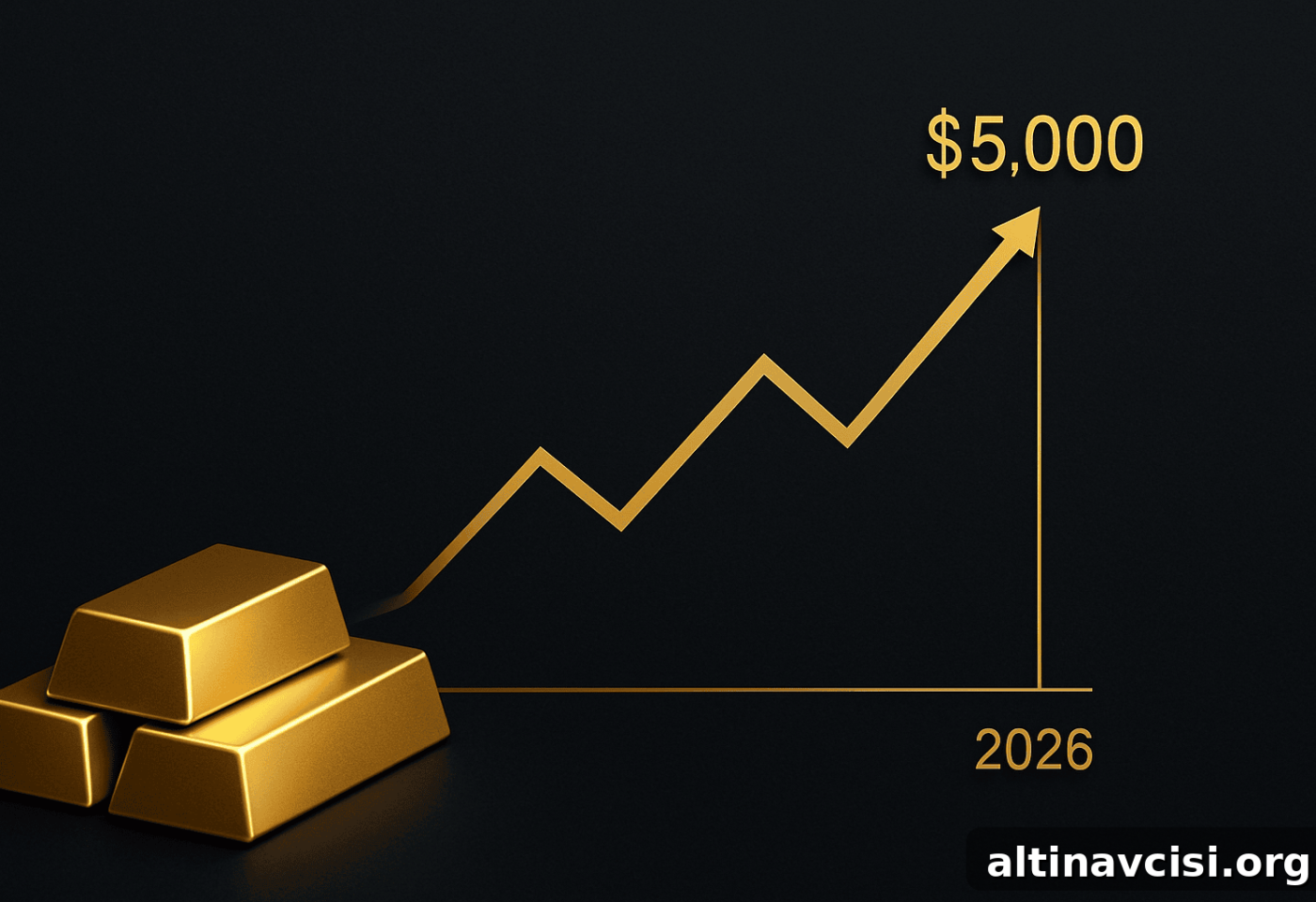
JPMorgan’s private bank has issued a high-profile forecast that gold could exceed $5,000 per ounce by 2026, citing persistent inflationary pressures, ongoing geopolitical uncertainty, and central bank buying as supporting drivers. The forecast is notable because it comes from a major global financial institution that regularly evaluates macro and portfolio implications for large clients.
The bank’s view underscores a broader reassessment across parts of traditional finance: precious metals are being considered not only as crisis hedges but also as strategic portfolio anchors amid a multipolar financial landscape and fiscal imbalances. If a scenario of sticky inflation and diversifying central bank reserves persists, current prices for gold and silver could be viewed as relatively attractive in hindsight.
For investors focused on precious metals, this backdrop emphasizes the importance of weighting, time horizon, and the role of gold and silver within diversified portfolios—whether as a hedge against inflation, a defense against policy missteps, or a store of value during heightened geopolitical risk.
Popular Topics
Picked from the archive
-
01
 Topics
Gold Price Outlook: ING Says Market Needs a New Catalyst
-
02
Topics
How the IRS Taxes Gold vs Silver
-
03
Topics
Senate Tax Bill Adds 3.3 Trillion to Deficit, Raising Alarm
-
04
Topics
Gold Price Jumps Amid Fed Chair Uncertainty
-
05
Topics
US Dollar Falls to Multi-Week Lows as Fed Cut Nears in September
-
06
Topics
Gold Surges to Record High as $5,000 Target Nears
-
07
Topics
Citi Predicts Gold Price to Reach $3,100 to $3,500 in Q3
-
08
Topics
Gold Surges 11% in September Amid Washington, DC Shutdown