Why Boring Gold Outperformed Nasdaq by 30% in 5 Years
Daily News Nuggets | Today’s top stories for gold and silver investors
October 17th, 2025
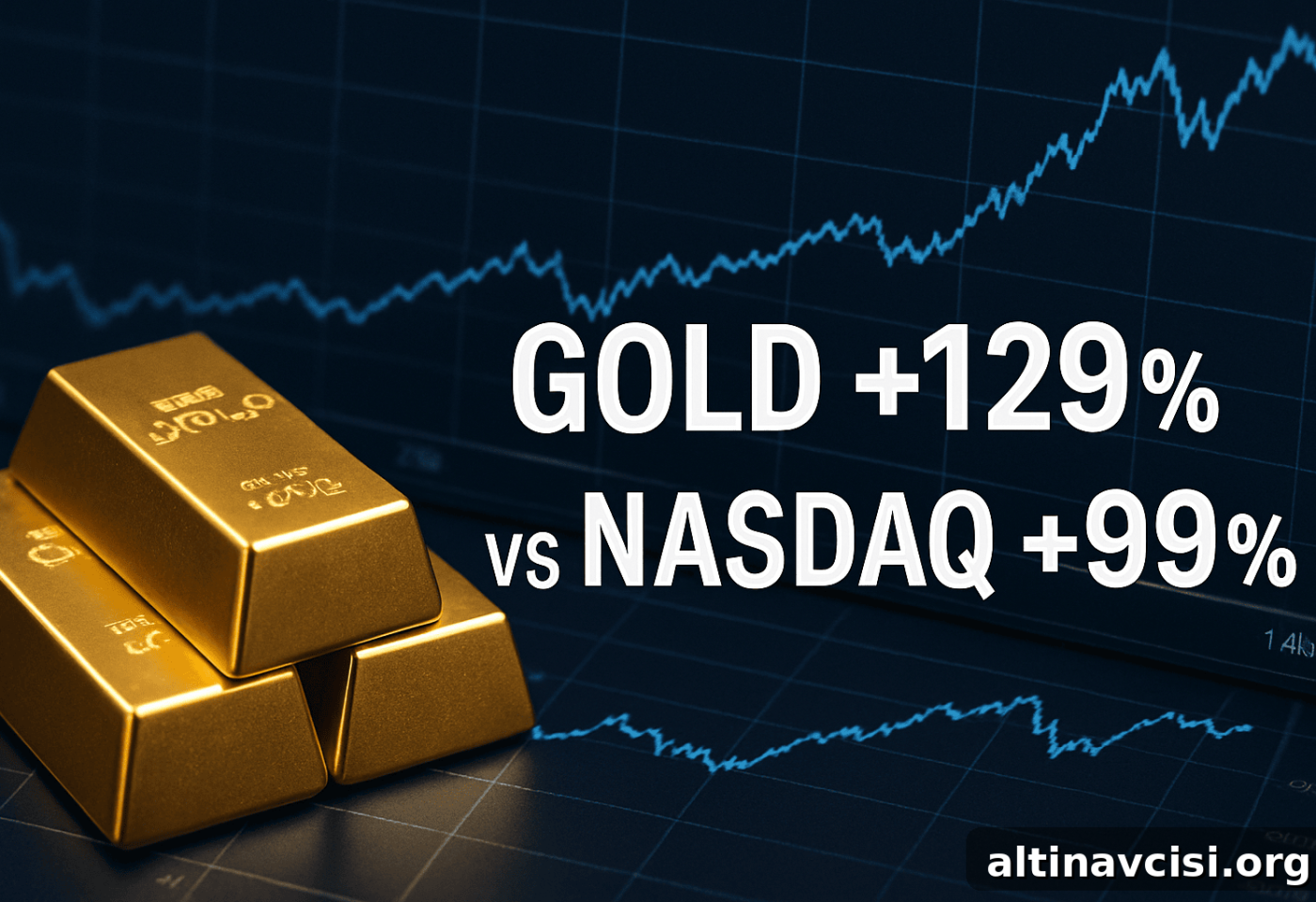
Gold Quietly Outruns the Nasdaq Since 2020
Many investors still picture gold as the conservative, low-drama asset — not the headline-grabbing growth story you brag about at a dinner party. Yet over the last five years, gold has delivered surprisingly strong returns, outpacing major equity benchmarks in a market environment marked by shocks and volatility. During a cycle defined by rate surprises, bank stress, and geopolitical unrest, gold delivered steady, low-correlation gains while providing portfolio protection when equities wavered.
Start dates and hindsight matter, and past performance does not guarantee future results, but the broader takeaway is clear: a thoughtfully sized allocation to physical gold or gold-backed exposures can materially improve portfolio resilience. For many investors, the biggest benefit is not headline-making upside but the way gold reduces drawdowns and offsets risk when traditional markets turn uncertain.
Bank Stocks Tumble as Haven Bids Surge
Recent stress among regional banks in the United States has spread to Europe, driving a risk-off move across global financial markets. Major bank shares were pressured and market volatility spiked as investors sought safety. That flight-to-quality pushed gold to record levels and sent Treasury yields lower as traders repriced expectations for future interest-rate cuts.
This pattern follows the classic liquidity-scare playbook: banking stress undermines confidence in risk assets, the US dollar softens, and non-yielding safe havens such as gold attract fresh demand. If difficulties among regional lenders persist or broaden, demand for liquidity reserves and tangible assets is likely to remain elevated, supporting higher gold prices and sustained investor interest in precious metals.
HSBC: Gold’s ‘Bull Wave’ Could Crest at $5,000 by 2026
One major bank has publicly projected a potential upside scenario for gold, citing ongoing central-bank purchases, geopolitical tensions, and a softer rate outlook as drivers of renewed investor interest. Analysts emphasize that while upside potential exists, the journey will likely be volatile. Even in a bull market, gold can experience sharp swings, underscoring the importance of position sizing, risk management, and a long-term perspective for metal investors.
Price forecasts vary widely among institutions and should be treated as scenarios rather than certainties. Still, the combination of central-bank demand and episodic market stress has increased the plausibility of materially higher gold prices over coming quarters, reinforcing the argument for maintaining a strategic allocation to precious metals.
Shutdown Hits Day 17: Data Blackouts Deepen
The ongoing partial government shutdown has entered its third-longest stretch in modern history, disrupting normal operations and delaying the release of routine economic statistics. Missing or delayed data complicates policy decisions and raises uncertainty about the true pace of economic growth and inflation.
Markets dislike ambiguity. When official data is scarce or unreliable, investors tend to gravitate toward assets that do not depend on counterparty promises or government reporting — notably physical gold and silver. The longer the data blackout persists, the greater the appeal of stores of value that perform as a hedge against policy uncertainty and information gaps.
IMF Flags Elevated Financial-Stability Risks
The IMF’s latest assessment highlights systemic vulnerabilities: stretched asset valuations, sovereign-bond pressures, and risks within nonbank financial intermediation all raise the possibility of sudden market tightening. The organization warns that liquidity can evaporate quickly under stress and that correlations across asset classes often rise precisely when diversification is most needed.
For investors, that translates into a call to stress-test portfolios, preserve liquidity, and consider ballast positions that hold up during episodes of heightened volatility. Historically, gold has served a dual role as both a liquidity reserve and a tail-risk hedge — not because it pays income, but because it retains purchasing power and market confidence when other instruments falter.
Investing in Physical Metals Made Easy
For investors seeking portfolio insurance or long-term diversification, physical gold and silver can offer a durable hedge against systemic risk, inflation uncertainty, and information blackouts. Consider allocation size, secure storage, and trusted custodial solutions when evaluating metal holdings.
Popular Topics
Picked from the archive
-
01
 Topics
June CPI Jumps 2.7 Percent as Tariffs Push Up Consumer Prices
-
02
Topics
Gold Prices Slide as Rate-Cut Hopes Meet Reality
-
03
Topics
Tariff Uncertainty and Fed Outlook Keep Gold Prices Volatile
-
04
Topics
Powell Warns Tariffs and Immigration Curbs Threaten US Economy
-
05
Topics
Tariffs vs Treasuries: What’s Driving Gold Prices Now
-
06
Topics
Why Wealthy Investors Allocate 11% of Portfolios to Gold
-
07
Topics
Greenland Resources Wins 30-Year Permit for Defense Molybdenum
-
08
Topics
Silver Spot vs Retail Price: Understanding Dealer Premiums