Why U.S. Treasuries Are No Longer a Crisis Safe Haven

Are U.S. Treasuries Losing Their Safe-Haven Status?
For decades, U.S. Treasury bonds have been viewed as the default safe-haven asset during periods of global uncertainty. Investors fleeing risk traditionally moved cash into Treasuries, driving prices higher and yields lower. Recent market behavior, however, has raised questions about whether that paradigm is changing.
Recent Market Signals
Two notable episodes this year illustrate a shift in investor preferences. On June 13, when Israel attacked Iran, U.S. Treasury yields unexpectedly rose, implying a decline in demand for those bonds even as geopolitical risk spiked. At the same time, government bonds from other regions — particularly across Asia and Australia — experienced falling yields, a classic sign of increased buyer interest.
A similar dynamic emerged after President Trump’s April 2 tariff announcement. Rather than prompting an across-the-board rush into U.S. government paper, global investors again showed stronger demand for non-U.S. sovereign bonds. These episodes suggest that some market participants are reallocating safe-haven allocations away from a U.S.-centric default and toward a more diversified mix of sovereign debt.
What Rising Yields Mean
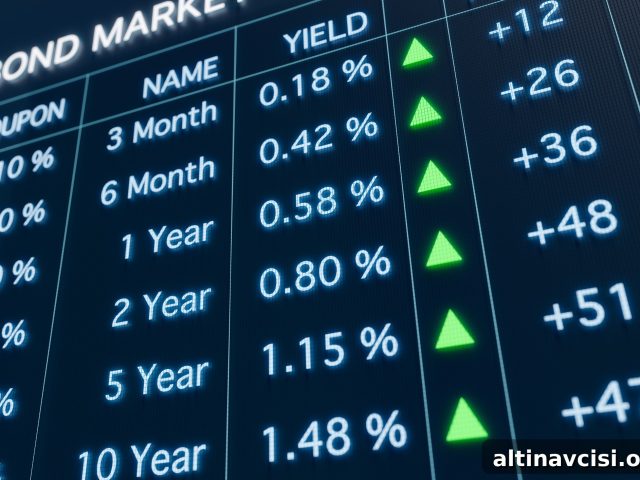
It is important to clarify what changes in yields represent. When yields rise, that typically means bond prices are falling and demand is weakening. Conversely, yields that fall indicate increasing demand and rising bond prices. The recent pattern — rising U.S. Treasury yields alongside falling yields in parts of Asia and Australia — points to differential demand across sovereign markets rather than a uniform global flight to safety.
ETF Performance Reflects Shifting Flows
Exchange-traded funds (ETFs) focused on international government bonds have significantly outperformed U.S. Treasury ETFs so far this year. That relative performance reflects both yield movements and capital flows: investors reallocating toward higher-demand regional sovereigns can lift total returns for those ETFs. While past performance is not a guarantee of future results, the divergence highlights the practical consequences of changing investor preferences during crises.
Why Investors Might Diversify Beyond Treasuries
Several factors can explain why investors are broadening their definition of “safe haven.” Currency considerations, interest-rate differentials, perceived credit risk, and regional exposure all play a role. In some cases, sovereign bonds outside the United States may offer similar or better liquidity, favorable yield dynamics, or a hedge against concentrated U.S. risk. Political and policy developments can also alter the risk-reward calculus between different government bonds.
Moreover, advances in global fixed-income markets and the growth of ETF access make it easier for both institutional and individual investors to gain exposure to a wide range of sovereign debt. That increased accessibility encourages diversification away from a single-country dominant position.
Practical Implications for Investors
For investors who have traditionally relied solely on U.S. Treasuries as their crisis hedge, these market moves are a reminder to reassess assumptions. Diversifying safe-haven allocations across geography, currency, and duration can reduce concentration risk and potentially capture more stable performance when markets react to geopolitical or policy shocks.
Key considerations when evaluating safe-haven diversification include:
- Understanding how currency exposure impacts returns and risk.
- Comparing liquidity profiles across sovereign bond markets.
- Assessing credit and political risk, even among traditionally stable issuers.
- Monitoring central bank policy and macroeconomic trends that influence interest-rate expectations.
Conclusion
While U.S. Treasuries remain a cornerstone of global financial markets, recent episodes indicate that investor behavior during crises is evolving. Market signals and ETF performance this year suggest growing appetite for international government bonds as alternative safe-haven assets. Rather than abandoning Treasuries, many investors appear to be broadening their toolkit — an approach that favors diversification and a more nuanced view of global sovereign risk.
Popular Topics
Picked from the archive
-
01
 Topics
China May Cut Tariffs on Key US Medical and Industrial Imports
-
02
Topics
Weaponizing Supply Chains: Rare Earths to Semiconductors
-
03
Topics
76% of Central Banks to Increase Gold Reserves, WGC Survey Finds
-
04
Topics
Trump Demands Powell’s Removal as Fed Chair Warns on Tariffs
-
05
Topics
Gold Rises to No. 2 Global Reserve amid Sanctions Concerns
-
06
Topics
Daly Urges Fed to Temper Forecasts and Balance Dual Mandate
-
07
Topics
Strong Jobs Report Drives 10-Year Treasury Yield Above 4.34%
-
08
Topics
Report: Republican Tax Bill Masks Over 1 Trillion in Future Debt