Silent Gold Bank Run: What COMEX Data Reveals

Written by: The MacroButler
Andrew Niccol’s original concept—The Malcolm Show—imagined a dystopian life trapped under corporate surveillance. Peter Weir transformed that premise into a satirical movie, The Truman Show (1998), casting Jim Carrey to personify a man whose world is controlled by cameras and producers. The film’s warning was simple and enduring: whoever controls the lens often controls the narrative. Today’s financial markets feel like a modern Truman Show—central banks write the script, financial media manage perception, and algorithms choreograph the crowd. In that story, gold remains the quiet dissenter: a hard asset that tends to appreciate amid debt, war and inflation, even as derivatives and interventions mute its price. Savvy investors are increasingly treating gold as more than an asset class; it’s a hedge and an escape route when the set starts to crack.
Capital flows have always shaped history. From ancient trade routes to modern electronic transfers, money migrates toward opportunity and safety. Speculative manias are nothing new: the South Sea and Mississippi Bubbles showed that cross-border euphoria can erase fortunes overnight. Later episodes—like the Panic of 1896—demonstrated how capital can pivot from distress to opportunity, as foreign buyers scoop up collapsed assets. That historical backdrop matters because it explains today’s movement: capital is shifting again, and gold is the favored refuge.
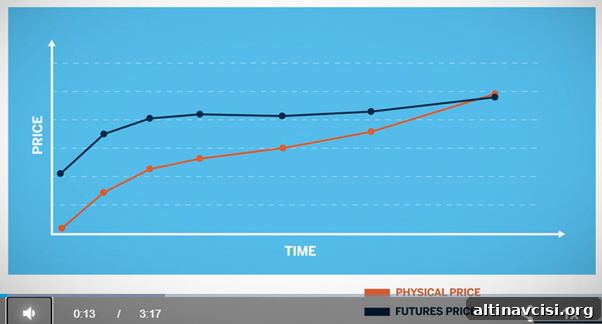
COMEX—operated by CME Group—is the main U.S. futures venue where much of the market trades gold on paper rather than exchanging bars. Futures let two sides speculate on price direction: longs bet on rising prices, shorts on falling ones. Most participants roll contracts rather than take delivery, effectively trading promises instead of metal. If a buyer posts the full contract value and insists on physical delivery by the First Position Date, the short party must deliver real bars. Delivered metal is typically marked “Registered,” meaning it carries the warrant to be transferred immediately.
Leverage makes the futures game efficient and risky: traders can control large exposures with a small margin. That efficiency collapses into urgency when market participants demand physical delivery—suddenly the paper game requires tangible metal, and inventories matter.
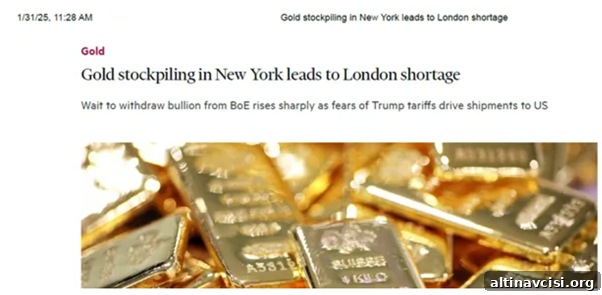
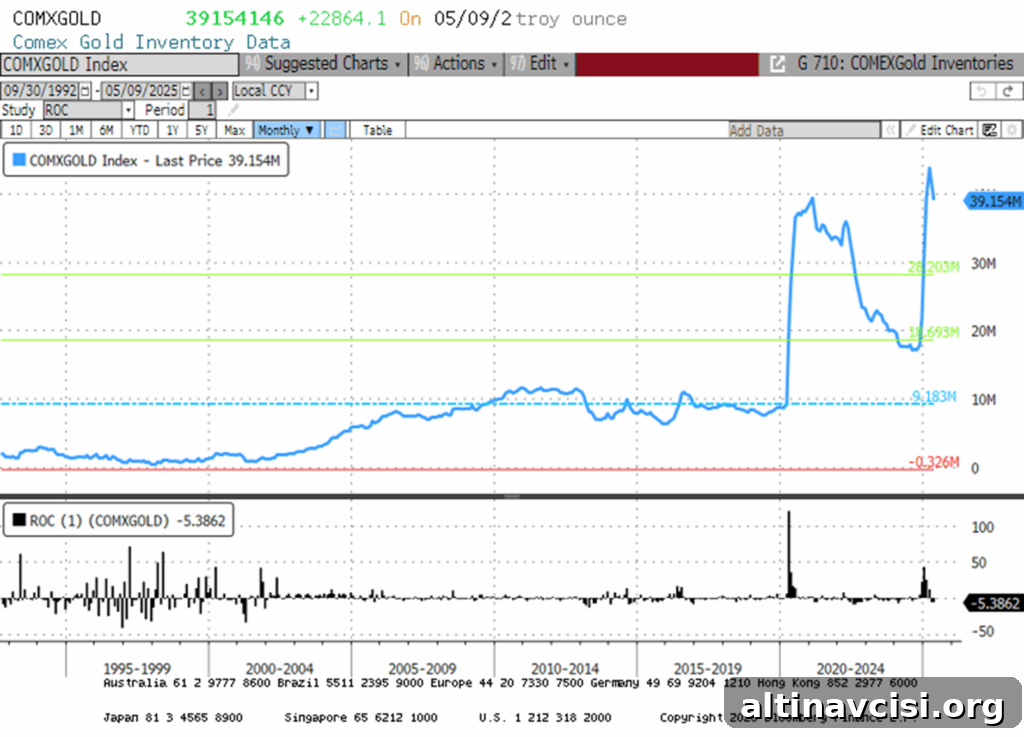
Since the U.S. election on November 5, gold movements into COMEX vaults have accelerated. Roughly 24 million troy ounces (~746 tons) were shifted into storage, lifting COMEX inventories to about 39.15 million ounces—levels near the highest in 35 years and eclipsing the panic-driven hoarding of May 2020. Elevated delivery volumes and rising registered inventories reveal that more participants are seeking actual metal rather than paper exposure.
Comex Gold Inventory data & Monthly Change
Delivery statistics are a direct window into the paper-versus-physical dynamic. When investors take delivery, they pay full contract value and accept storage costs—actions that usually signal a genuine need for metal. A sustained increase in delivery requests could lead to a supply squeeze, driving higher prices for gold and silver as paper promises must be matched by real bars.
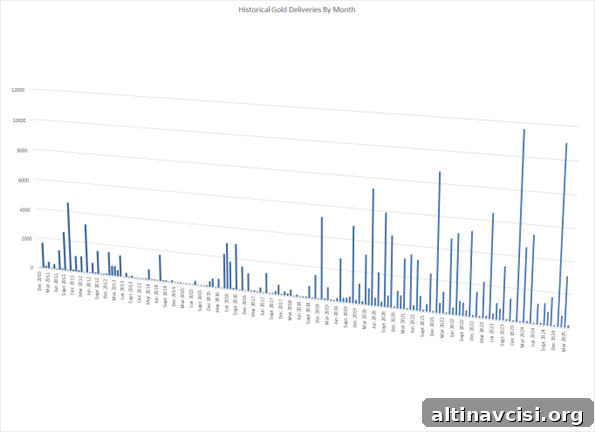
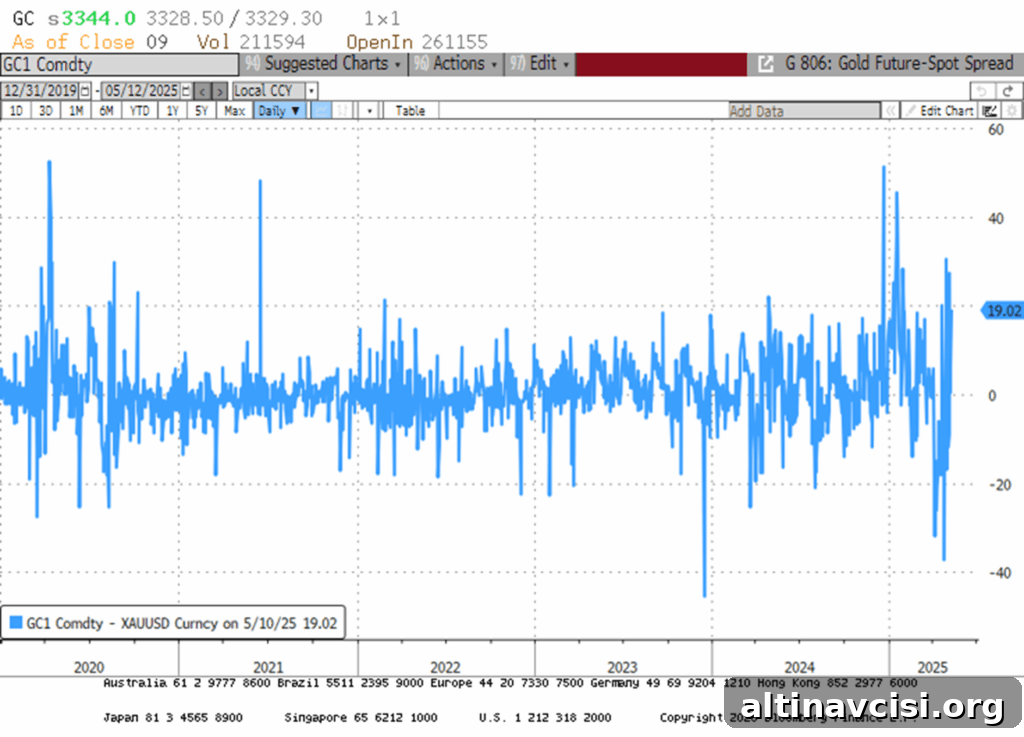
April was notable: COMEX recorded 64,514 contracts delivered—one of the largest monthly transfers on record—equating to roughly $21.3 billion in gold. The surge was driven by an arbitrage between spot and futures prices, prompting traders to convert paper positions into physical metal. Although activity cooled after that spike, the behavior signals a market that still responds strongly when delivery opportunities arise.
Spread in $ between Futures & Spot Price.
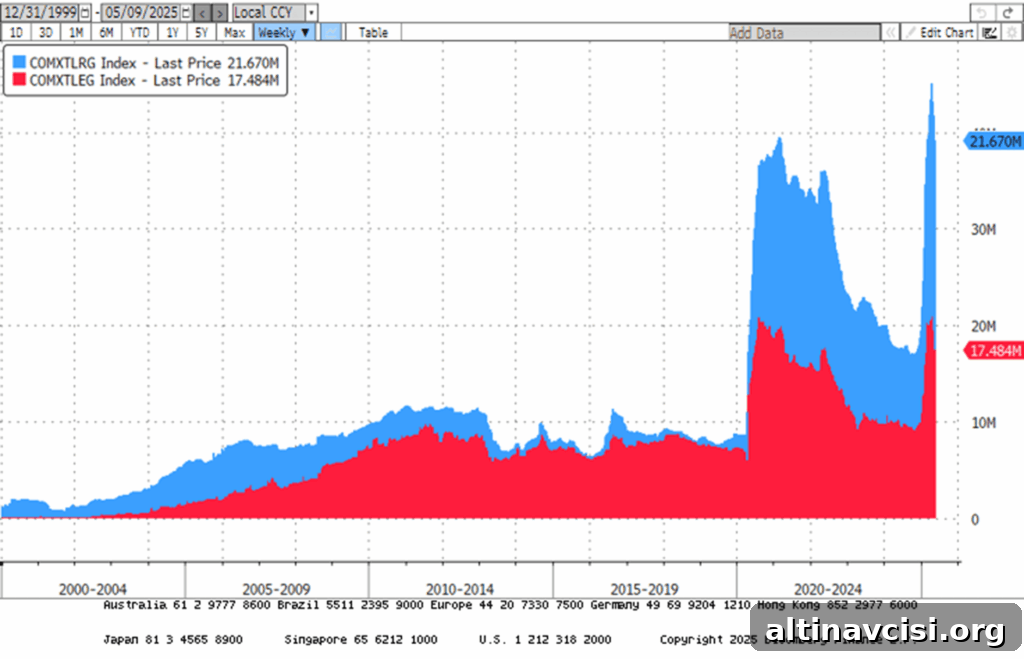
COMEX categorizes stored metal as Eligible or Registered. Eligible bars meet exchange standards and sit in approved vaults but require a warrant to be delivered. Registered bars carry that warrant and can be transferred immediately; some Registered bars are pledged as collateral and tracked that way. Since April, visible inventory levels have dipped, suggesting actual withdrawals rather than mere accounting changes. Unlike earlier episodes when Registered gold almost disappeared, the recent profile shows material Registered stocks—a sign that delivery capacity exists but is being actively used.
Comex Registered Gold Inventory (blue histogram); Comex Eligible Gold Inventory (red histogram).
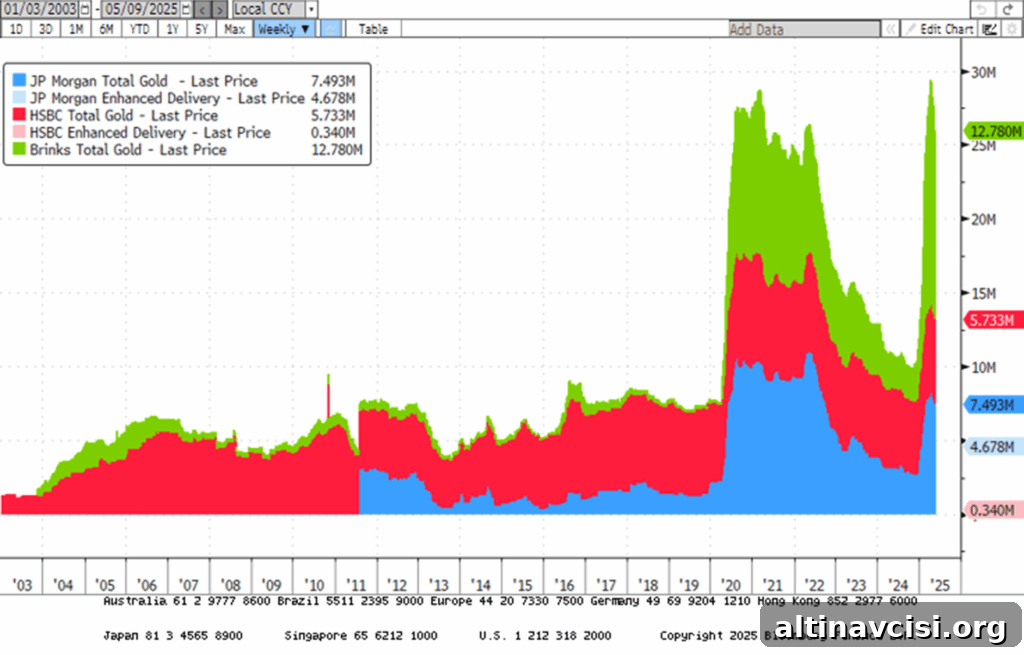
Historically, the vast majority of COMEX futures are settled without physical exchange: in 2018 only 1.6 million ounces moved as deliveries. Today, three vault operators—Brink’s, HSBC and JPMorgan—hold over 80% of COMEX’s stored gold, with JPMorgan holding a particularly large share. That concentration matters for market resilience if demand for physical metal accelerates.
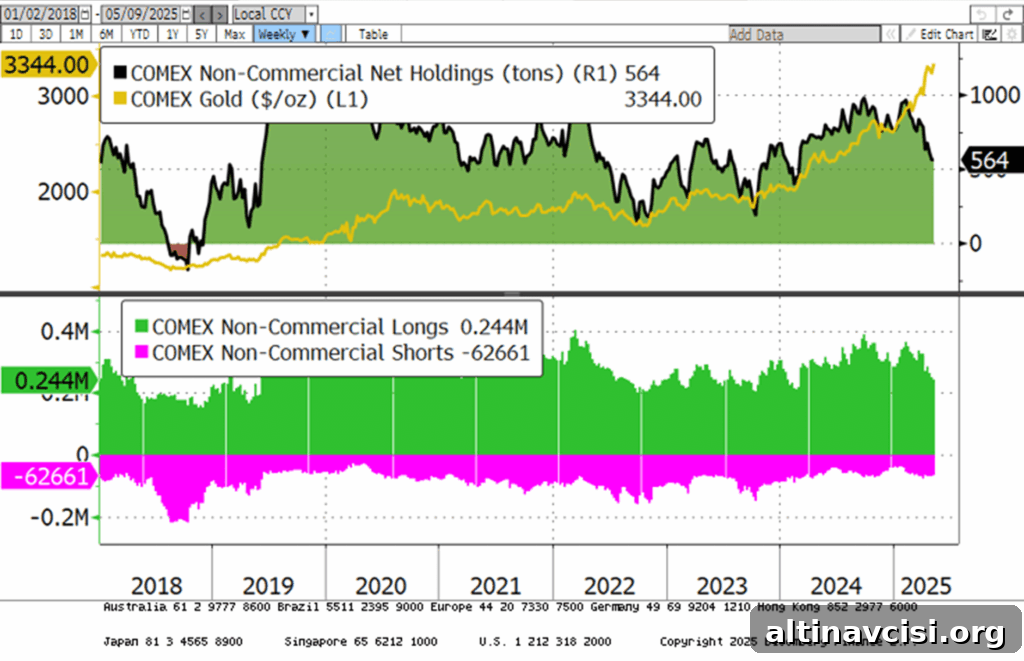
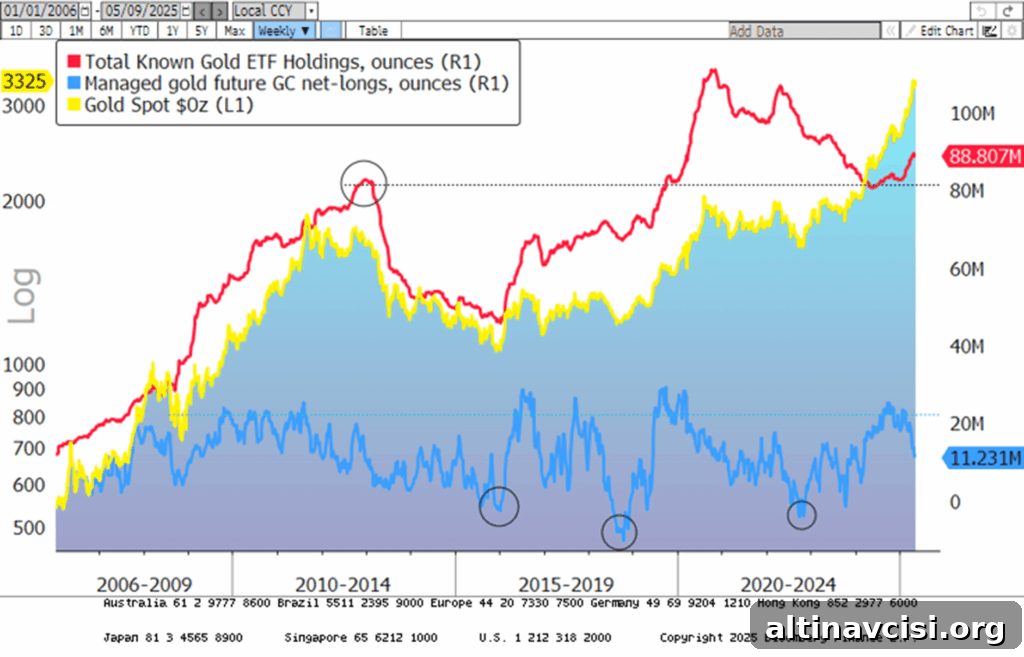
This rally feels unusual: gold has risen since February without a corresponding surge in speculative futures positions. Net non-commercial holdings remain relatively low, suggesting retail and speculators have not yet piled in. That makes this advance one of the quietest and most unloved rallies in recent COMEX history—driven more by physical demand and geopolitical concerns than by leverage and momentum trading.
U.S. retail investors have been slow to take physical positions, favoring gold ETFs instead. ETF holdings have only shown net inflows since late February 2025 and, at about 88.9 million ounces under management, remain below the Q3 2020 peak. That signals room for further inflows before retail euphoria sets in.
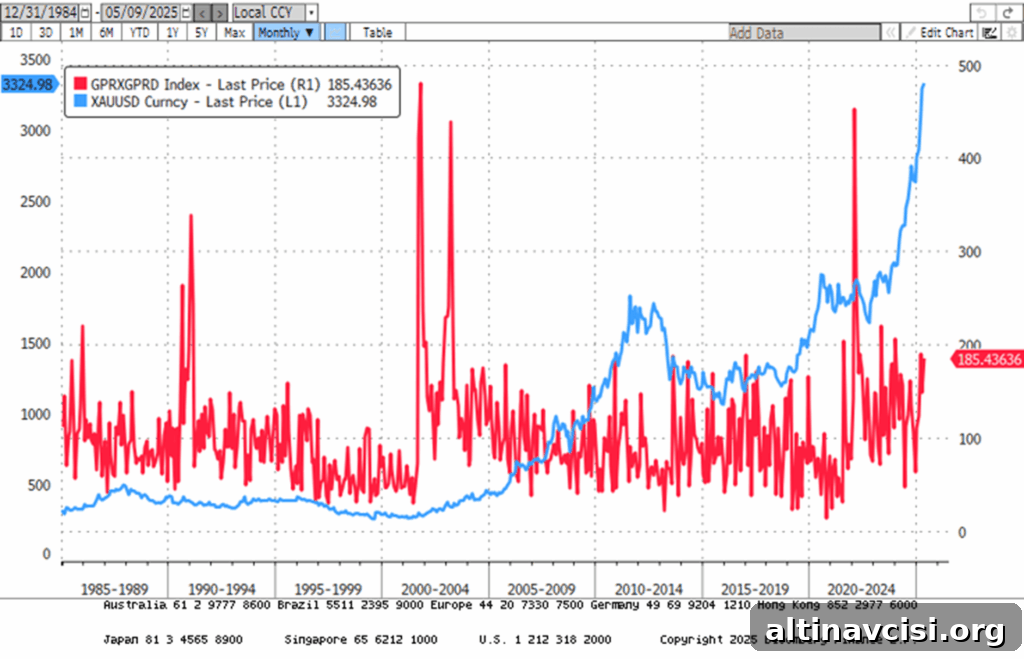
Geopolitical tensions, trade frictions and regional conflicts have moved back to the center of market risk. Research shows that spikes in geopolitical risk tend to lift gold prices: historically, major geopolitical events have produced rapid price moves that take months to fully reverse. With tariffs and military tensions rising, gold’s role as a non‑counterparty, anti‑fragile asset is again front and center for investors seeking safety.
Gold Price in USD (blue line); Geopolitical Risk Index (GPR Index) (red line).
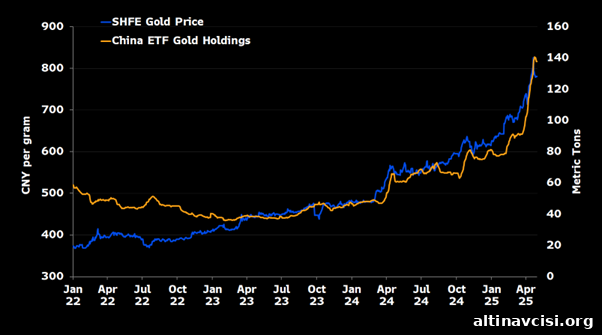
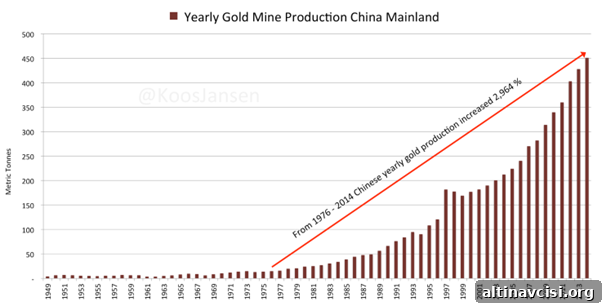
Recent flows indicate a westward move of gold from London and Zurich toward COMEX and New York vaults. Market commentators suggest this reflects concerns about potential capital controls in Europe as geopolitical and fiscal stress mounts. Concurrently, China has become a dominant buyer, increasing strategic purchases via funds and ETFs. That shift—combined with China’s organized approach to securing physical production and reserves—has meaningful implications for global supply and demand dynamics.
China’s systematic approach to gold—covering production, state purchases and institutional demand—has reshaped the market. Such sustained, strategic buying supports prices independently of Western speculative flows and changes the balance between paper and physical markets globally.
For many investors, physical ownership offers autonomy from centralized digital systems and counterparty exposure. Gold stored in private vaults does not require digital IDs or third‑party compliance protocols and carries no issuer default risk. That practical reliability underpins why many view physical gold—alongside silver and select commodities—as essential in portfolios focused on capital preservation.
As geopolitical risk and the war cycle escalate, investors should adjust priorities: favor return of capital over return on capital, increase allocations to physical precious metals and essential commodities, and manage cash with short-dated, high-quality USD instruments. Equity exposure should emphasize low‑leverage firms with solid earnings and free cash flow—especially commodity and energy producers with real balance‑sheet resilience.
In short, diversification now favors tangible assets, strong liquidity management and conservative credit exposure. Expect higher volatility and muted inflation‑adjusted returns in the near term, but owning non‑counterparty assets can help preserve purchasing power and financial autonomy.
KEY TAKEAWAYS.
Important, evidence‑based conclusions for investors:
- Markets resemble a carefully scripted show; gold remains the unscripted safeguard while COMEX facilitates the paper market.
- Large flows into COMEX vaults indicate growing physical demand—this is more hoarding than hedging.
- COMEX is mainly a paper market, but shrinking inventories and concentrated vault holdings make delivery risk more meaningful.
- The recent gold rally has advanced with limited speculative participation—an unloved, physically‑driven move.
- Geopolitical risk correlates with higher gold prices; during crises, gold reliably serves as a non‑counterparty store of value.
- China’s strategic buying materially affects global gold dynamics and supports sustained physical demand.
- In an inflationary bust or stagflation scenario, prioritize capital preservation over yield‑seeking risk.
- Physical gold and silver remain among the few assets with minimal counterparty risk and durable wealth‑preservation qualities.
- Declining trust in institutions will likely increase demand for non‑confiscable, non‑digital bullion holdings.
- Long‑dated government bonds now present material duration risk; prefer short‑dated investment‑grade USD instruments for cash management.
- Prepare for larger price swings and lower real returns over the coming years; adjust portfolio construction accordingly.
HOW TO TRADE IT?
As of May 9, 2025, the U.S. remains in an inflationary expansion, but structural indicators—such as the S&P 500 to Gold ratio trading below its seven‑year moving average—suggest an inflationary bust could arrive sooner than many expect. Investors should remain disciplined: monitor business‑cycle signals, emphasize capital preservation, and use short‑dated, high‑quality USD bonds and Treasury bills for liquidity. Consider increasing allocations to physical gold and silver, favoring reputable custody outside regions at risk of capital controls, and tilting equity exposure toward low‑leverage, cash‑generative companies in commodity and energy sectors.
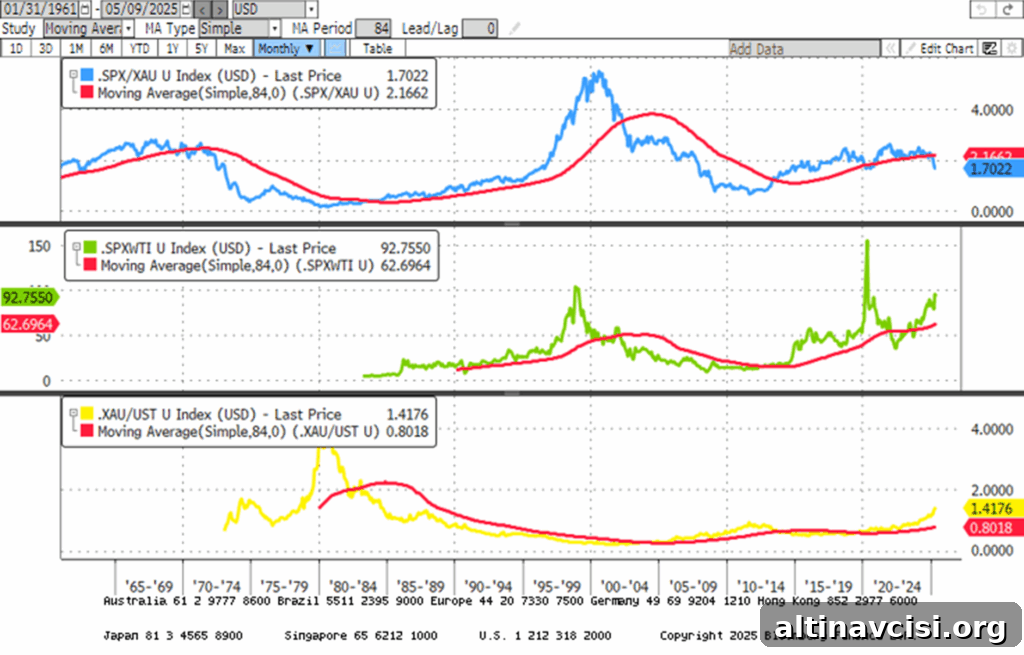
Geopolitical tensions and capital flight are likely to support gold and the U.S. dollar as safe havens. Investors should reassess custodial risk—considering jurisdictions with robust physical custody options in Asia or U.S. states perceived as more favorable for asset protection. Expect the dollar and gold to potentially rise together as markets transition from an inflationary boom toward a tougher economic phase.

Holding physical gold outside centralized digital infrastructures preserves autonomy and reduces counterparty exposure. Unlike digital assets subject to evolving compliance regimes, physical bullion stored securely provides a time‑tested hedge against currency risk, centralization and political interference. Gold has preserved value across eras; for many investors today, that durability matters more than ever.
This analysis first appeared on the MacroButler’s Substack.
👉 https://themacrobutler.substack.com/p/the-comex-show
Popular Topics
Picked from the archive
-
01
 Topics
Gold Prices Rebound Ahead of U.S. Jobs Report
-
02
Topics
Deutsche Bank Cuts S&P 500 Forecast, Wall Street Turns Cautious
-
03
Topics
Chinese Banks Cash In on Gold’s Record Rally Amid Surging Demand
-
04
Topics
Trump Pushes Rate Cuts, Blasts Powell as Treasury Cites Markets
-
05
Topics
Goldman Sachs, JPMorgan Revise Outlook After 90-Day Tariff Truce
-
06
Topics
Technical Indicators Signal Silver Rally as Gold Fades
-
07
Topics
China May Cut Tariffs on Key US Medical and Industrial Imports
-
08
Topics
Gold Prices Jump After Moody’s Downgrade and China Buying