Deutsche Bank Cuts S&P 500 Forecast, Wall Street Turns Cautious
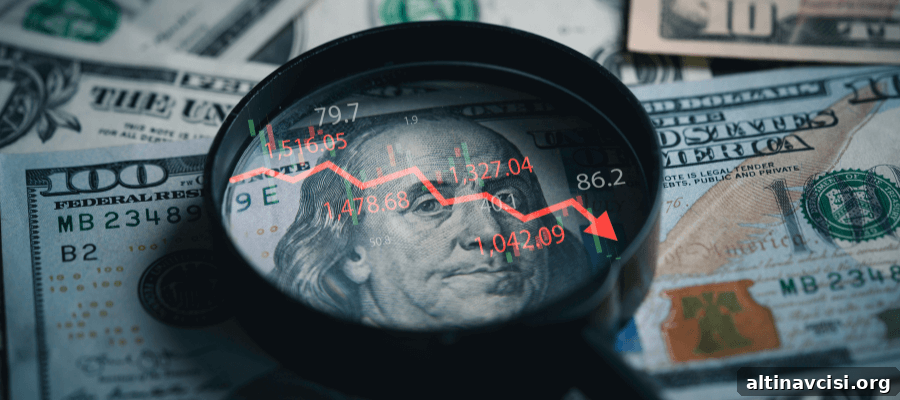
Deutsche Bank Slashes S&P 500 Forecast Amid Concerns Over Trump Trade Policies
One of Wall Street’s previously most optimistic forecasters has sharply reduced its outlook for the S&P 500, citing the potential economic fallout from proposed trade measures. Deutsche Bank now projects the S&P 500 will end the year at 6,150, down from its earlier forecast of 7,000. At the same time, the bank has revised its view on corporate profitability, forecasting a 5% decline in corporate earnings this year instead of the growth it had anticipated.
The bank’s downgrade centers on the likely effects of higher import tariffs. According to Deutsche Bank, the proposed tariff package would effectively raise average import tax rates from about 2.3% to roughly 26.4%. The bank estimates that this shift would impose an additional cost burden of around $800 billion on U.S. businesses. That load on companies, the bank warns, could only be alleviated if the administration reverses course or reduces the proposed measures.
What the Revised Forecast Means for Markets and Investors
A downward revision of this size from a long-standing optimistic forecaster is significant for investors and market strategists. A lower year-end target for the S&P 500 implies more modest expected returns for broad-market equity investors, and the forecasted drop in corporate earnings suggests company profitability may come under strain. For portfolio managers, this combination can motivate reassessments of risk exposure, sector allocation, and valuation assumptions.
Investors often react to both the direct and indirect effects of tariffs. Directly, higher import taxes raise costs for companies that rely on foreign inputs, squeezing profit margins unless firms can pass costs on to consumers. Indirectly, the threat of trade disruptions can dampen business investment, slow supply chains, and increase uncertainty—factors that tend to reduce valuation multiples investors are willing to pay for corporate earnings.
Potential Economic and Corporate Impacts
Higher tariffs can influence the economy in several connected ways. If companies absorb higher import costs, profit margins may shrink, contributing to the earnings decline Deutsche Bank forecasts. If companies pass those costs on to consumers, inflationary pressures could rise, potentially affecting consumer demand. Either outcome can weigh on sales growth and investor sentiment.
Industries that depend heavily on global supply chains and imported components are typically more sensitive to tariff increases. Retailers, manufacturers, and technology firms that source parts or finished goods from abroad could face the greatest immediate impacts. The ultimate effect on any particular company will depend on its pricing power, the flexibility of its supply chain, and the extent to which it can substitute domestic inputs or negotiate lower costs elsewhere.
Policy Uncertainty and the Path Forward
Deutsche Bank’s analysis underscores the role of policy choices in shaping market outcomes. The bank notes that the estimated $800 billion additional burden would be mitigated only if the administration backs down on the proposed tariffs. That leaves a clear conditional element in the outlook: markets could perform differently depending on whether tariffs are implemented as proposed, scaled back, or modified.
In practice, the timing, scope, and enforcement of trade measures are all sources of uncertainty. Market participants will likely monitor public statements, legislative developments, and any follow-on measures from trading partners to reassess the probability of various scenarios. For investors, maintaining a disciplined approach that considers valuation, earnings power, and macro risks can help navigate the uncertainty inherent in such policy-driven scenarios.
Summary
Deutsche Bank has lowered its S&P 500 year-end projection from 7,000 to 6,150 and now expects corporate earnings to fall 5% this year rather than rise. The bank attributes the downgrade largely to proposed tariffs that would raise effective import tax rates dramatically and impose an estimated $800 billion cost on businesses. That burden, the bank says, would only be eased if the administration retreats from or modifies the proposed trade measures. For investors, the downgrade highlights heightened policy risk and the potential implications for corporate profits, sector performance, and market valuations.
Popular Topics
Picked from the archive
-
01
 Topics
Goldman Sachs Sees Gold Rally Reaching $4,500 on Tail Risk
-
02
Topics
US Launches Tariff Probe into China’s Critical Minerals Supply
-
03
Topics
Precious Metals Drop After US China Tariff Cut
-
04
Topics
Is Gold Overcrowded for Investors? Data Says No
-
05
Topics
Powell Says Tariffs Fuel Tension Between Inflation and Growth
-
06
Topics
Gold Drops 3% as U.S.-China Trade Deal Calms Markets
-
07
Topics
Foreign Treasury Selloff Threatens U.S. Borrowing Costs
-
08
Topics
Why Investors Remain Bullish Despite 60 Percent Recession Odds