
Key Takeaways
- “Junk silver” describes circulated U.S. dimes, quarters, and half dollars minted in 90% silver prior to 1965; the term refers to condition, not metal quality.
- The U.S. Mint guaranteed silver content for those coins: $1 face value in 90% coins contains about 0.715 troy ounces of pure silver, regardless of the mix of denominations.
- The Coinage Act of 1965 removed silver from dimes and quarters after silver’s market price rose above the coins’ face value.
- Junk silver trades at lower premiums than minted bullion because it generally carries no numismatic premium and requires no assay to verify authenticity.
- A standard $1,000 face-value bag of junk silver weighs roughly 55 pounds, so storage and logistics are important considerations.
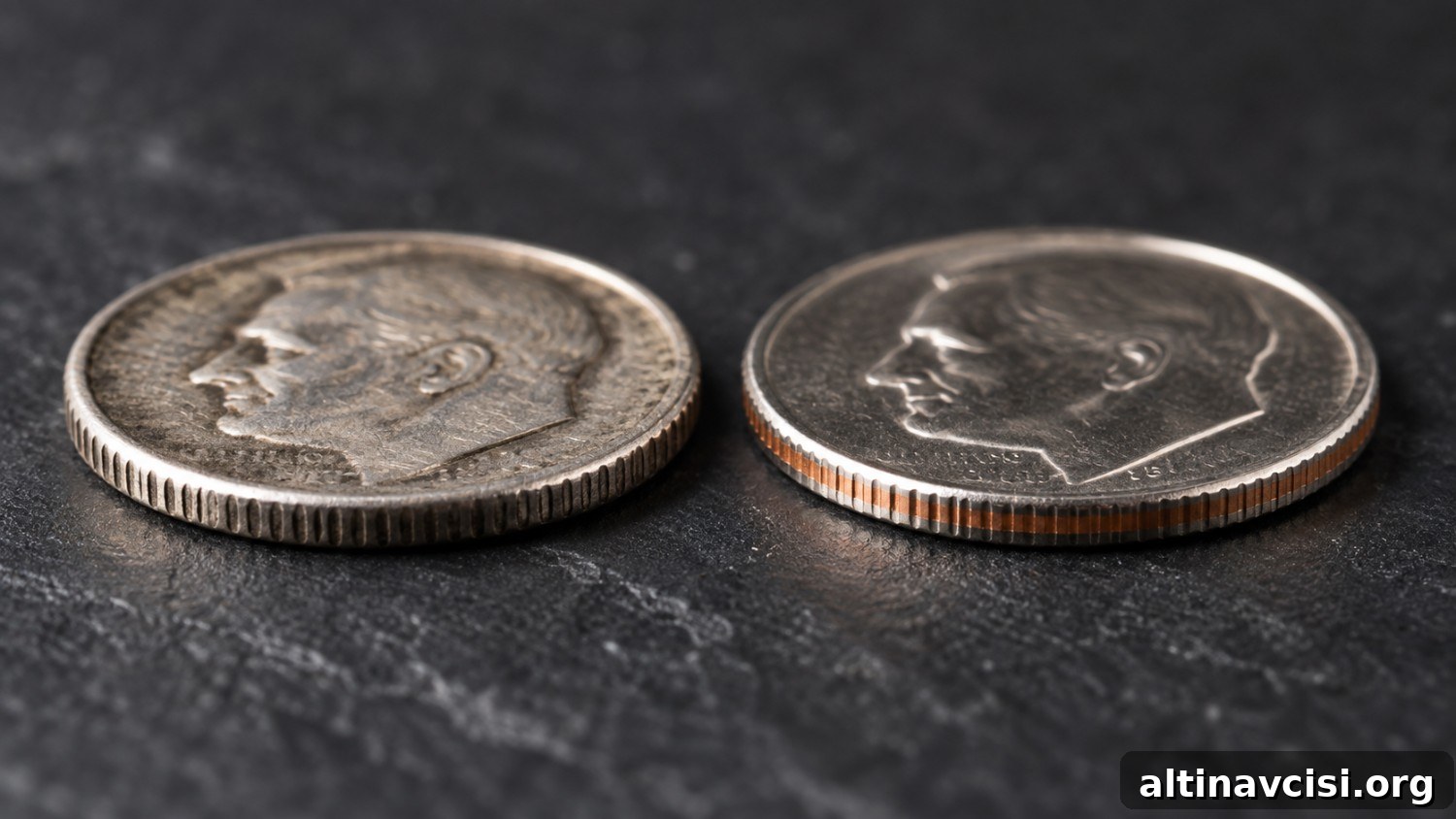
Junk silver refers to ordinary, circulated U.S. coins—dimes, quarters, and half dollars—minted in 1964 or earlier from a 90% silver and 10% copper alloy. These coins typically have little or no collector premium and trade close to their melt value. The nickname “junk” describes their worn condition and lack of numismatic value, not the metal itself. Because pricing is based on silver content rather than rarity or grade, transactions are usually straightforward and transparent.
What Is Junk Silver?
Junk silver is a practical category of pre-1965 U.S. small-denomination coins that contain bullion-grade silver. Unlike rare or graded coins that command numismatic premiums above metal value, junk silver is valued primarily for its silver content. Common examples include Mercury dimes (1916–1945), Roosevelt dimes (1946–1964), Washington quarters (1932–1964), and Walking Liberty, Franklin, and 1964 Kennedy half dollars. These coins were produced in vast quantities and are easy to recognize and verify without specialized equipment.
Which Coins Actually Count as Junk Silver?
The date on the coin is the decisive factor. Key categories include:
- 90% silver: Dimes, quarters, and half dollars dated 1964 or earlier.
- 40% silver: Kennedy half dollars struck from 1965 through 1970, plus a small run of special 40% silver collector pieces struck at San Francisco in 1976. Most 1976 Bicentennial circulation pieces are copper-nickel clad and contain no silver.
- 35% silver: Jefferson “war nickels” produced from 1942 through 1945; these are identifiable by a large mint mark above Monticello on the reverse.
Dimes and quarters dated 1965 or later are copper-nickel clad and contain no silver. That single date often marks the difference between bullion value and mere face value.
How Much Silver Is in a Junk Silver Coin?
Each 90% silver coin contains a fixed amount of pure silver:
- Dime: ~0.0723 troy ounces
- Quarter: ~0.1808 troy ounces
- Half dollar: ~0.3617 troy ounces
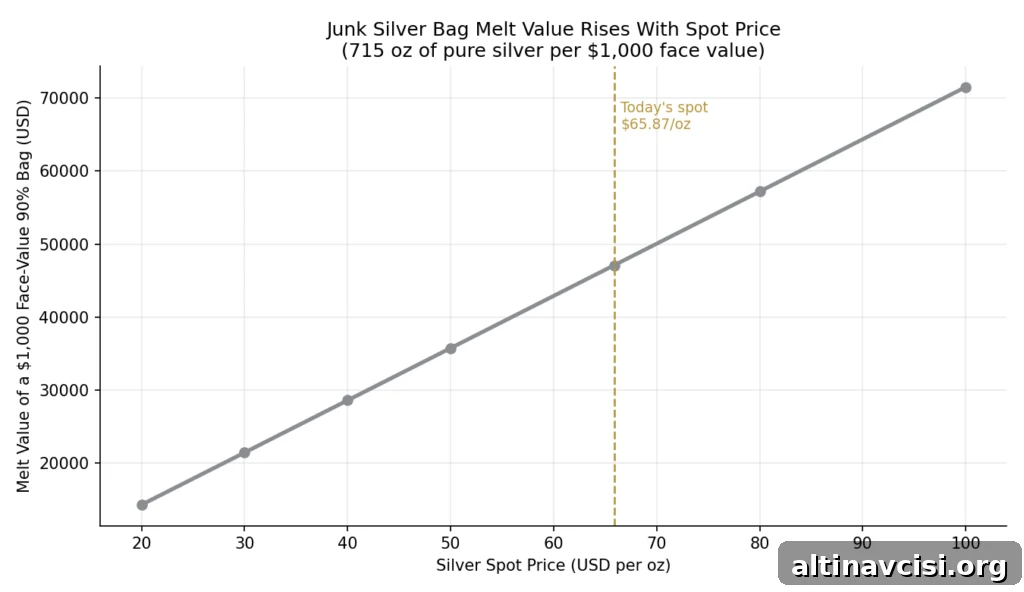
A useful constant to remember: $1 in face value of 90% silver coins contains about 0.715 troy ounces of pure silver. That holds whether a dollar is composed of dimes, quarters, or half dollars. Using that conversion, a standard $1,000 face-value bag holds roughly 715 troy ounces of pure silver.
At different silver spot prices, the melt value of a $1,000 face bag changes accordingly. For example, at $30 per ounce the bag would be worth about $21,450; at $50 per ounce about $35,750; at $80 per ounce about $57,200. These examples illustrate how the bag’s metal value scales with spot price.
Why Did the U.S. Government Remove Silver From Coins?
Silver’s market price rose in the early 1960s to the point where its melt value exceeded the coins’ face value. That created incentives to hoard and melt coins, reducing circulating coin supply. To stop this, Congress passed legislation in 1965 that eliminated silver from dimes and quarters and reduced the half dollar’s silver content. Later, the half dollar’s remaining silver was removed, and modern U.S. circulating coinage has been copper-nickel clad without silver since 1971. This sequence reflects a common monetary pattern: when a coin’s metal becomes worth more than its face value, the higher-metal-content coins are removed from circulation.
How Is Junk Silver Priced and Traded?
Most junk silver trades in $1,000 face-value bags, though dealers also sell smaller increments such as $500, $250, and $100 bags. A full $1,000 bag typically weighs about 55 pounds and may contain any mix of dimes, quarters, and half dollars since the melt math is consistent across denominations.
Because junk silver has little to no numismatic premium and is easily authenticated visually, it usually carries a lower markup over spot than newly minted rounds or bars. That affordability and accessibility make it attractive to buyers who want physical silver without paying extra for minting or design. The tradeoffs are volume and stacking efficiency—mixed, worn coins are bulkier and less uniform than bars or one-ounce rounds.
Is Junk Silver a Good Way to Own Physical Silver?
Junk silver can be a practical component of a physical silver allocation. It is widely recognized, divisible into small, known-weight units, and easy to verify without specialized testing—features that support liquidity and everyday usability. A single dime or quarter represents a small, known amount of silver, useful for small transactions and incremental selling.
The main downsides are bulk and storage efficiency. Because coins are 90% silver and 10% base metal, you carry extra non-silver weight compared with pure silver bars. For buyers focused on maximizing ounces per cubic inch of storage, bars and one-ounce rounds are typically more space-efficient.
What About Taxes and Reporting on Junk Silver Sales?
Selling junk silver at a profit usually creates a capital gain that should be reported on the seller’s tax return. Dealers may have reporting obligations in certain cases, and industry practice often treats a sale of more than $1,000 face value of 90% coins as a reportable transaction because it corresponds to the standard bag size used in regulated markets. Tax rules can change and vary by circumstance, so anyone selling a meaningful quantity should consult a qualified tax professional for guidance tailored to their situation.
Where and How Do You Store Junk Silver?
Storage is a practical concern for junk silver because a meaningful holding quickly becomes heavy and bulky. A $1,000 face-value bag weighs about 55 pounds, so secure storage planning is essential. Options include a robust home safe rated for the weight, a bank safe deposit box, or a professional vaulting service. Before accumulating a large position, plan where the coins will be kept, how they will be insured, and how they can be authenticated if needed.
The Knowledge That Changes Everything

Two essential guides — free. Learn why gold matters and how fiat currencies have historically lost value.
People Also Ask
No. “Junk” refers to worn condition and lack of collector premium, not the metal. The silver content in pre-1965 coins is real and measurable.
Check the date: dimes and quarters dated 1964 or earlier are 90% silver; 1965 or later are clad with no silver. Silver coins also show a silver-colored edge band and produce a higher-pitched ring when tapped.
A standard bag contains $1,000 face value of 90% coins and weighs about 55 pounds. Dealers commonly sell smaller bags for smaller budgets.
Some silver dollars, like Morgan and Peace dollars, are 90% silver, but they often carry numismatic premiums. They are usually treated separately from small-denomination junk silver because their value can exceed melt value.
Yes. Pre-1965 silver dimes, quarters, and half dollars remain legal tender at face value, although their metal value exceeds that nominal value.
“Constitutional silver” is an alternate name used by some sellers, referencing the historical role of gold and silver in U.S. monetary policy. The term describes the same pre-1965 90% silver coins.
SOURCES
1. U.S. Mint — historical records and timeline
2. U.S. Mint — historical summaries of circulating coinage
3. Internal Revenue Service — updated instructions for reporting certain precious metals sales
4. Commodity price references and market data
Disclaimer: This article is for informational purposes only and does not constitute investment or tax advice. Consult a qualified professional before making financial decisions.
You May Also Like:
- Why Is Silver Demand Tied to AI Data Centers?
- The Role of Byproduct Mining in Silver Supply
- Inherited Gold IRA: Beneficiary Rules
- The Cantillon Effect: How Money Printing Shifts Wealth
- Silver Price Outlook: Factors to Watch
- Why Gold Often Reacts Differently to Rate Hikes
- How Much Gold Should You Own at Different Ages?