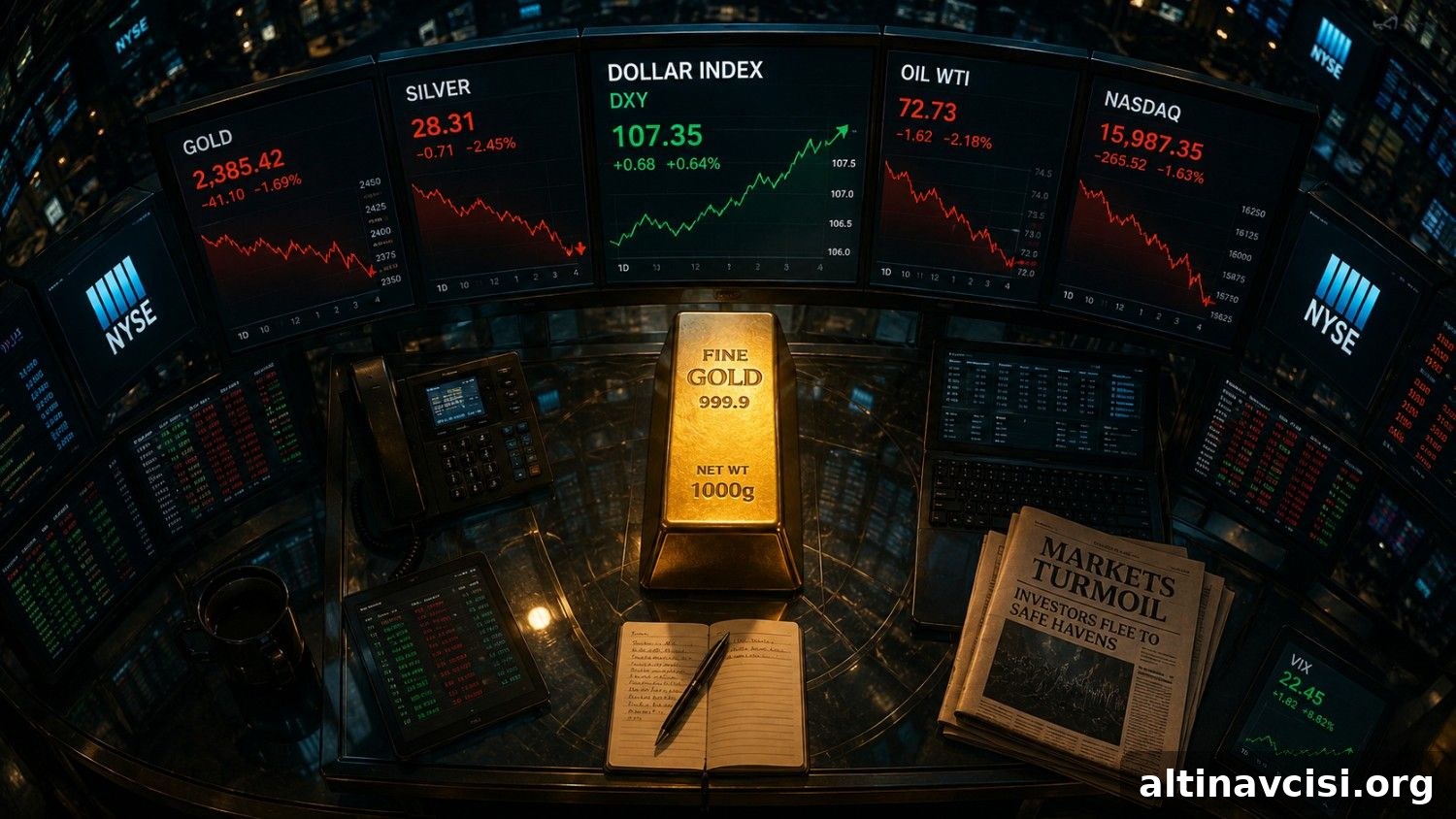
Spot prices for precious metals fell today for two distinct, unrelated reasons. First, a sudden global selloff in semiconductor stocks prompted institutional traders to liquidate profitable positions — including allocations to precious metals — in order to cover losses in equities. Second, the Federal Reserve’s hawkish dot plot released on June 17 pushed real yields higher, increasing the opportunity cost of holding a non-yielding asset like gold. Neither factor reflects a structural change in the intrinsic demand for physical gold.
On Wednesday morning spot gold dropped to $4,020 per ounce, its lowest level in two weeks. Silver declined to $59.13, down nearly 4% intraday, widening the gold-silver ratio to about 68-to-1. These moves are significant in the short term but distinct in their drivers.
Why Is Gold Falling Today?
The immediate cause is the semiconductor selloff that began in South Korea and rippled into global markets. When equity portfolios suffer fast, concentrated losses, managers often liquidate other profitable and liquid positions to raise cash and meet margin calls. Precious metals, which had been strong this year, became convenient sources of liquidity.
Gold is up roughly 22% year-over-year even after the recent drawdown, which makes it a liquid, marked-up asset that traders can sell quickly. Market analysts and brokerage notes have described the process simply: investors forced to close or reduce losing equity positions will trim other winners to balance books. That is a liquidity-driven sale, not a new negative assessment of gold’s fundamental value versus the dollar.
The speed and scale of the selloff in semiconductors amplified the effect. Major semiconductor indexes and individual names experienced large, concentrated declines that triggered broad risk reductions across portfolios. When a crowded trade reverses rapidly, other profitable trades are often trimmed alongside it — and in this case, precious metals were among those trimmed.

The Edge Every Investor Needs
Smarter precious metals investing starts with clear, timely information. Sign up for concise market insights, Fed updates, trend analysis, and educational content to help you make informed decisions.
Is the Rate-Hike Pressure on Gold Separate From the Chip Selloff?
They are related only in their combined impact on price; they are not the same phenomenon. The chip selloff is the proximate trigger for today’s move, while monetary policy and real yield dynamics represent an ongoing background pressure that has not materially changed in one day.
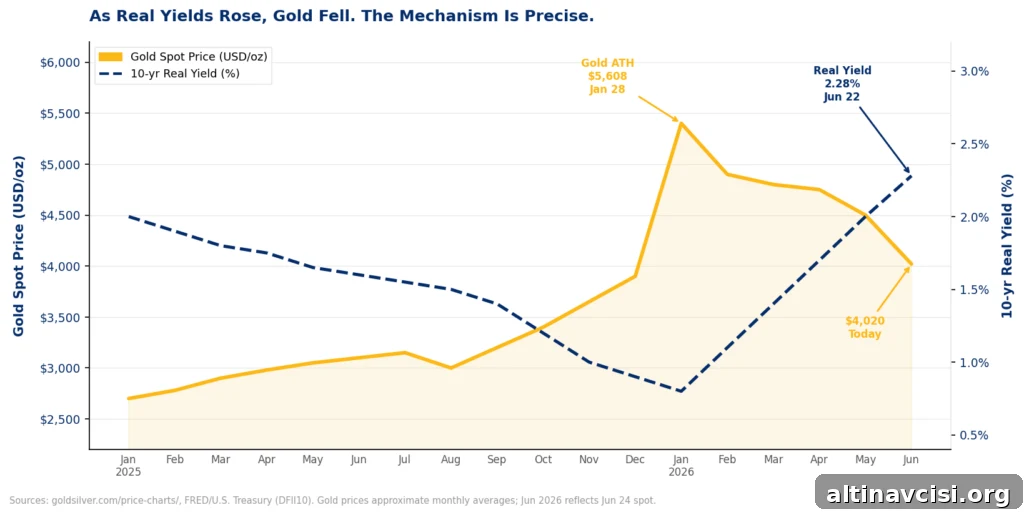
The Federal Reserve’s June 17 Summary of Economic Projections showed a split among officials, with several policymakers still projecting at least one rate increase before the end of the year. Major banks have updated their outlooks to include additional hikes later in 2026, and market odds for further tightening have risen. The 10-year nominal Treasury yield recently traded above 4.5%, and real yields on 10-year TIPS sit near 2.28% — a level that directly competes with non-yielding assets.
Real yields of 2.28% mean an inflation-protected government bond is now offering a meaningful positive return above inflation. Physical gold pays no interest, so when real yields rise materially, institutional allocation models often reduce their weighting in non-yielding assets. That dynamic is separate from the liquidity-driven selling caused by the semiconductor rout, but both can act together to pressure spot prices.
What Are the Two Catalysts That Will Determine Gold’s Direction This Week?
Two key events in the next 48 hours will likely resolve whether the current pressure eases or intensifies.
Micron earnings, after the close tonight: Investors will watch both the headline results and management guidance. Analysts expect earnings and revenue near consensus, but the crucial question is whether Micron’s outlook confirms robust AI-driven memory demand. A strong report and upbeat guidance could stabilize semiconductor stocks and relieve the forced-liquidation dynamic that weighed on metals. A disappointing guide, by contrast, could prolong selling across leveraged and risk-averse portfolios, keeping pressure on spot metals.
May Personal Consumption Expenditures (PCE), Thursday 8:30 AM ET: The PCE price index is the Fed’s preferred inflation measure. The prior core PCE reading ran around 3.3% year-over-year. A hotter-than-expected print would reinforce expectations for further hikes, likely strengthening the dollar and real yields and pressuring gold and silver. A softer print would reduce the odds of additional tightening and provide room for metals to recover. In short, PCE will help determine whether the recent repricing of the Fed path has more runway.
What This Means for Physical Metal Holders
If you hold physical gold or silver, the immediate risk differs from holders of paper instruments. Physical metal cannot be margin-called, and long-term buyers who store bullion are not forced sellers by margin events. The current price movement is driven largely by futures, ETFs, and other paper-market flows where rapid adjustments and forced liquidations occur more readily.
The structural factors that underpin demand for physical gold remain intact: central bank buying, continued fiscal deficits, and long-term concerns about purchasing power and currency dilution are unchanged by a single-day selloff. For example, central bank purchases reported earlier in the year and ongoing silver supply deficits are background facts that do not evaporate because spot prices temporarily fall.
The decline from a January peak near $5,608 to roughly $4,020 represents a meaningful drawdown, driven by an inflation spike earlier in the year and a re-evaluation of the Fed’s policy path. Those causes can be reversible: oil supply and geopolitical pressures ease over time and central bank policy will respond to incoming inflation data. Thursday’s PCE print will be a pivotal datapoint for the next leg of policy-driven price action.
For holders who focus on the structural monetary case — large and persistent fiscal deficits, rising nominal debt levels, and the erosion of purchasing power relative to low savings yields — the incentives to hold physical metal remain. The market price fluctuated today; the underlying reasons to own physical bullion have not changed.
Monitor tonight’s Micron results and Thursday’s PCE release. Those two events are likely to determine whether this week marks a price bottom or the start of a longer correction.
SOURCES
1. GoldSilver — Gold & Silver Spot Prices, June 24, 2026
2. FRED/Federal Reserve — 10-Year Treasury Constant Maturity, June 22, 2026
3. FRED/Federal Reserve — 10-Year TIPS Real Yield, June 22, 2026
4. Federal Reserve — Summary of Economic Projections, June 17, 2026
5. Coverage of bank forecasts updating rate-hike expectations, June 2026
6. CME FedWatch and market probability data, June 2026
7. Reports on the semiconductor selloff and market moves, June 23–24, 2026
8. Analyst commentary on liquidation dynamics and metals markets, June 24, 2026
9. BEA — Personal Consumption Expenditures price index data releases (core PCE)
10. Market reporting on gold price moves, June 24, 2026
Disclaimer: This article is for informational purposes only and does not constitute financial or investment advice. Consult a qualified financial adviser before making investment decisions.
You May Also like:
- Why Is Silver Down 5%? The Gold-Silver Ratio Explains.
- BofA Says Three Rate Hikes. Silver Just Priced In the First One.
- Iran Deal. Oil Falling. A PM Out. Gold Still Above $4,100.
- PCE Drops Thursday. Here’s What It Means for Gold.
- Goldman Sachs Gold Target Cut: What the $1,400 Gap Means
- Gold Price Today, June 19: What Juneteenth Trading Tells You
- Half the Fed Wants a Hike. 45% of Central Banks Are Buying More Gold.
- Silver Hit $69.85 This Morning. Then the FOMC Took It All Back.