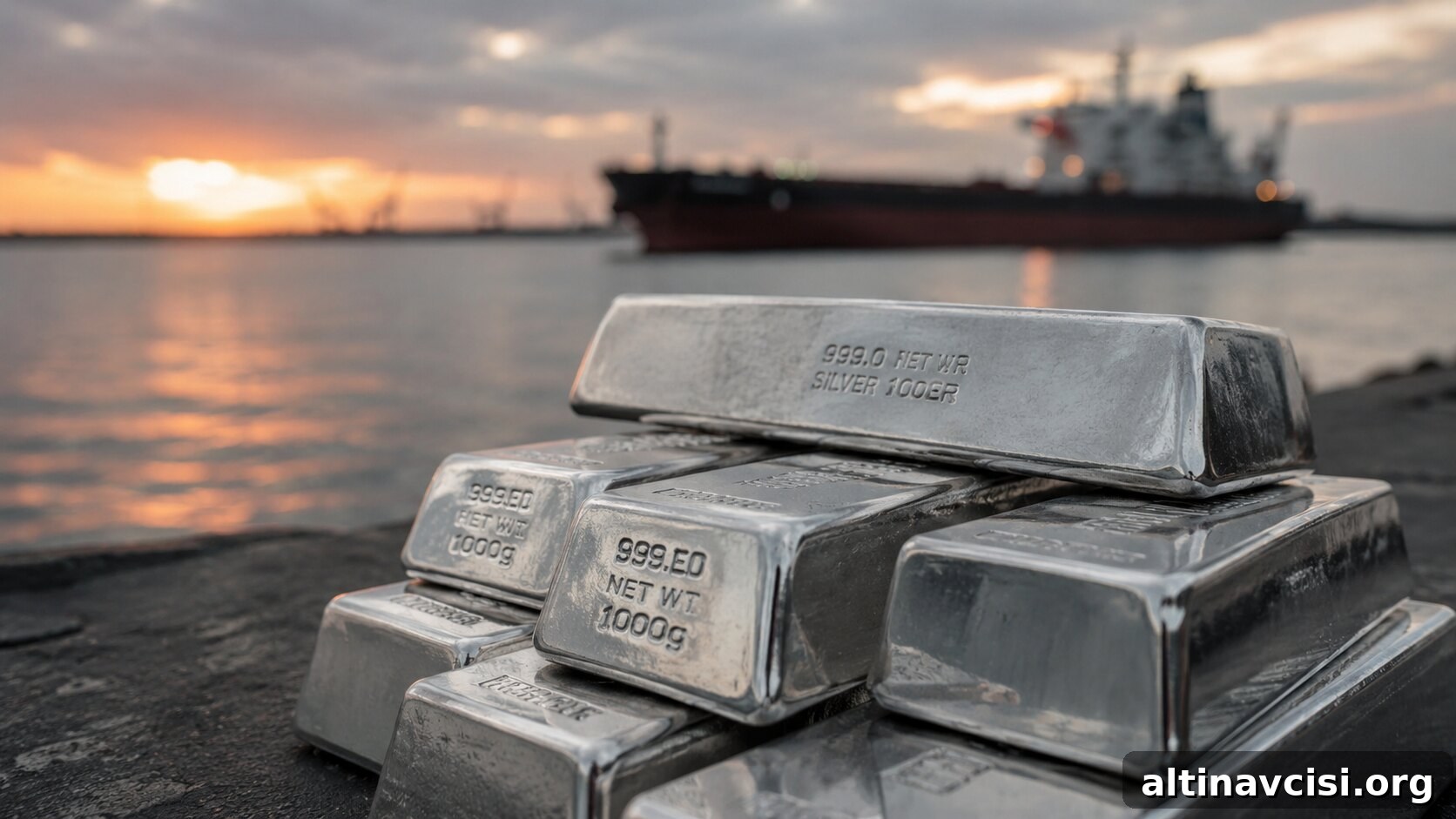
Silver is up 1.4% today, while oil is down more than 5%. Many headlines are describing the move as a “peace trade,” but that explanation misses the point.
To understand what is really driving the silver price, investors need to look beyond geopolitics and focus on real yields, inflation expectations, and industrial demand.
Why did silver fall during the US-Iran war?
When the conflict began on February 28, silver was trading near $84.50 per ounce. By early June, it had dropped to roughly $65. That was a decline of about 23% during a period of serious geopolitical risk.
If silver were driven only by fear, the price should have risen. It did not. That is the key point.
The main pressure on silver was not fear itself. It was the inflation chain created by the conflict, which changed market expectations for Federal Reserve policy. The process unfolded in several steps:
- The Strait of Hormuz partially closed, causing oil prices to spike.
- Higher energy costs drove more than 60% of May’s monthly CPI increase. Headline inflation reached 4.2% year over year, the highest reading since April 2023, according to the Bureau of Labor Statistics on June 10, 2026.
- Hot inflation reduced the Fed’s flexibility to cut rates. By early June, the probability of a December 2026 rate hike had moved above 71%, up from below 50% shortly before the June 5 jobs report, according to CME FedWatch data from June 10, 2026.
- Higher expected interest rates pushed real yields higher, making Treasuries and cash-like instruments more attractive.
- Silver does not pay income. When money market funds offer yields above 4%, holding silver carries a meaningful opportunity cost. That weighed on the silver price.
In other words, silver’s decline was not a simple fear story. It was a real yield story.
The Edge Every Investor NeedsSmarter precious metals investing starts here. The Nuggets Newsletter brings you essential market insights, Fed updates, global trends, educational videos, and more.
How does the Iran peace deal affect silver prices?
On June 14, President Trump signed a preliminary memorandum of understanding with Iran. The Strait of Hormuz is expected to reopen. Oil fell more than 5% immediately and is down roughly another 5% today, trading near $80.53 per barrel, a two-month low.
Lower oil prices mean lower energy costs. Lower energy costs also suggest that May’s CPI reading may prove to be the inflation peak of this cycle rather than the beginning of a new inflation surge. If inflation is starting to roll over, the Fed has less reason to keep discussing additional rate hikes.
Markets reacted quickly. The implied probability of a December 2026 rate hike fell from near 90% to almost 60% in a single session on June 15, 2026, according to CME FedWatch. That roughly 30-point decline in rate-hike expectations is what helped move silver higher.
This was not mainly about less fear in the market. It was about a lower real yield premium. The same force that had been suppressing silver for months suddenly weakened.
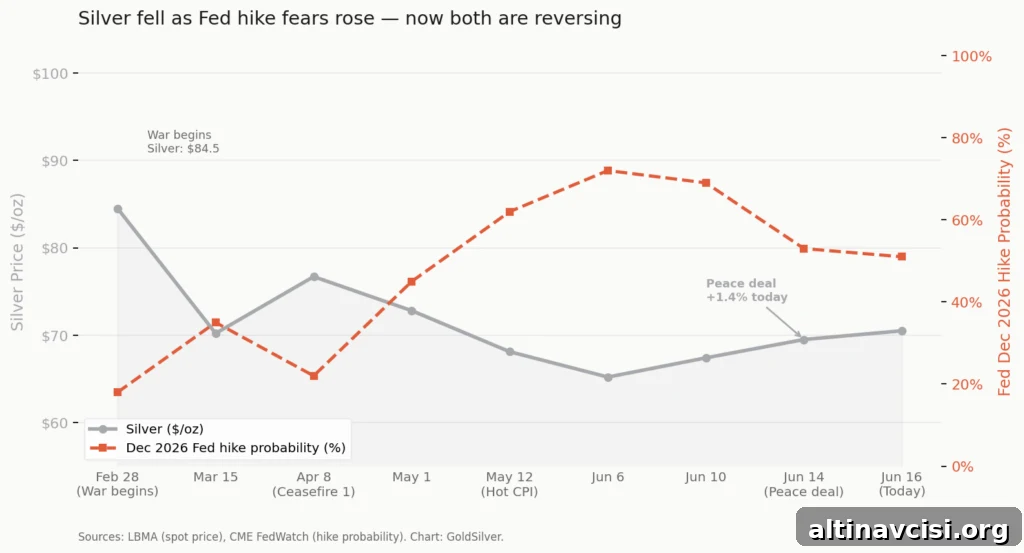
The peace deal did more than remove a war premium. It weakened the rate-hike argument that had been holding silver down.
What are silver’s two demand drivers right now?
Silver is different from many other precious metals because it has two major demand engines: monetary demand and industrial demand. At the moment, both appear to be working in the same direction.
The monetary engine works much like gold’s. When oil prices fall, inflation expectations ease. When inflation expectations ease, the Fed has more room to hold rates steady instead of raising them. That can reduce real yield pressure. Every factor that makes Treasury yields less attractive can make silver more appealing as a store of value.
The industrial engine is more specific to silver. More than 60% of annual silver demand comes from industrial uses. Solar panels, electric vehicles, AI data center hardware, and consumer electronics all require silver. The partial closure of the Strait of Hormuz did not only push oil prices higher. It also disrupted global manufacturing, slowed energy-intensive production, and forced supply chains to adjust. That pressure hurt industrial silver demand.
As the Strait reopens, manufacturing activity can begin to recover, and silver’s industrial engine can restart. The supply picture is already tight. The Silver Institute’s World Silver Survey 2026 projects a sixth consecutive annual supply deficit of 46.3 million ounces, wider than last year’s 40.3 million ounce shortfall. The same report states that the cumulative drawdown from above-ground stockpiles has reached 762.1 million ounces since 2021.
In a market with that kind of structural deficit, it does not take a large rebound in demand to influence prices. That is why silver’s reaction can be stronger than gold’s when both monetary and industrial factors improve at the same time.
Gold is up 0.67% today. Silver is up 1.43%, roughly twice as much. That outperformance suggests that silver is benefiting from both lower real yield expectations and renewed industrial demand momentum.
What does the Warsh FOMC meeting mean for silver?
Kevin Warsh chairs his first FOMC meeting today and tomorrow. The rate decision itself appears largely settled. A hold at 3.50% to 3.75% carries roughly a 97% probability, according to CME FedWatch data from June 13, 2026.
The more important event for silver is Warsh’s press conference at 2:30 PM ET tomorrow, along with the updated dot plot. Investors will be watching how he explains the recent inflation data and whether he treats the oil-driven CPI increase as temporary or structural.
The distinction matters. If Warsh frames the inflation spike as geopolitical and temporary, especially now that the Strait of Hormuz is expected to reopen, real yield expectations could fall further. That would provide an additional tailwind for silver’s monetary demand.
If he treats the inflation increase as more persistent and signals the need for restrictive policy regardless of falling oil prices, rate-hike concerns could rise again. In that case, silver may consolidate near current levels rather than extend its rally immediately.
Still, one press conference does not erase the broader structure of the silver market. The market continues to face six consecutive years of supply deficits, a 762 million ounce drawdown from above-ground stocks, and two demand engines that are now moving in the same direction.
The factor that suppressed silver for four months has lost its main source of fuel. That is why today’s move should not be described simply as a peace trade. It is better understood as a real yield trade, supported by improving industrial conditions. For investors following silver prices, that difference is crucial.
Stay On Top of Gold & Silver Prices
Get important market alerts sent straight to your inbox.
SOURCES
1. Bureau of Labor Statistics — Consumer Price Index, May 2026
2. CME Group — FedWatch Tool
3. Silver Institute — World Silver Survey 2026
4. LBMA — Precious Metal Prices
Disclaimer: This article is for informational purposes only and does not constitute financial or investment advice. Always consult a qualified financial adviser before making investment decisions.
You May Also Like:
- Gold Up 3%, Silver Up 4.7%: Five Forces Driving Metals Higher Today
- Iran Peace Deal Sends Oil Down 5%, Gold Up 3%
- Gold & Silver Surge on Iran Peace Deal — Then Pull Back
- Silver Fell 22% in 30 Days. Gold-Silver Ratio Hits 63.
- Every Bearish Catalyst Landed at Once. Gold and Silver Went Up Anyway.
- Gold at Seven-Month Lows: Why Geopolitical Fear Is Not Enough
- Gold Slides to $4,130 as Iran War Turns Inflation Against It
- May CPI Printed 4.2%. Core Inflation Beat. So Why Did the Gold Price Drop?
- Gold Is Down 9%. The CPI Print That Could Either Extend the Drop — or End It.
- Gold Price News: Goldman, China, CPI, and the Fed Explained