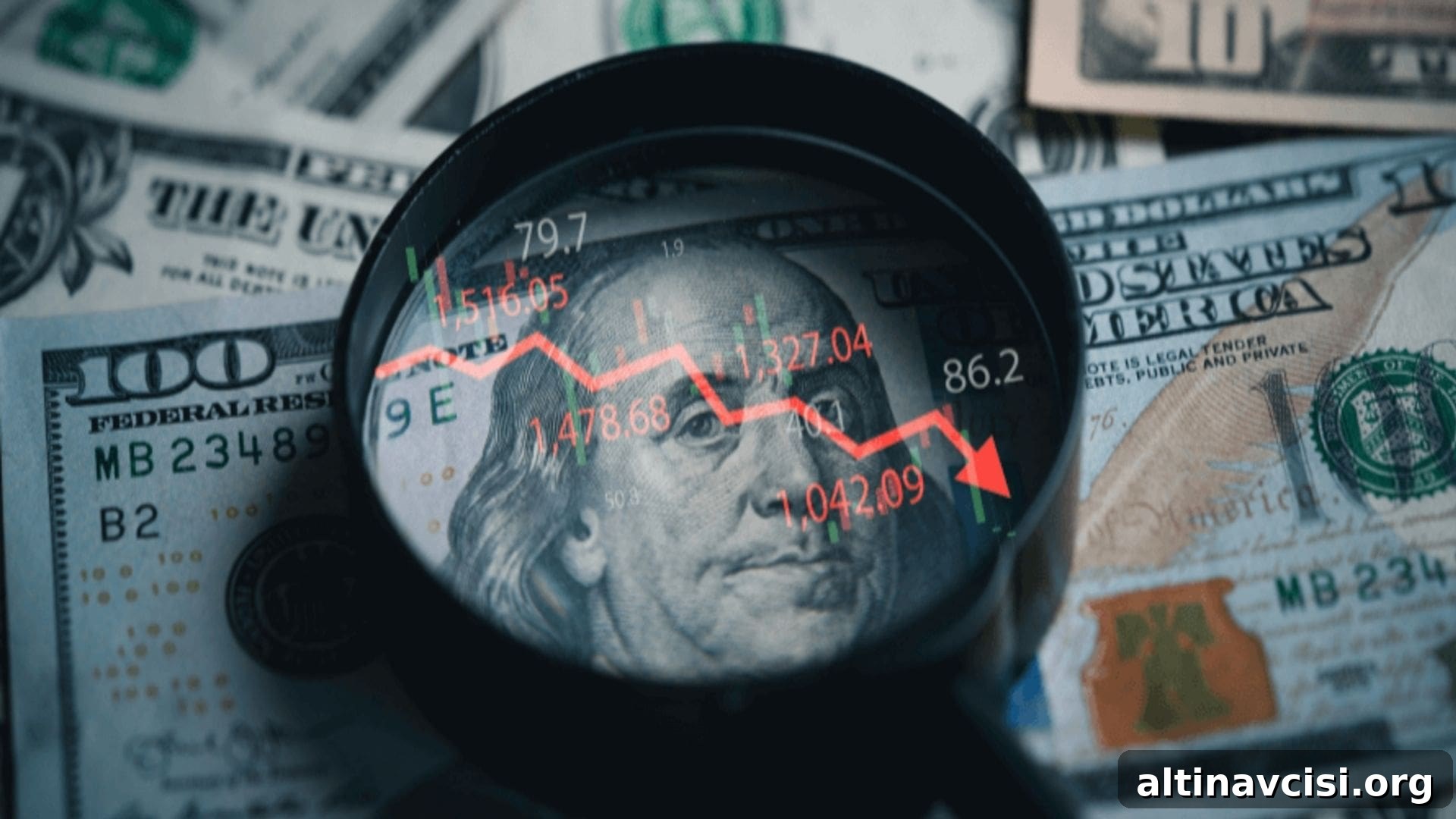
With the US Dollar Index down roughly 8% in 2025, investors are exploring a range of strategies to benefit from dollar weakness.
Common approaches include gaining exposure to foreign currencies through exchange-traded funds (ETFs) such as the Euro Trust (FXE) and Japanese Yen Trust (FXY), allocating to commodities that often appreciate when the dollar falls, increasing exposure to international equities, and holding gold.
Several factors have contributed to the dollar’s decline: widespread expectations for Federal Reserve rate cuts, policy uncertainty linked to the current U.S. administration, and a broader reallocation of global capital away from US assets.
Financial advisers recommend diversifying geographic equity exposure—many suggest targeting at least 50% of equities outside the United States and considering a meaningful allocation to emerging markets to capture growth and currency diversification. A 5–10% allocation to gold is often advised as both a crisis hedge and a direct play on dollar depreciation.
When considering foreign-currency ETFs, investors should weigh fund costs, liquidity, and the tax treatment of currency instruments. Currency-tracking ETFs can simplify exposure to a single currency but may carry tracking error and management fees that reduce returns over time.
Commodities tend to move inversely to the dollar because a weaker dollar makes raw materials cheaper in other currencies, supporting demand and prices. Energy and industrial metals often benefit, while agricultural commodities can react to both currency shifts and supply-demand fundamentals. Investors can access commodities through ETFs, futures, or commodity-producing equities, each with different risk profiles and cost structures.
International equities offer another route to benefit from dollar weakness. When the dollar falls, foreign corporate earnings translated back into dollars can look stronger, potentially boosting returns for US-based investors. Within international markets, developed markets provide stability and corporate governance, while emerging markets can offer higher growth and greater sensitivity to currency moves—along with higher volatility.
Portfolio construction in this environment should balance opportunity with risk management. Diversification across asset classes and geographies helps reduce concentration risk. Hedging currency exposure can protect capital but may reduce upside if currencies move further in your favor. Investors should also consider interest-rate differentials, local economic fundamentals, and geopolitical risks when shifting allocations.
Gold remains a classic hedge against currency weakness and economic uncertainty. Its historical role as a store of value and limited correlation with equities make it useful for portfolio diversification. However, gold does not produce income and can be volatile, so sizing should reflect individual risk tolerance and investment objectives.
Before making material changes, investors should evaluate tax implications, transaction costs, and the potential need for rebalancing. Consulting with a financial professional can help align allocations with long-term goals, time horizon, and risk tolerance. Dollar declines can create attractive opportunities, but disciplined planning and careful selection of instruments are essential to capture potential gains while managing downside risk.