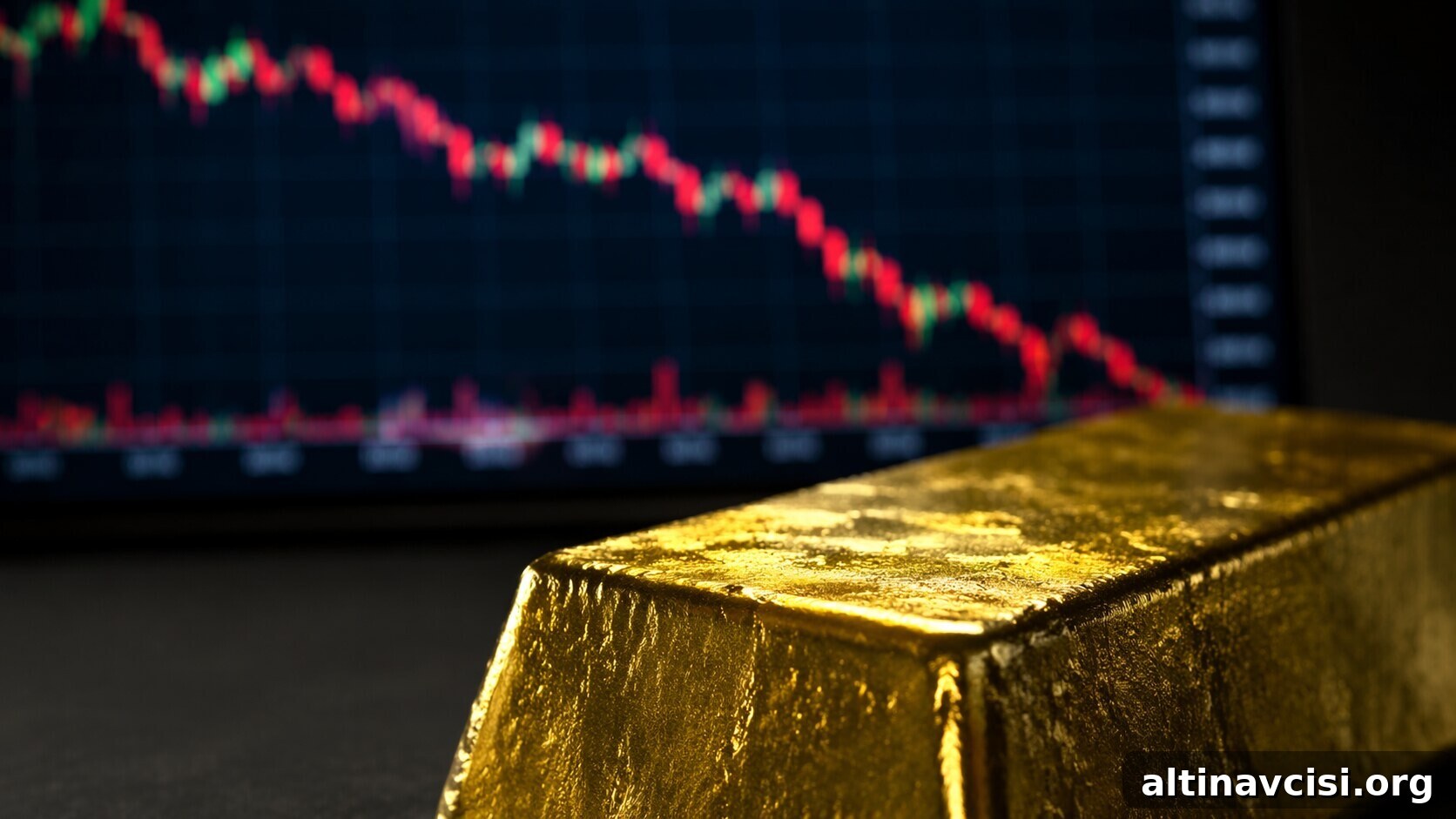
The U.S. Dollar Index has fallen to six-week lows while the IMF has trimmed its growth outlook and projected headline inflation to rise to 4.4% in 2026.
For gold, those signals align. The macro forces that pushed gold to an intraday high of $5,589 in January remain in place. The recent pullback looks like a pause in an ongoing bullish trend, not the end of it.
What Are the Dollar and IMF Signaling for Gold Right Now?
Gold is trading near $4,800 per ounce, roughly 13–14% below the intraday high of $5,589.38 reached on January 28, 2026. Meanwhile, the U.S. Dollar Index (DXY) has declined to its lowest level since late February, around 98. The dollar has given back the gains it made during the Middle East conflict earlier this year.
A weaker dollar together with a gold consolidation under its record high is not contradictory — it’s clarifying. When the dollar weakens while gold rests below a peak, it often signals that the structural case for gold is strengthening even as the market digests previous gains. The dollar and the IMF don’t predict daily price moves; they describe the environment gold operates in.
What Does a Weaker Dollar Mean for Gold?
The dollar–gold relationship is among the most consistent in markets. When the dollar’s purchasing power falls, gold — priced in dollars — tends to rise in nominal terms. Gold is a form of stateless money with no government credit risk. When confidence in the dollar wanes, capital often shifts into gold.
The DXY compares the dollar to six major currencies: the euro, yen, pound, Canadian dollar, krona, and franc. The index hit about 98 in mid-April 2026 after several sessions of declines, down from peaks above 109 in early 2025. Near-term pressure on the dollar has eased as U.S.–Iran diplomacy progressed, but structural drivers are also at work. Many institutional forecasts place the DXY in a 97–100 range by year-end 2026, with scenarios from major banks envisioning a Fed pivot and sustained dollar weakness through the year.
The reserve composition picture supports this view. IMF data showed the dollar at roughly 56.77% of official foreign exchange reserves as of Q4 2025 — the lowest share since the mid-1990s. That gradual shift away from the greenback has been directed in part into gold.
Your Gold Buying Guide Most investors overpay when they buy gold and again when they sell. This guide explains what to own and why.
What Is the IMF’s April 2026 Outlook — and Why Does It Matter for Gold?
A weaker dollar is only part of the story. The IMF’s April 2026 World Economic Outlook adds another layer that points in the same direction.
The IMF projects global growth at about 3.1% in 2026 — below an earlier pre-conflict forecast of 3.4% — while forecasting global headline inflation to rise to roughly 4.4%. That marks a reversal of the recent disinflation trend. The IMF’s baseline assumes a relatively short-lived Middle East conflict and a moderate rise in energy prices. If the conflict endures, the IMF’s adverse scenario sees inflation higher and growth weaker.
Gold is a monetary asset with no coupon or dividend; its opportunity cost is tied to real yields. Gold tends to perform well when inflation is persistent, growth weakens, and confidence in fiat currencies falters. The IMF’s outlook describes precisely those conditions, which historically have been favorable for gold.
Why Are Central Banks Still Buying Gold?
A key signal comes from central banks. They purchased about 863 tonnes of gold in 2025 — nearly double the 2010–2021 annual average. The World Gold Council and other industry data show continued elevated buying into 2026, with China, Kazakhstan, and several emerging-market central banks active in the market.
Central banks acquire gold as policy: to reduce dollar exposure and hold a reserve asset without counterparty risk. This shift is often described as part of a broader de-dollarization trend and geopolitical hedging. Even modest ongoing purchases matter for reserves because at higher prices fewer tonnes are needed to change allocation meaningfully.
The dollar’s shrinking share of reserves has been noticed by policymakers; adding gold is their institutional response.
Is Now a Good Time to Buy Gold?
At around $4,800 — about 13–14% below January’s intraday high — gold is in a correction inside a larger bull market, not a structural reversal. Prices have already recovered from lower levels earlier in April when gold dipped toward the mid-$4,600s amid geopolitical repricing.
The fundamental drivers that took gold to record highs remain present: U.S. inflation above target, a weakening dollar, central banks buying at elevated rates, and slowing global growth. Those conditions are inconsistent with a sustained bear market for gold.
Major bank research includes bullish scenarios: some project gold above $6,000 by late 2026 and even higher longer-term ranges if private investor allocations rise alongside central bank demand. There are legitimate near-term risks — a temporary dollar rebound, delayed rate cuts, or a worsening inflation shock could create volatility — but such scenarios often strengthen gold’s structural case over time.
The discipline for investors is not timing an exact low. It’s recognizing when monetary conditions make gold a rational portfolio allocation and acting before that view becomes consensus. Persistent inflation, a structurally weaker dollar, slower growth, and central bank diversification together form a clear checklist that currently favors gold.
The Bottom Line
The dollar is weakening, inflation is rising, growth is slowing, and central banks are buying gold at historically high rates. These forces reinforce one another and show no clear sign of reversing.
Gold near $4,800 is not a panic buy at a peak; it can be a measured entry in an ongoing bull market, sitting well below January’s high while the underlying demand architecture remains intact. As the era of easy dollar dominance recedes, gold stands out as a primary beneficiary.
Stay On Top of Gold & Silver Prices
Get important market alerts sent straight to your inbox.
People Also Ask
What happens to gold when the dollar weakens?
When the dollar weakens, gold typically rises in price. Since gold is priced in U.S. dollars globally, a weaker dollar makes gold relatively cheaper for holders of other currencies, boosting demand. This inverse relationship is durable, though it can be complicated when simultaneous crises drive flows into multiple safe-haven assets.
What is the IMF saying about the global economy in 2026?
The IMF’s April 2026 World Economic Outlook forecasts global growth slowing to about 3.1% and global headline inflation rising to around 4.4%. The downgrade reflects the impact of geopolitical tensions on energy prices and financial conditions, and includes an adverse scenario with higher inflation and weaker growth if conflicts persist.
Why are central banks buying so much gold?
Central banks are lowering dollar exposure and increasing holdings in gold — an asset free of counterparty risk and political restrictions. After sanctions and reserve freezes in recent years, many emerging-market central banks accelerated gold purchases, lifting annual central bank demand to levels well above the pre-2022 averages.
What is gold’s all-time high price?
Gold reached an intraday high of $5,589.38 per ounce on January 28, 2026, amid heightened geopolitical tensions and a falling dollar. That peak followed a strong bull run in 2025.
What does de-dollarization mean for gold?
De-dollarization describes the gradual shift by central banks and governments away from the U.S. dollar as the dominant reserve asset. As dollar holdings decline, many central banks have increased gold allocations, viewing gold as a politically neutral, sanction-resistant reserve asset. That structural trend has boosted institutional demand for gold.
SOURCES
1. Trading Economics — United States Dollar Index
2. Deutsche Bank Research — Dollar and FX Forecasts
3. International Monetary Fund — Currency Composition of Official Foreign Exchange Reserves (COFER)
4. International Monetary Fund — World Economic Outlook, April 2026
5. World Gold Council — Gold Demand Trends: Full Year 2025
6. World Gold Council — Central Bank Gold Statistics: 2026 Forecast
7. World Gold Council — Central Bank Gold Statistics update
8. J.P. Morgan Global Research — Gold Price Predictions: 2026 Outlook
Disclaimer: This article is for informational and educational purposes only and does not constitute investment advice. Past performance is not a guarantee of future results. Consult a qualified financial advisor before making investment decisions.
You May Also Like:
- Is Gold a Better Investment Than Bitcoin Right Now?
- What the Silver-to-CPI Ratio Reveals That Spot Price Hides
- Gold & Silver Supply and Demand: What Really Drives Prices Over Time
- Dow to Gold Ratio: 100 Years of History Decoded
- How the 50 Day SMA Helps You Understand Gold & Silver
- Gold Silver Ratio Forecast (75): Buy Gold, Add Silver, or Wait?
- Gold Dip Buying Explained: Is This A Smart Move Now?
- What Is Quantitative Easing — and How Does It Affect Metals?