
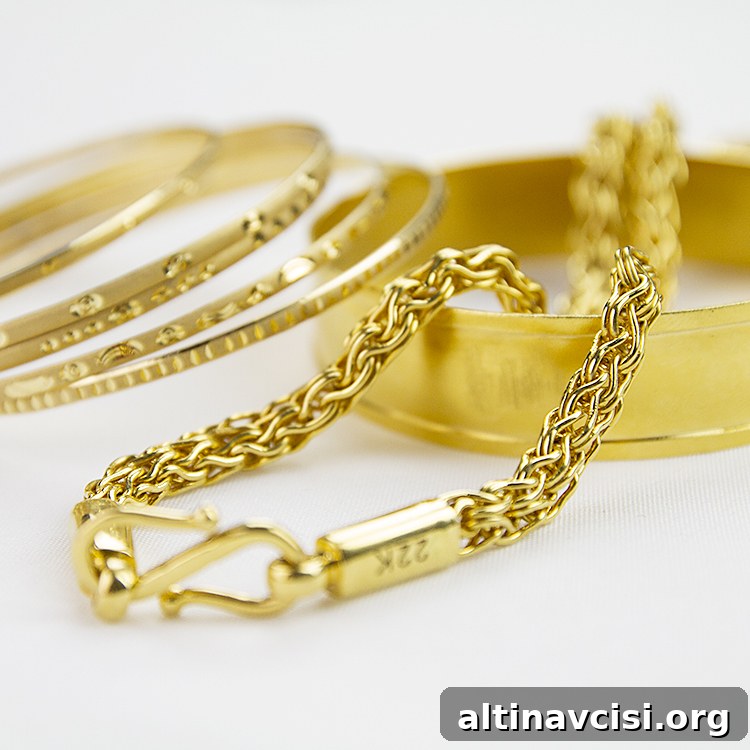
Other than perhaps diamonds, few adornments rival the timeless beauty of pure gold jewelry. Both 22K and 24K gold pieces are elegant, captivating and enhance the wearer’s appearance. People have crafted gold jewelry for thousands of years because its natural luster evokes feelings of beauty, status and enduring value.
Buying a handsome piece of gold jewelry is rarely a mistake. Gold is timeless and many pieces become cherished family heirlooms. Beyond aesthetics, high-purity gold jewelry can also serve as a form of portable wealth in times of need.
That said, there are smarter and less wise ways to buy gold. Fashion or costume jewelry often imitates gold’s appearance but lacks the weight and permanence of real gold. Genuine gold has heft and longevity that costume pieces don’t. This guide will help you avoid common pitfalls and select the right gold jewelry, whether for yourself or as a gift. It also highlights the benefits of investment-grade gold jewelry. Key questions covered include:
- What’s the difference between 22K and 24K gold jewelry?
- How do 18K, 14K and 12K compare?
- Which should you buy: 22K or 24K?
- How to choose the right jewelry size
- How to measure yourself for necklaces and bracelets
- When pure gold jewelry makes a fitting gift
- Other reasons to buy gold jewelry
- Where to find solid gold pieces
First, some basics…
1. What’s the Difference Between 22K and 24K Gold?
The “K” in gold ratings stands for karat, which denotes purity. (Carat with a C measures gemstone weight.) Karat is shown as K or Kt and commonly appears as 10, 12, 14, 18, 22 or 24. In many countries jewelers are required to stamp the karat rating on gold items.
Higher karats mean purer gold. 24K indicates essentially pure gold—about 99.9% pure—and is known for its bright yellow hue. 22K gold is roughly 91% pure, with the remaining portion typically alloyed from metals like copper or silver. Those alloys make the gold harder and more durable.
2. What Is 18K, 14K and 12K Gold?
Karat ratings range from 10K up to 24K. Lower karats contain more base metals and are therefore harder and more resistant to wear, but they contain less actual gold. Typical gold content by karat is:
| Karat | % Gold |
|---|---|
| 10K | 41.67% |
| 12K | 50% |
| 14K | 58.33% |
| 18K | 75% |
| 22K | 91.67% |
| 24K | 99.99% |
Note: 24K is essentially pure gold; any claim of 25K or higher is incorrect.
3. Should I Buy 22K or 24K Gold Jewelry?
Although much jewelry marketed as “gold” is 14K (around 58% gold), choosing 22K or 24K ensures more gold content for the money. Each karat level has advantages:
- 24K: Bright, warm yellow color and the highest gold content. It typically holds slightly greater intrinsic value per weight, but it is softer and more prone to scratches and deformation.
- 22K: Slightly less pure but stronger due to alloying metals like copper or silver, making it more practical for everyday wear.
- 18K and 14K: Even more durable because they include more base metals, but they contain less gold and show a subtler yellow tone.
Preference depends on the intended use: 24K appeals for its vivid color and purity, while 22K is a popular compromise that balances appearance and durability. “Yellow,” “rose” and “white” gold describe the hue produced by different alloy metals—more copper yields a redder cast, more silver or palladium yields a whiter tone. High-karat 22K and 24K pieces are typically yellow gold.
4. How to Buy the Right Jewelry Size
If you can’t try jewelry on in person, these guidelines help pick the right size—especially useful when buying a gift.
Necklaces for women: Lengths commonly range from 10 to 48 inches; even-inch lengths are typical. Common placements on the average female body include:
| Women’s Necklace Length | Position |
|---|---|
| 10 to 14 inches | Wraps closely around the neck |
| 16 inches | Wraps loosely around the neck |
| 18 inches | Sits near the collarbone |
| 20 inches | Sits below the collarbone |
| 22 inches | Lays near the top of the bust |
| 24 inches | Lays at or below the center of the bust |
| 28 to 38 inches | Hangs below the bust |
Keep in mind the clasp or connector is often not included in the listed length. A standard clasp is about 3/4 inch; some are longer, so factor that into your choice.
Necklaces for men: Typical lengths run from 18 to 24 inches. Common placements on the average male frame include:
| Men’s Necklace Length | Position |
|---|---|
| 18 inches | Sits at the base of the neck |
| 20 inches | Sits at the collarbone |
| 22 inches | Falls at or below the collarbone |
| 24 inches | Falls to the upper chest |
Bracelets for women: The common standard is 7 to 7½ inches. This length typically positions the bracelet between the hand and the wrist bone, which is considered an attractive fit.
5. How to Measure Yourself for Gold Jewelry
To measure for necklaces, use a soft, flexible tape measure wrapped snugly (but comfortably) around the neck. For a collar or choker, add about two inches to the neck measurement.
To size a bracelet, measure the widest part of the wrist just below the wrist bone and add approximately half an inch for a comfortable fit. Add more length if you want the bracelet to hang lower on the hand, or less for a tighter fit.
If you don’t have a flexible tape measure, create length samples using string cut to 8″, 10″, 12″ and 14″. Try each to see which length looks best. Remember a single person may wear multiple necklace lengths for different styling effects.
6. When Is Pure Gold Jewelry an Appropriate Gift?
Gold jewelry is a classic gift for many occasions, including:
- Birthdays
- Wedding anniversaries
- Bridal showers and engagements
- Weddings
- Graduations
- Expressions of thanks or apology
- Christmas and other religious holidays
- Valentine’s Day
- Mother’s Day and Father’s Day
Gold makes an enduring gift because it can be passed down across generations. Gold does not corrode, tarnish or rust, so a well-made piece can remain beautiful and wearable for decades—even centuries.
7. Why Else Should You Buy Gold Jewelry?
Beyond beauty and sentiment, high-purity gold jewelry retains monetary value. 22K and 24K pieces contain significant amounts of gold, so they carry intrinsic worth. Investment-grade gold jewelry—pieces made primarily of gold without unnecessary decorative markups—can act as wearable bullion, combining adornment with a tangible store of value.
Bullion Jewelry™: Adornment and Investment
Bullion-style jewelry is crafted mainly from gold without large stones or heavy decorative premiums. Because its value is closely tied to the gold content, bullion jewelry tends to track the precious metal’s market value and can appreciate as gold prices rise. In contrast, fashion or designer jewelry often sells at high premiums relative to melt value and rarely resells for what the buyer originally paid.
Practical Advantages of Investment-Grade Gold Jewelry
Investment-grade gold jewelry offers practical benefits:
- It can serve as a portable, easy-to-transport store of wealth.
- Passing value to heirs or gifting wealth can be more straightforward than transferring bank accounts or investments.
- Bulion-style pieces often carry lower premiums compared with heavily branded or decorative jewelry.
- They provide a tangible asset outside the banking system, useful for financial diversification or emergency liquidity.
- High-purity gold jewelry is generally easier to sell at a fair price than costume jewelry.
Keep in mind most retail jewelry is 14K or similar and may include substantial markups. If your goal is to own wearable wealth, seek pieces with high gold content and modest premiums. That way you enjoy both a lovely piece of jewelry and an asset that can retain and potentially grow in value over time.