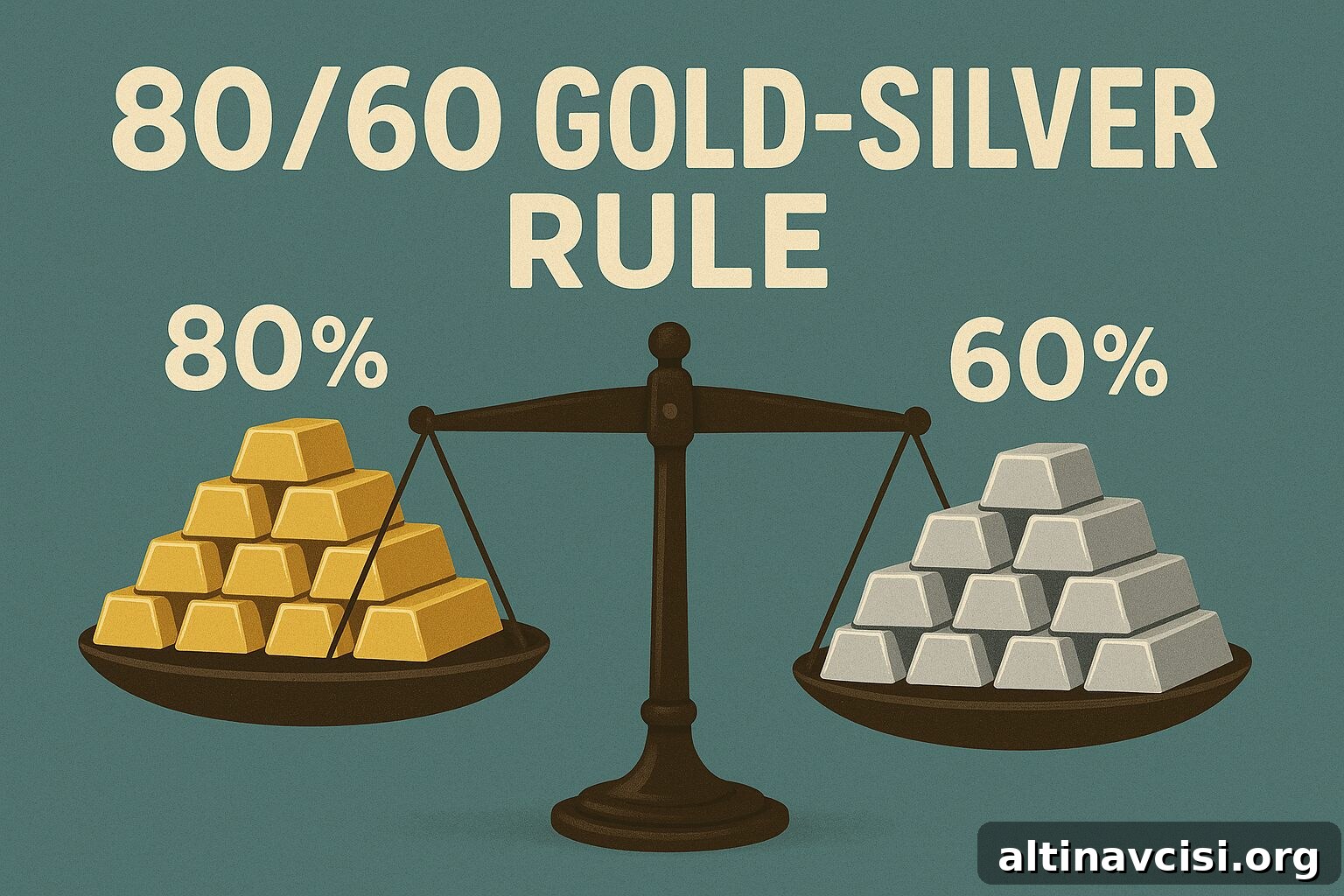
The gold-to-silver ratio has guided precious-metals investors for centuries, and applying it as a practical strategy can be straightforward. The 80/60 gold-silver guideline helps investors decide when to favor one metal over the other using data rather than emotion.
Understanding the Gold-to-Silver Ratio
The gold-to-silver ratio measures how many ounces of silver are required to buy one ounce of gold. It fluctuates with market conditions, macroeconomic data, industrial demand, and investor sentiment, making it a useful indicator of relative value between the two metals.
For example, if gold trades at $4,000 per ounce and silver trades at $50 per ounce, the ratio is 80:1. That ratio changes constantly, and tracking it helps investors identify potential buying or rebalancing opportunities.
The 80/60 Rule Explained
The 80/60 gold-silver rule is a tactical approach to guide allocation between gold and silver:
- When the ratio reaches 80:1 or higher → silver is relatively cheap → consider increasing silver exposure or trading some gold for silver.
- When the ratio falls to 60:1 or lower → gold is relatively cheap → consider shifting toward gold or trading silver for gold.
These thresholds reflect historical extremes and the tendency of the ratio to revert toward a long-term average near 65–70:1. By buying the relatively undervalued metal and rebalancing as the ratio normalizes, investors aim to capture value while managing risk.
Why These Numbers Matter
The 80 and 60 levels are not arbitrary: they mark points where one metal has historically been over- or under-valued relative to the other. When the ratio moves into these zones, it often signals that a meaningful reversion toward the mean is possible.
During the 2020 market dislocation, the ratio spiked above 120:1 as silver lagged, then moved back toward roughly 70:1 while silver outperformed gold significantly. Such swings illustrate how quickly opportunities can arise when sentiment becomes one-sided.
The Ratio at Work
When the ratio reached extreme levels above 100:1 earlier in the cycle, silver was deeply undervalued relative to gold. At that time, silver traded near $30 per ounce; as the ratio normalized, silver rose to roughly $48 per ounce, representing a substantial gain for those who increased silver exposure at the extreme.
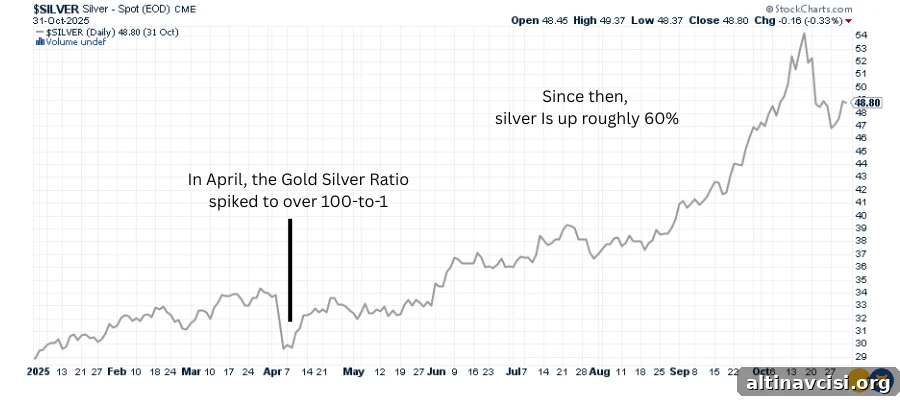
This example demonstrates the principle behind the 80/60 rule: when the ratio stretches to extremes, it frequently signals an opportunity to buy the undervalued metal and benefit as the relationship rebalances.
Investors who acted on the extreme readings and increased their silver allocations saw outsized returns as the market corrected the imbalance.
How to Apply the Strategy
1. Monitor the Ratio
Check the gold-to-silver ratio regularly through reliable market sources or bullion dealers. Many investors include it in monthly portfolio reviews to stay aware of changing relative valuations.
2. Identify Entry Points
- Above 80: Silver may be undervalued. Consider increasing silver positions through coins, rounds, or bars.
- Below 60: Gold may be undervalued. Consider increasing gold holdings.
3. Move Gradually
Avoid abrupt, large reallocations. Use dollar-cost averaging to adjust holdings over time, which reduces timing risk and smooths volatility.
Historical Validation
Historically, the gold-to-silver ratio has swung widely — sometimes above 100:1, other times below 40:1. These fluctuations have provided repeatable opportunities for investors who use relative-value signals to guide their metals allocations.
- In 2018–2019 the ratio climbed above 85:1, presenting a silver-buying opportunity.
- In 2020, silver significantly outperformed gold as the ratio normalized back toward the long-term average.
These episodes illustrate why the 80/60 framework remains a useful, disciplined guide for many investors seeking to balance exposure between gold and silver.
Benefits of the 80/60 Gold-Silver Rule
1. Objective Decisions: Clear ratio thresholds encourage decisions based on data rather than emotion or headlines.
2. Improved Return Potential: Buying the relatively undervalued metal and rebalancing toward the mean can enhance long-term performance within a diversified metals allocation.
3. Built-In Risk Management: The approach promotes diversification by balancing exposure based on relative value instead of fixed percentage allocations.
Limitations to Keep in Mind
- It’s Not a Crystal Ball. The ratio indicates relative value but does not provide exact timing. Extremes can persist for extended periods.
- Requires Monitoring. The approach is more active than a simple buy-and-hold strategy and benefits from periodic review.
- Costs Matter. Dealer spreads, shipping, insurance, and storage fees can affect net returns and should be considered when trading physical metals.
The Bottom Line: A Tool, Not a Rule
The 80/60 gold-silver rule is a practical, time-tested framework to guide precious-metals allocation using objective market data. It is not a guaranteed profit engine, but it can help investors make more disciplined allocation choices as part of a diversified investment plan.
Whether you are new to metals or an experienced investor, understanding the gold-to-silver ratio and using it strategically can help you identify opportunities and build long-term value.
Investing in Physical Metals Made Easy
People Also Ask
What is the 80/60 gold-silver rule?
The 80/60 gold-silver rule is a straightforward strategy that helps investors decide when to favor gold or silver based on their price ratio. Above 80:1, silver is often seen as undervalued; at 60:1 or lower, gold may offer better relative value.
How does the gold-to-silver ratio affect investment decisions?
The ratio shows how many ounces of silver equal one ounce of gold. Tracking it helps investors identify when one metal is historically cheap or expensive relative to the other, creating potential buy-low sell-high opportunities.
Why did the gold-silver ratio matter when it was over 100 to 1?
A ratio above 100:1 indicates that silver is extremely undervalued relative to gold. When such extremes occurred, silver traded near $30 per ounce and later rose significantly as the ratio normalized, highlighting how ratio-based signals can present compelling opportunities.
Is the 80/60 gold-silver rule still relevant today?
Yes. Although the ratio shifts over time, mean reversion remains a core principle. The 80/60 thresholds provide a disciplined, data-driven way to balance precious-metals holdings in changing markets.
How often should I check the gold-to-silver ratio?
Many investors review the ratio monthly or quarterly as part of regular portfolio checks. Including it in a routine review helps you stay informed about relative-value shifts between gold and silver.
Get Gold & Silver Insights Direct to Your Inbox
Join thousands of investors who receive expert analysis, market updates, and exclusive offers every week.