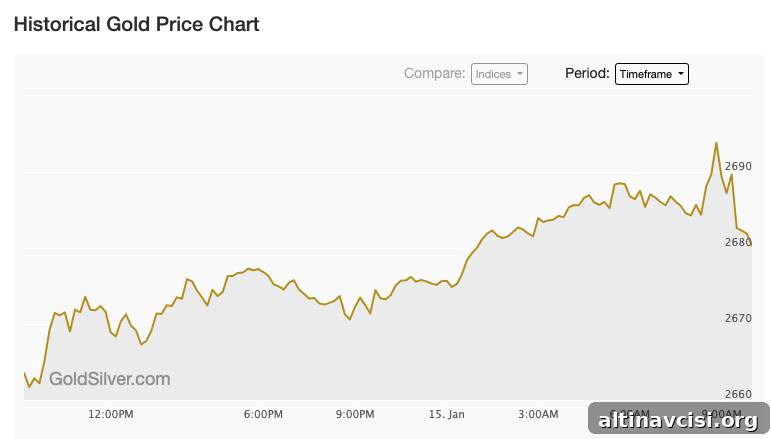
Gold rose as the U.S. dollar index and Treasury yields eased, with spot gold up 0.4% at $2,687.59 per ounce and futures gaining more than 1% to $2,710.00. Attention in markets has turned to upcoming U.S. consumer price index (CPI) data, which is expected to show annual inflation rising to 2.9% from 2.7% in November. Investors are weighing how that data will influence Federal Reserve policy and the outlook for rate cuts.
Ole Hansen, head of commodity strategy at Saxo Bank, said uncertainty is elevated ahead of the CPI release and that political developments add another layer of complexity. Proposals such as tariffs on imports — including those suggested by former President Trump — could push inflation higher. That, in turn, would complicate the Fed’s decisions on interest rates and the timing of potential easing.
Markets also digested Tuesday’s producer price index (PPI) report, which showed a modest increase. While the PPI did not point to an immediate acceleration in inflation pressures, analysts increasingly argue that expectations of near-term rate cuts have been pushed out. Many now see the earliest meaningful easing likely arriving in the second half of the year rather than the first.
The pullback in the dollar and yields has helped gold’s appeal as a store of value and hedge against inflation concerns. Lower real yields typically support higher gold prices because they reduce the opportunity cost of holding non-yielding assets. Traders will monitor not only the CPI print but also subsequent Fed commentary and any shifts in fiscal or trade policy that could influence inflation and growth.
In the near term, volatility around the CPI release is expected to drive market moves across currencies, bonds and commodities. Should inflation surprise to the upside, it could reinforce expectations that the Fed will remain cautious about cutting rates, which may limit upside in gold despite any short-term safe-haven flows. Conversely, a softer-than-expected CPI reading would likely increase speculation about earlier easing, putting additional pressure on the dollar and supporting further gains in gold.
For investors, the key considerations remain the pace of inflation, the Fed’s reaction function, and geopolitical or policy developments that could alter price dynamics. That mix of economic data and political factors is keeping markets on edge and sustaining demand for assets perceived as protection against inflation and uncertainty.