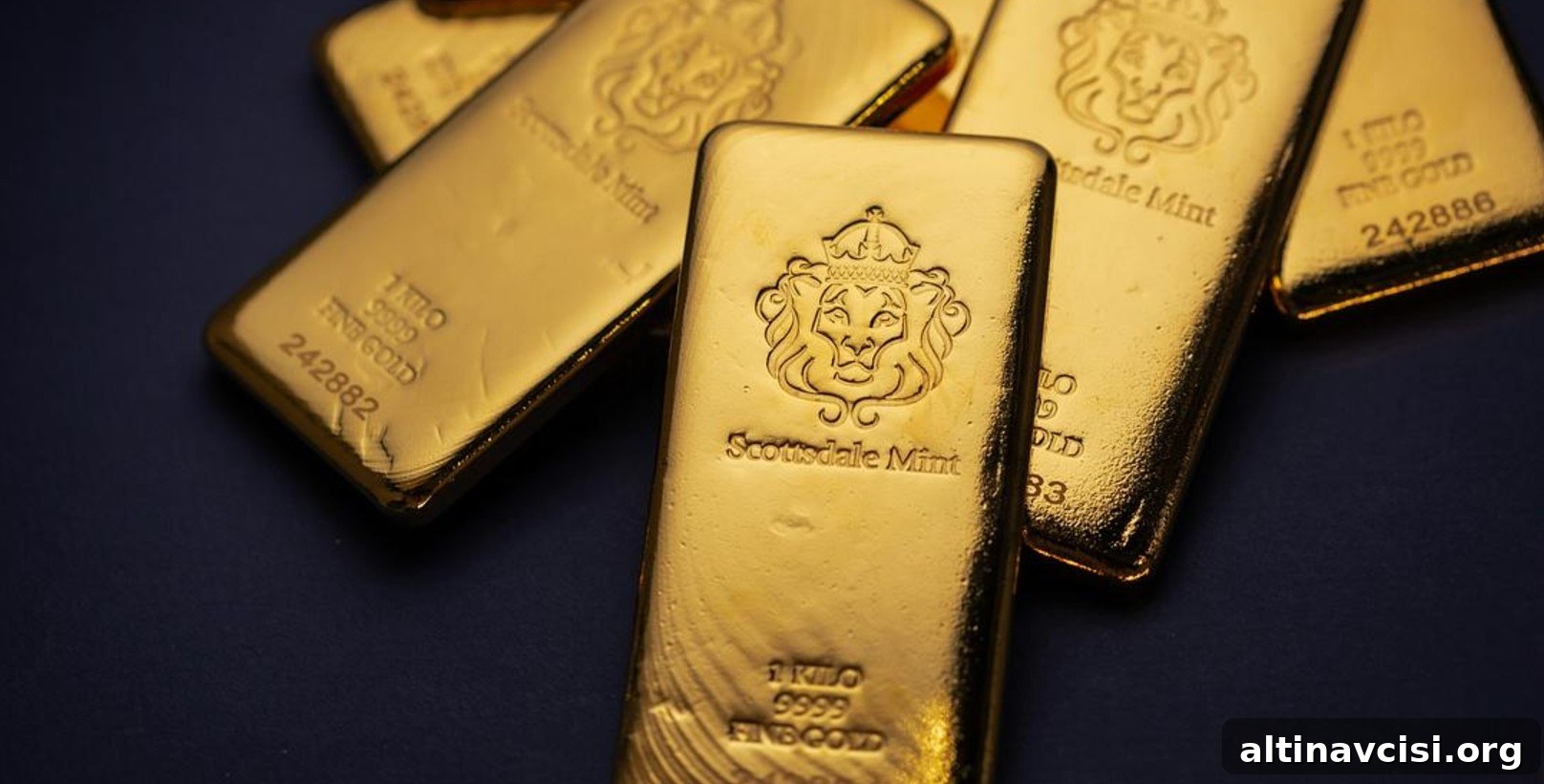
Gold prices remained steady around $3,388 per ounce as investors awaited the Federal Reserve’s upcoming interest rate decision and continued to monitor tensions in the Middle East. Traders are taking a cautious stance ahead of the Fed announcement, which many expect will leave benchmark interest rates unchanged. That expectation, combined with persistent geopolitical uncertainty, is helping sustain demand for safe-haven assets such as gold.
While gold held its ground, platinum outperformed other precious metals, rallying roughly 3.5% to reach about $1,307 per ounce — its strongest level in four years. Market participants point to emerging shifts in consumer demand, particularly in China, where some jewelers and buyers are considering platinum as an alternative to increasingly costly gold. This substitution effect, along with supply considerations in the platinum market, has contributed to the recent price surge.
The outlook for precious metals is being shaped by several intersecting forces. First, central bank policy remains a key driver: if the Fed signals a patient stance and commits to holding rates steady, real yields could stay lower, which traditionally supports higher nominal prices for non-yielding assets like gold and silver. Conversely, any hint of renewed tightening or a hawkish tone could pressure metal prices as real yields rise.
Second, geopolitical developments continue to cast a shadow over markets. Conflicts and heightened tensions in regions such as the Middle East often prompt investors to seek safety, lifting demand for bullion. Uncertainty about oil supplies, risk to trade routes, and broader geopolitical spillovers can all reinforce that safe-haven bid.
Third, demand-side dynamics differ across metals. For gold, central bank purchases, investment flows into exchange-traded funds (ETFs), and jewelry demand — especially from major consumers like India and China — remain critical. For platinum, industrial demand, automotive sector trends (given its role in catalytic converters), and evolving jewelry preferences are influential. The recent platinum surge suggests shifting preferences in some consumer markets where price-sensitive buyers may opt for platinum over gold.
Supply factors also matter. Mining output, labor disruptions, and logistical constraints can tighten markets and push prices higher. For platinum, concentrated production in a few regions makes the metal particularly sensitive to localized supply shocks. Gold’s supply profile is broader, but changes in scrap flows and mine output still affect price dynamics.
Market participants will be watching the Fed statement, the accompanying economic projections, and the press conference for cues about the path of monetary policy. Any indication that the central bank sees inflation cooling or growth weakening could reinforce expectations of a prolonged pause, which markets often interpret as supportive for precious metals. On the other hand, signals that policy could shift back toward tightening would likely weigh on prices.
In the short term, expect volatility around key macroeconomic releases and geopolitical headlines. Traders typically position defensively before major central bank decisions, which can result in muted trading ranges until clarity emerges. If tensions escalate in the Middle East or if new data surprises on inflation or employment, precious metals could see sharper moves.
Overall, with the Fed widely expected to maintain current rates and geopolitical risks persisting, the environment remains broadly supportive for precious metals. Gold’s stability around current levels suggests cautious investor sentiment, while platinum’s recent advance highlights how changing demand patterns and supply constraints can produce diverging performance within the metal complex. Investors should continue to monitor policy developments, regional tensions, and key demand indicators for a clearer sense of where prices may head next.