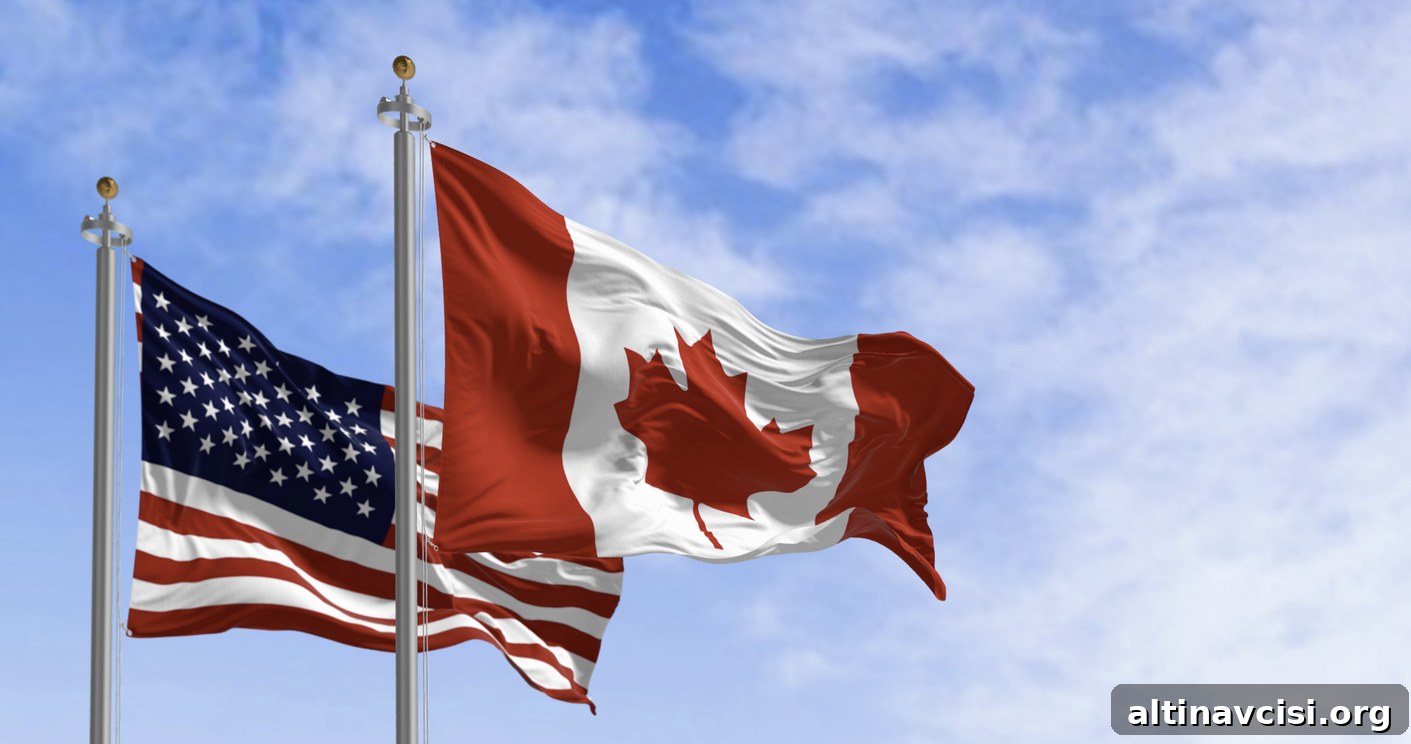
President Trump’s decision to raise tariffs on Canadian goods to 35% marks a sharp escalation in trade friction with one of the United States’ closest economic partners. Announced as a response tied to fentanyl enforcement and a series of longstanding trade complaints, the tariff increase adds fresh uncertainty to global markets already unsettled by a spate of U.S. trade actions. The move underscores how political priorities, border security concerns and trade policy are increasingly intertwined.
The tariff rise is scheduled to take effect on August 1, and markets reacted quickly. Early trading in U.S. stock futures showed declines as investors priced in the potential economic consequences of a major trade dispute between the U.S. and Canada. Financial analysts warn that higher duties on a broad array of goods could disrupt supply chains, raise costs for North American manufacturers and weigh on consumer prices, especially for industries that depend on integrated cross-border production.
Canada has already responded by imposing retaliatory tariffs, and Ottawa officials have signaled they are prepared to defend Canadian interests through diplomatic, legal and economic channels. Although talks are underway, Canadian leaders have publicly criticized the U.S. approach as disproportionate and politically driven, and they have rejected demands that they believe unfairly shift responsibility for complex cross-border security issues solely onto Canadian authorities.
As the United States’ second-largest trading partner, Canada plays a central role in U.S. supply chains for energy, automotive parts, agricultural products and many manufactured goods. Any sustained tariff conflict between the two countries could therefore ripple through multiple sectors. Manufacturers that rely on just-in-time delivery across the border may face higher input costs, logistical delays and the need to reconfigure sourcing strategies. Smaller firms, in particular, could find it difficult to absorb sudden increases in tariffs without passing costs on to consumers or cutting investment.
Beyond direct trade impacts, the tariff decision carries broader geopolitical and economic implications. It raises questions about the stability of rules-based trade relationships in North America and the ability of governments to coordinate on cross-border law enforcement without triggering commercial retaliation. Observers also note the potential for the dispute to complicate cooperation on shared challenges like energy infrastructure, environmental policy and migration management.
Market participants will be watching several indicators closely in the coming weeks: official statements from negotiators on both sides, any additional retaliatory measures, changes in currency and bond markets, and revised corporate guidance from companies with significant exposure to Canadian supply chains. Policy uncertainty can depress investment and delay hiring decisions, so business confidence measures and capital expenditure plans will be important to monitor.
Domestic political considerations are also at play. Leaders in both countries must weigh public reaction to tariffs that could translate into higher prices at the pump or in grocery stores. For U.S. officials, the linkage of trade policy to fentanyl enforcement reflects a broader attempt to address a pressing domestic crisis; for Canadian leaders, protecting export industries and asserting national sovereignty are central priorities. These competing pressures make negotiations delicate and increase the risk that rhetoric could outpace the pace of constructive diplomacy.
Economists emphasize that while tariffs can be used as leverage, they are a blunt instrument that often imposes costs on both sides. Historically, tariff disputes between closely integrated economies have led to short-term disruptions and longer-term shifts as businesses adapt by diversifying suppliers or relocating parts of their operations. The scale and duration of the current measures will determine how quickly firms and markets adjust.
In the weeks ahead, the international community will be watching whether negotiators can reach a workable compromise that addresses security concerns without inflicting widespread economic damage. For now, the 35% tariff decision has injected fresh uncertainty into a trade relationship that many had expected to be resilient, highlighting the fragility of economic ties when political and security issues are intertwined.