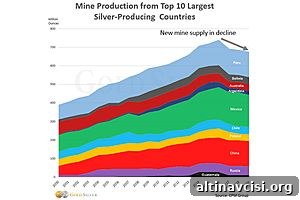
The data are clear: after reviewing multiple consultancy reports, the silver market has moved into a genuine supply/demand imbalance. The current structure of the market sets the stage for a potential crunch if trends continue.
Silver has traded in a range for about five years, but beneath that sideways price action a structural shortage has been forming. That imbalance could trigger price spikes driven simply by an inability of supply to meet growing demand.
This conclusion is not based on speculation or sensationalism, but on the latest supply and demand figures. Those numbers reveal how fragile the silver market has become and how susceptible it is to a sharp price move.
Below is a concise summary of the current supply and demand dynamics for silver so you can draw your own conclusion.
Silver Supply: Declining and Tightening
Annual silver supply is in a pronounced decline and the downtrend is worsening. New supply has fallen for several consecutive years and is widely expected to decline again this year. Notably, silver supply did not decline even during the difficult 1990s when miners faced severe margin pressure — but it is declining now.
The drop in supply begins with mining output. Miners around the world are producing less silver each year. In fact, every single country among the top 10 silver producers is reporting lower mine production, illustrating that this is a global phenomenon rather than a local blip.
Low silver prices are the main driver: many mining operations are unprofitable at current price levels, so companies are reluctant to invest in expanding output. Even if prices rise, most producers require a sustained rally before committing capital to restart or expand operations. And bringing new production online typically takes years. In short, supply won’t rebound overnight once prices start moving.
Mine capacity — the expected production from new projects — has collapsed, declining by nearly 90% since 2013. That dramatic fall-off underscores how little new metal is likely to enter the market in the near term.
Scrap supply has weakened as well. Recycling is at a roughly 20-year low and has dropped nearly 30% since 2006. Again, low prices make scrap recovery less economical, reducing that source of secondary supply.
Government stockpiles are not a reliable backstop. Governments no longer accumulate silver for currency purposes, so there is little to no strategic stockpile available to release into the market during future supply shocks.
Demand: Growth Across Multiple Fronts
While supply trends are firmly downward, demand for silver continues to grow and in many segments is hitting record levels.
Total fabrication demand has increased for multiple consecutive years and is widely expected to rise again. Much of that growth comes from industrial applications that leverage silver’s unique chemical and physical properties.
Industrial demand is near all-time highs and is projected to climb further. This contrasts with headlines about weak physical investment demand in certain markets; many sectors, especially industrial and technological users, are expanding consumption.
Investment demand via silver exchange-traded products reached record levels last year. Those funds and institutional investors have not substantially reduced their positions, indicating ongoing confidence and demand at scale.
One of the fastest-growing uses is in photovoltaic technology. Silver demand for solar panels has increased for several consecutive years and shows no sign of backing off. Twelve years ago this use was negligible; today it is a significant and growing component of total silver demand. As renewable energy deployment expands, silver consumption in green technologies is likely to continue growing for the foreseeable future.
China is a major driver of rising fabrication demand. Over roughly two decades, fabrication demand in China has surged dramatically, reflecting industrialization and growing domestic consumption.
Other demand categories are also strong: jewelry and silverware demand both reached record levels in recent years, further tightening the supply/demand balance.
The Price Outlook: A Catalyst Waiting to Ignite
Supply and demand for silver are moving in opposite directions, and it is rare to find a period in modern history where the imbalance appears this pronounced. With supply locked into a multi-year decline and demand increasing across industrial, technological, and investment channels, the market looks vulnerable to a sharp price move once catalysts align.
When the next sustained silver bull market begins, rising demand risks overwhelming constrained supply. That is basic economics: when demand spikes and supply cannot respond quickly, prices accelerate. Given the current setup, any meaningful increase in demand or loss of available metal could produce a rapid and notable price surge.
Investors and users should be aware of these dynamics and consider how a tightening market could affect availability and price. If a significant bull market develops, higher prices and potential shortages are realistic outcomes based on today’s supply and demand fundamentals.