7 Reasons Gold and Silver Are Poised to Surge
Precious metals investors are watching market conditions closely as gold and silver hover near pivotal levels. While both metals have posted impressive gains, several converging factors suggest we may be witnessing the early stages of a sustained gold and silver price surge rather than a market peak.
Understanding these drivers can help you position a portfolio to benefit from potential upside while managing risk. Below are seven compelling reasons gold and silver could move higher from current levels.
1. Central Bank Demand Remains at Record Highs
Central banks around the world have shifted from net sellers to persistent buyers of gold — a structural change in how nations manage reserves.
The numbers tell the story: Central banks purchased over 1,000 tonnes of gold annually in 2022, 2023, and 2024 — the highest levels since 1967.
Countries such as China, India, Poland and Turkey continue to expand gold holdings as they diversify away from dollar-denominated assets. For example, the People’s Bank of China increased its gold reserves for many consecutive months through mid‑2024.
This trend goes beyond simple portfolio diversification. It reflects growing concern about fiat currency stability and the long-term structure of the global monetary system. When institutions that manage national wealth consistently buy an asset, individual investors should take notice.

The Financial System Isn’t Safer — And You Know It
As risks rise, discover why gold and silver are expected to remain relevant through 2026 and beyond.
2. Real Yields Are Working in Gold’s Favor
Gold’s relationship with real yields — interest rates adjusted for inflation — remains one of the most reliable predictors of price movement. When real yields fall or stay negative, gold becomes more attractive because it carries no opportunity cost compared with bonds that barely beat inflation.
Current monetary policy suggests real yields will remain compressed for the foreseeable future. Central banks face a challenging balance between controlling inflation and supporting growth, which often keeps nominal rates from outpacing inflation — an environment where gold historically performs well.
Even as headline inflation moderates, real yields (for example, 10‑year Treasury yields minus inflation) have hovered near zero or below, creating a favorable backdrop for the precious metals rally many analysts anticipate.
3. Silver’s Historic Rally Demonstrates Its Explosive Leverage
The gold-to-silver ratio shows how many ounces of silver equal one ounce of gold. At roughly 57:1 today, the ratio reflects significant recent moves and the potential for further revaluation.
Earlier in the cycle, the ratio exceeded 100:1, suggesting silver was deeply undervalued relative to gold. Since then, silver has staged a powerful catch-up rally — typical of past cycles when the ratio reached extreme levels.
Silver’s rise from around $30 to over $78 highlights its higher upside potential during rallies. However, silver’s volatility cuts both ways: the leverage that can drive 100%+ gains can also produce sharp corrections.
Practical takeaway: Bull markets often unfold in multiple legs. If you missed silver’s initial surge, consider waiting for disciplined pullbacks rather than chasing extended moves. If you’re already positioned, tighten risk controls and consider partial profit-taking as appropriate.
4. Industrial Demand for Silver Creates a Supply Squeeze
Unlike gold, which serves primarily as a store of value, silver plays a dual role as both an industrial metal and an investment asset. That dual role creates supply dynamics that are currently tightening.
The green energy transition is a major driver for silver demand. Each solar panel requires roughly 20 grams of silver, electric vehicles use 25–50 grams per car in electronics and charging systems, and 5G infrastructure, medical devices and consumer electronics all rely on silver’s superior conductivity.
Industrial demand has climbed rapidly: estimates put industrial consumption in recent years well above prior levels, representing a material increase in demand over a short period. Industrial use removes silver from circulation permanently — unlike investment holdings, which can be sold back into the market.
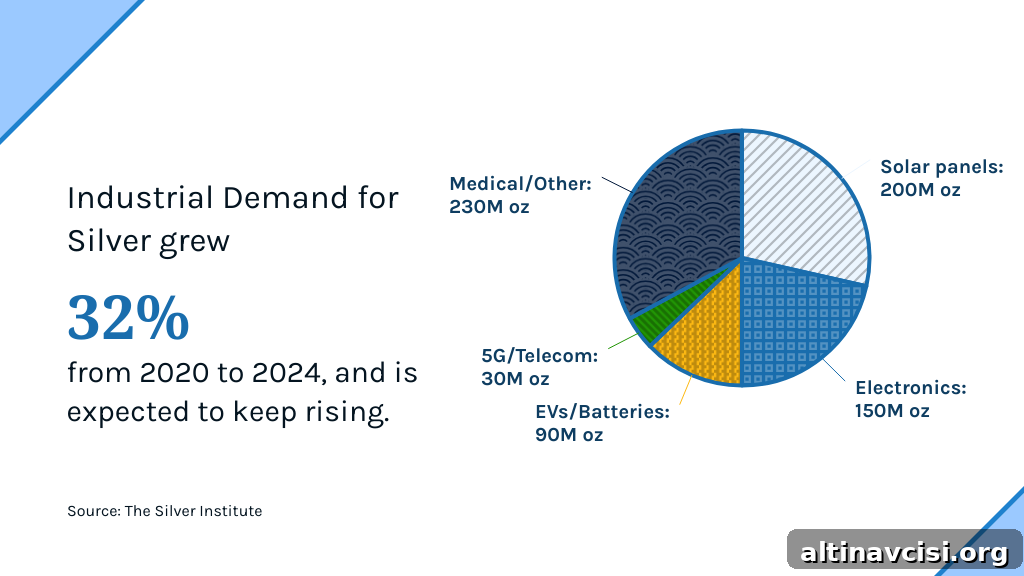
Annual mine production is limited, and overall demand (industrial plus investment) has outpaced supply in recent years. While recycling and above‑ground stocks temporarily fill shortfalls, persistent deficits are unsustainable and can support higher prices over time.
5. Geopolitical Tensions Are Intensifying
Global uncertainty is elevated. Ongoing conflicts, trade disputes, and shifting alliances create an environment where safe‑haven assets like gold and silver tend to perform well.
Precious metals preserve value independently of political outcomes: they cannot be devalued by government decree or easily frozen by sanctions. Historical episodes — such as price jumps during major geopolitical shocks — demonstrate this safe‑haven role.
Given persistent geopolitical risks and uncertainty about the stability of global institutions, safe‑haven demand is likely to remain a supportive factor for prices.
6. Currency Devaluation Concerns Are Growing
High government debt levels and expansive monetary policy have raised concerns about long‑term currency stability. Large debt burdens in major economies have historically been associated with periods of currency pressure or devaluation.
When confidence in fiat money erodes, investors often turn to tangible assets that have preserved purchasing power over centuries. Gold and silver have maintained real value across civilizations, and they act as insurance against monetary uncertainty.
Unprecedented fiscal and monetary responses to recent crises expanded money supplies globally. While these policies averted immediate collapse, they have increased debate about future currency valuations — a dynamic that tends to support precious metals.
7. Technical Indicators Suggest a Breakout Is Imminent
From a technical perspective, recent price action delivered the kind of breakout patterns that often precede extended bull markets. Gold gained markedly and silver posted even larger percentage gains, moves consistent with the start of broader trends rather than isolated spikes.
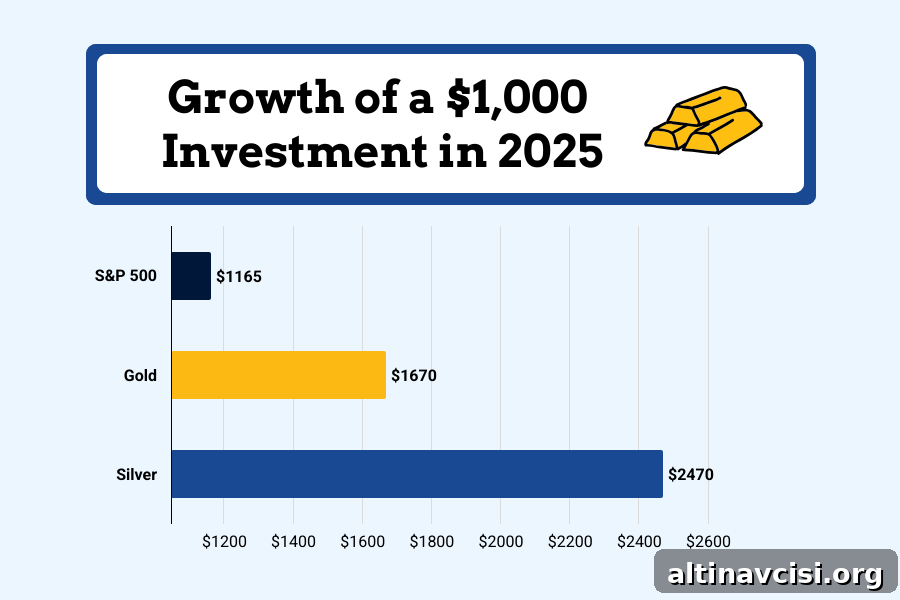
These are not modest advances — they align with past bull market behavior. Historical rallies often proceed in waves: initial breakouts are followed by consolidation, then renewed advances. Current chart patterns show new support zones and price‑discovery ranges with relatively limited historical resistance overhead, and volume patterns indicate institutional participation in many cases.
Still, risk management is essential after large moves. Consider partial profit-taking, dollar‑cost averaging into new exposure, or tightening stop‑losses rather than chasing extended rallies.
Positioning Your Portfolio for 2026
Translating these catalysts into a practical plan matters. For many investors, dollar‑cost averaging is an effective way to build exposure gradually while smoothing volatility and avoiding poorly timed lump‑sum purchases.
Conservative allocations might target roughly 8–10% in gold and 2–3% in silver to emphasize stability and wealth preservation. Investors with higher risk tolerance who want greater upside exposure could increase silver allocations, recognizing the metal’s greater volatility.
Whatever allocation you choose, align it with your risk tolerance, investment horizon, and financial goals. The convergence of central bank buying, supportive monetary conditions, supply constraints, geopolitical uncertainty, and favorable technicals creates a compelling case for holding some exposure to precious metals — but prudent sizing and active risk management remain key.
Stay On Top of Gold & Silver Prices
Get important market alerts sent straight to your inbox.
People Also Ask
What are the key factors driving gold and silver prices higher?
Record central bank buying, compressed real yields, and rising industrial demand for silver (from solar, EVs and electronics) have combined with geopolitical tensions, currency devaluation concerns, and bullish technical patterns. Together these dynamics create multiple catalysts pushing prices higher.
Is now a good time to invest in gold and silver?
After strong gains, timing becomes challenging. Dollar‑cost averaging helps build positions while reducing the risk of poor timing. Conservative investors might allocate 8–10% to gold and 2–3% to silver; those comfortable with volatility could increase silver exposure. Align any allocation with your risk tolerance and goals.
How does the gold-to-silver ratio impact investment decisions?
The gold-to-silver ratio measures how many ounces of silver equal one ounce of gold. A compressed ratio signals silver has outperformed gold and may offer less upside in the short term, while an expanded ratio can highlight silver as relatively undervalued. Use the ratio as a tactical input, not a sole decision criterion.
What role do central banks and industrial demand play in the price surge?
Central bank buying creates steady, institutional demand for gold and signals concern about fiat currency stability. Industrial demand for silver — driven by solar, EVs and electronics — permanently consumes metal, tightening supply and supporting higher prices when investment demand rises.
What are the risks of investing in gold and silver at current levels?
Volatility is elevated after recent large moves. Metals can suffer sharp 15–25% corrections even during bull markets. Rising real yields could reduce the appeal of non‑yielding assets, geopolitical tensions might ease, and weaker industrial activity could reduce silver demand. Experts often recommend limiting precious metals to a modest portion of a diversified portfolio and using risk controls like stop‑losses and partial profit-taking.
Past performance does not guarantee future results. This article is for informational purposes only and should not be considered investment advice. Always conduct thorough research or consult a financial advisor before making investment decisions.
- Global Protectionism Surges to Levels Not Seen Since Post‑WWII Era
- Gold‑Silver Ratio: A Window into Inflation Trends
- Gold to Silver Ratio 100:1 — What It Means for Silver Investors
- Dovish Policy Hopes and Gold’s Recent Highs
- Gold/Silver Ratio Price Charts and Historical Context
Popular Topics
Picked from the archive
-
01
 Topics
Gold Hits $4,000: Wake-Up Call for Markets and Policymakers
-
02
Topics
Trump Threatens EU With 250% Tariffs on Pharmaceuticals
-
03
Topics
Incrementum August 2025 Gold Compass Report: 50+ Charts
-
04
Topics
Gold Price Surges Past $5,000 Amid Bond Market Turmoil
-
05
Topics
Ruthenium in Electronics: How a Tiny Metal Powers Big Tech
-
06
Topics
Gold Drops After June Jobs Data Beats Forecasts
-
07
Topics
Trump Confirms July 9 Tariff Deadline Will Stand; No Extension
-
08
Topics
Why Gold Is Outperforming Nvidia in 2025