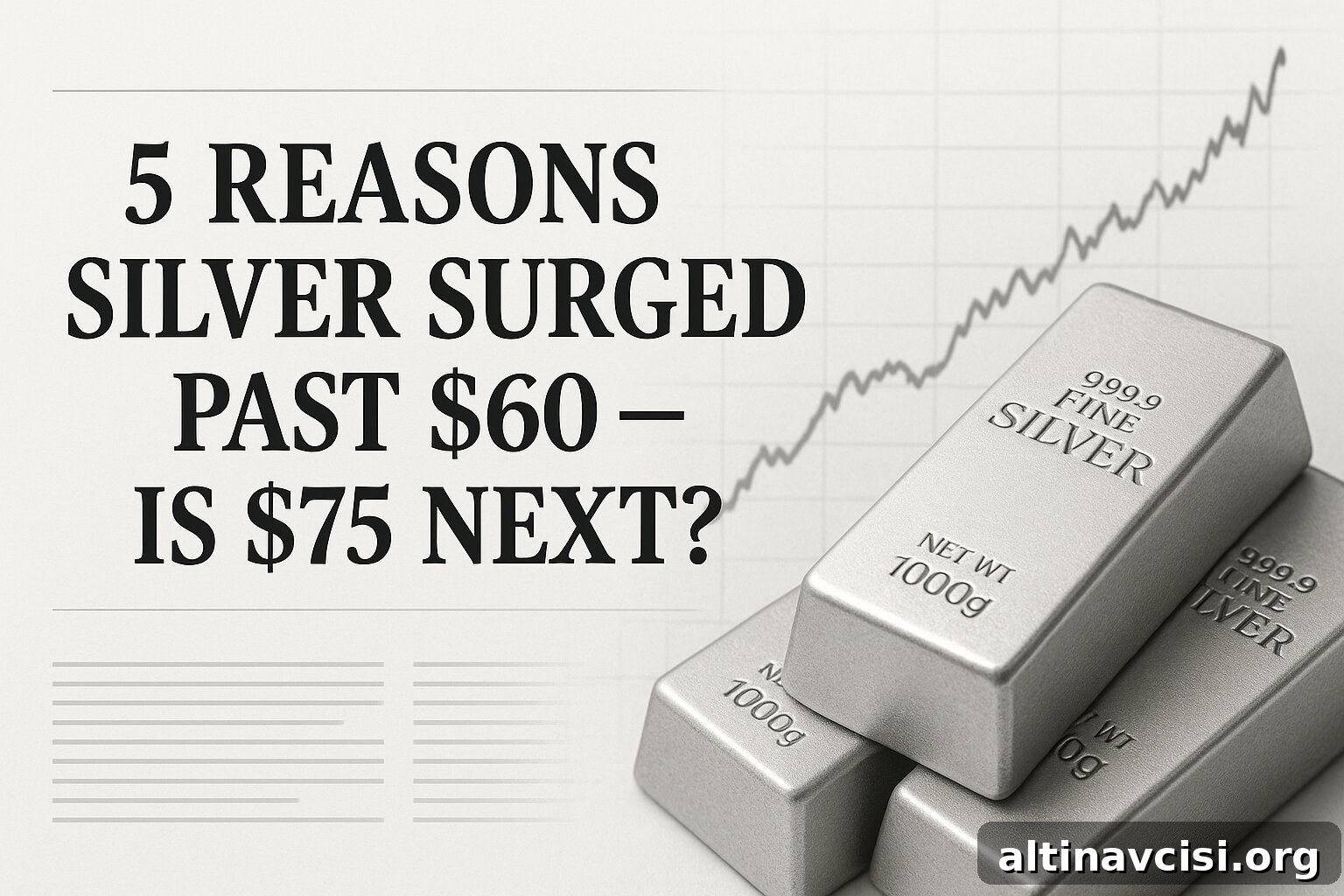
Silver has just reached a milestone: it surpassed $60 for the first time in history, breaking a long-standing psychological barrier. This move is more than a routine commodity swing — it reflects structural changes that have market participants wondering whether $75 or even $100 could be next.
The jump above $60 reflects shifts in industrial demand, supply dynamics and monetary conditions. Below are five core drivers behind this historic rally and what they mean for the outlook.
1. Industrial demand has reached a tipping point
The transition to green energy has transformed silver into a crucial industrial metal. Solar manufacturers now consume a significant share of global silver. Each gigawatt of solar capacity requires substantial silver input, and government targets for renewable deployment continue to rise.
Beyond solar, electric vehicles, 5G infrastructure and semiconductors all use silver in essential components. For many electronic applications there are no practical substitutes, so rising adoption of these technologies translates directly into stronger, persistent silver demand.
In short, industrial consumption is climbing to levels the silver market was not originally built to accommodate.
2. Supply constraints are tightening
While demand gains steam, production has struggled to keep pace. Only a minority of silver output comes from primary silver mines; most is produced as a byproduct of zinc, lead and copper mining. As ore grades decline and base-metal operations mature, this secondary supply has become less reliable.
Key producing countries that account for a large share of output have faced disruptions from labor disputes, regulatory changes and policy uncertainty. Recent production interruptions removed millions of ounces from expected supply.
The market has recorded supply deficits over multiple consecutive years and above-ground inventories sit at multi-decade lows — a structural imbalance that amplifies price moves when demand spikes.
3. Monetary pressures are driving safe-haven flows
With global indebtedness high and expansive central bank policies continuing in many regions, investors are increasingly turning to tangible assets as protection against currency debasement and inflation. Silver’s monetary history and tangible nature make it an attractive hedge.
The gold-to-silver ratio, which climbed above 80:1 in recent years, has compressed toward historical norms, implying silver may still be undervalued relative to gold. Heavy physical accumulation by retail and institutional buyers is pulling metal out of circulation and adding upward pressure to prices.
4. Geopolitical tensions and de-dollarization are increasing physical demand
Rising geopolitical friction and efforts by some nations to diversify away from dollar-denominated assets have led to increased accumulation of precious metals. Major consumers in Asia have ramped up purchases for both industrial use and reserve diversification.
Trade disruptions and sanctions have also strained traditional supply chains, encouraging manufacturers and governments to move from just-in-time sourcing to strategic stockpiles to ensure supply security. Premiums on eastern exchanges have risen, signaling persistent physical demand that outpaces available supply.
5. A technical breakout has drawn momentum traders
Clearing the $60 level represents an important technical breakout that had capped prices for years. That breach attracts algorithmic traders and momentum funds that can amplify directional moves, increasing both speed and volatility.
Managed-money positions remain below prior peaks, suggesting significant buying power could still enter the market. As $60 shifts from resistance to support, technical models point to $75 as the next notable target, and options activity indicates many traders are positioning for further upside.
Investment implications: positioning for $75
The combination of accelerating industrial demand, constrained supply, monetary concerns and technical momentum makes a persuasive case for higher silver prices. That said, silver is volatile and requires disciplined risk management.
For direct exposure, physical silver eliminates counterparty risk. Mining equities can offer leveraged upside but carry company-specific and operational risks. Dollar-cost averaging and well-calibrated position sizing can help manage volatility while maintaining exposure to the secular themes supporting silver.
What differentiates the current rally is its structural basis: it is driven by durable demand trends and supply limitations rather than a single speculative event. That increases the likelihood these pressures will persist over the coming years.
The path forward
Silver’s breakthrough past $60 marks an important inflection. Industrial demand remains on an upward trajectory, production faces persistent challenges, and macro conditions favor hard assets. The setup for additional gains appears robust.
Short-term pullbacks are inevitable — corrections of 10–20% can occur even within strong bull markets — but the confluence of secular trends suggests the broader uptrend may continue. Whether $75 arrives next month or next year is less important than recognizing the long-term forces reshaping silver’s market.
For investors considering entry, the central questions are allocation, time horizon and risk tolerance: how much exposure is appropriate, which instruments best match your objectives, and how to manage volatility while participating in this market transformation.
People Also Asked
Why did silver break $60 for the first time?
Silver surpassed $60 because multiple drivers converged: expanding industrial usage (especially in renewables and electronics), persistent production shortfalls and strong physical buying from investors seeking inflation protection and secure supply.
What are the key factors driving silver prices to historic highs?
The main factors are rapid growth in industrial demand, ongoing supply deficits, macroeconomic policies that favor tangible assets, geopolitical shifts that increase physical accumulation, and technical momentum after breaking long-term resistance.
Is now a good time to invest in silver?
Fundamentals remain supportive, but silver’s volatility means investors should use prudent position sizing and consider dollar-cost averaging. Diversifying among physical metal, ETFs and mining stocks can balance direct ownership with potential leverage.
What is the future outlook for silver prices?
Many analysts expect continued strength, with technical models identifying $75 as the next meaningful level. Long-term prospects are underpinned by sustained industrial demand and constrained supply, though volatility and periodic corrections are likely.
How does silver’s performance compare to other precious metals like gold?
Silver’s 2024–2025 performance has outpaced gold in percentage terms, reflecting its combined monetary and industrial roles. Because the silver market is smaller, it tends to be more volatile than gold, which can offer both larger upside and sharper drawdowns.