Gold and silver market update — May 11, 2026
Key Takeaways
- Silver is up 6.15% today (as of Monday, May 11, 2026) at $85.36/oz while gold is up just 0.39% at $4,734 — silver is outpacing gold by roughly 16x, driven by positioning ahead of the Trump–Xi meeting in Beijing on May 13–15.
- The mechanism: approximately 60% of silver demand is industrial — solar panels, EVs, electronics, semiconductors — much of it routed through US–China supply chains; improved trade relations are directly bullish for silver in a way they are not for gold.
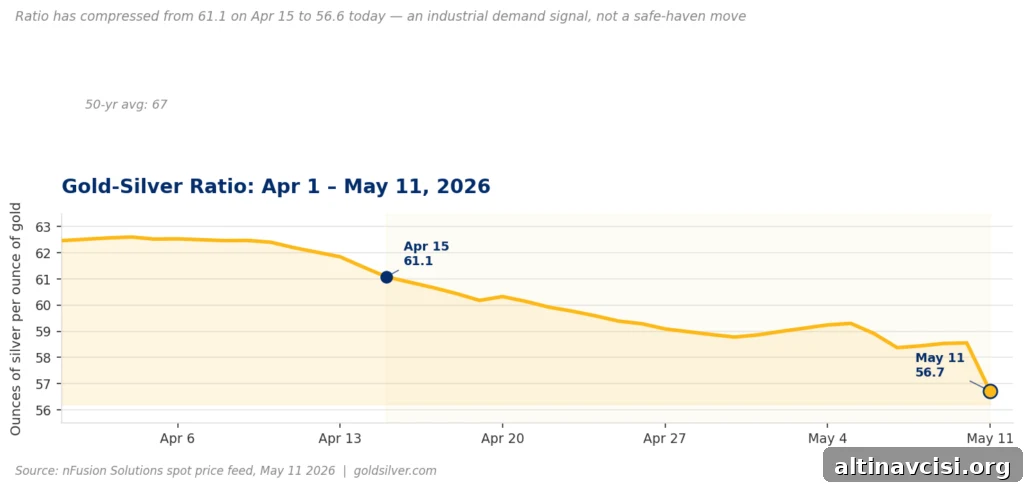
- The gold–silver ratio has compressed to 55.46 from above 61 in mid-April, confirming this move reflects industrial demand expectations rather than a pure safe-haven bid.
Silver jumped 6.15% today to $85.36 per ounce, while gold gained 0.39% to $4,734. Both metals are higher, but silver’s advance far outpaces gold’s. The catalyst is the upcoming visit by President Trump to Beijing — the first US presidential trip to China in nearly nine years — and markets are already pricing in what improved trade terms could mean for industry demand.
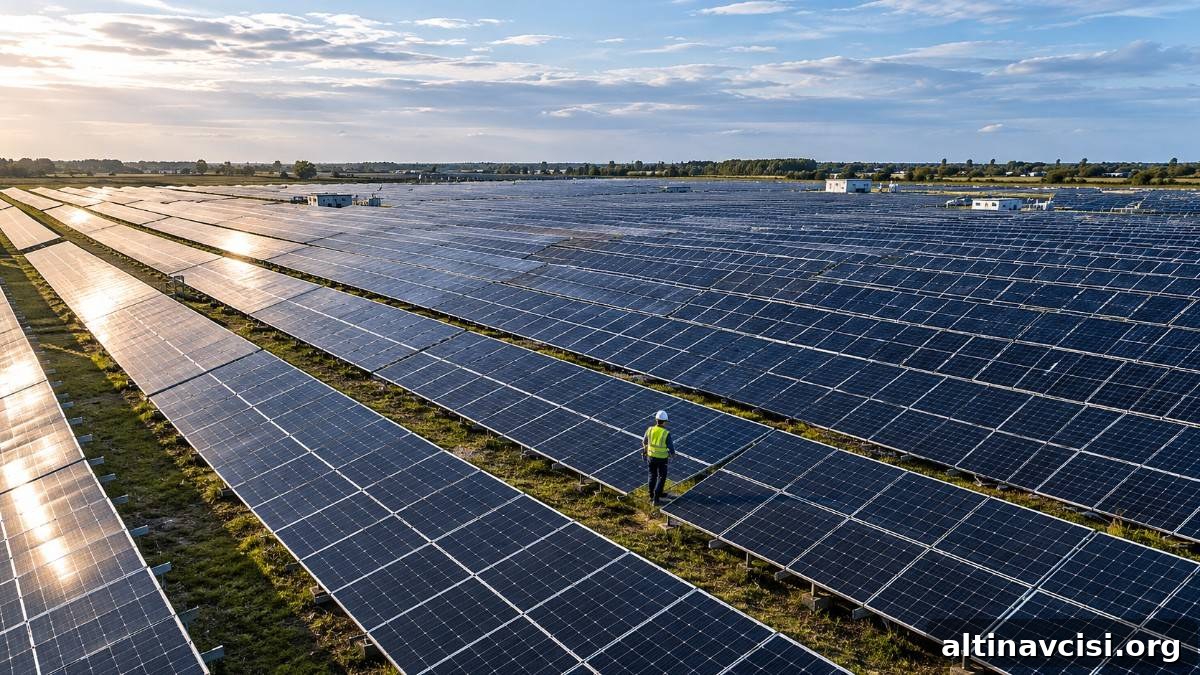
Unlike gold, which primarily reflects monetary and geopolitical risk, silver carries a substantial industrial component. Roughly 60% of silver’s annual demand comes from manufacturing: solar photovoltaic cells, electric vehicles, electronics and semiconductors. Many of those supply chains are concentrated across the US–China trade relationship. When trade frictions ease or are expected to ease, manufacturers can plan and expand production, lifting silver consumption in ways that do not affect gold to the same degree.
The Edge Every Investor Needs
Smarter precious metals investing starts here. The Nuggets Newsletter brings you essential market insights, Fed updates, global trends, educational videos, and more.
Why Is Silver Rising Ahead of the Beijing Summit?
Silver’s rally reflects its heavy industrial exposure. About 60% of silver demand is industrial — electronics, solar panels, EVs and semiconductors — and many of those production chains are tied to US–China trade. The Silver Institute’s World Silver Survey 2026 and related industry analysis show solar photovoltaic manufacturing alone accounted for nearly 29% of silver’s industrial use in 2024, up from around 11% in 2014. As trade tensions ease or look likely to ease, manufacturers can expand output and inventory, supporting higher silver consumption in a way that typically leaves gold relatively unchanged.
Electric vehicles, semiconductor fabrication and data-center hardware are all growing sources of silver demand and are sensitive to supply-chain clarity. The May 13–15 summit offers the biggest chance since late 2025 to solidify a truce or establish a formal trade framework. Market expectations that tariffs and other trade frictions could be extended or formalized are directly bullish for silver by improving the outlook for production and capital spending across those sectors.
What Does the Gold-Silver Ratio Tell Us About This Move?
The gold–silver ratio fell to 55.46 on May 11, down from above 61 in mid-April. That is a notable compression in a short period. A falling ratio can indicate either that investors are buying silver as a monetary hedge alongside gold or that markets expect stronger industrial demand specifically for silver. Given gold’s modest 0.39% move versus silver’s 6.15% jump, this episode aligns with an industrial-demand story rather than a safe-haven surge.
Analysts at major banks emphasize that silver’s industrial weighting makes it more responsive to changes in manufacturing expectations and trade flows. A meeting that improves the production outlook in China or eases bilateral trade risk will move silver more than it will move gold.
For readers interested in longer-term implications of ratio shifts, institutional research explores how changes in the gold–silver relationship can reflect evolving industrial and monetary drivers without implying guaranteed future returns.
Which Three Summit Outcomes Matter Most for Silver?
Three specific outcomes would directly affect the industrial supply chains that drive silver demand:
Tariff trajectory. Extending or formalizing the current US–China tariff truce would reduce uncertainty for solar, EV and semiconductor manufacturers and support production plans that increase silver consumption.
Rare earth and critical-mineral controls. Any rollback or clarification of export controls on rare earths and other critical minerals would ease supply fears across multiple industries that share the same inputs as silver-dependent manufacturing.
Technology sector restrictions. Limits on further decoupling in semiconductors or AI hardware would remove a material tail risk for fabrication investment and capital spending, which in turn supports silver demand used in those processes.
Isn’t This Just a Summit Bet That Could Easily Unwind?
That is a valid concern. Short-term positioning ahead of a binary political event carries event risk. If the summit fails to deliver meaningful progress — no tariff extension, no commitments on mineral flows, no new framework — silver’s intra-day gains could retrace quickly.
But the summit is an accelerator, not the underlying thesis. Silver’s larger rally in 2025—driven by supply deficits, robust industrial consumption and macro concerns—already established a structural supply/demand imbalance. The Silver Institute and major research teams project continued deficits into 2026. Even if the summit disappoints, the structural drivers supporting silver remain in place, though price volatility can increase around political outcomes.
What to Watch This Week
Wednesday–Friday, May 13–15. Watch for any joint statement on tariff timelines, rare earth controls, or a managed trade framework. Those signals will determine whether today’s optimism has substance.
The gold–silver ratio. The ratio sits near 55.46. A sustained move below 54 would suggest a structural repricing is underway; a return above 58 would point to a short-lived, event-driven trade.
Silver’s close. Silver opened at $80.39 and moved to $85.36 intraday. A close above $85 would reinforce the session’s strength; a close below $83 would suggest the move lacked staying power.
Stay On Top of Gold & Silver Prices
Get important market alerts sent straight to your inbox.
SOURCES
1. Silver Institute — World Silver Survey 2026
2. Silver Institute & Oxford Economics — Silver: The Next Generation Metal (December 2025)
3. J.P. Morgan Global Research — How Will Silver Prices Fare in 2026?
4. Council on Foreign Relations — What to Expect Ahead of Next Week’s Trump–Xi Summit (May 8, 2026)
5. Council on Foreign Relations — At the Trump–Xi Summit, China Will Have the Upper Hand (May 10, 2026)
6. nFusion Solutions — Live Spot Price Feed (May 11, 2026, 12:32 UTC)
Disclaimer: This article is for informational purposes only and does not constitute financial or investment advice. Always consult a qualified financial adviser before making investment decisions.
You May Also Like:
- April Jobs Beat 115K. Gold Held. The Dollar Didn’t. Here’s Why
- Jobs Beat, Ceasefire, Deficit: What It Means for Gold
- Gold Price Outlook: Oil Futures Disagree With Stock Markets
- Why Silver Hit $82 Today: Iran, Oil, and the Fed
- Gold Hits $4,746 as Oil Crashes. Here’s Why That’s Bullish
- Gold Price and Nonfarm Payrolls: Why the Fed Is Trapped
- Gold Is Decoupling From Geopolitics. Here’s the Proof
- The Fed Is Frozen. The Debt Is Growing. Gold Is Watching.