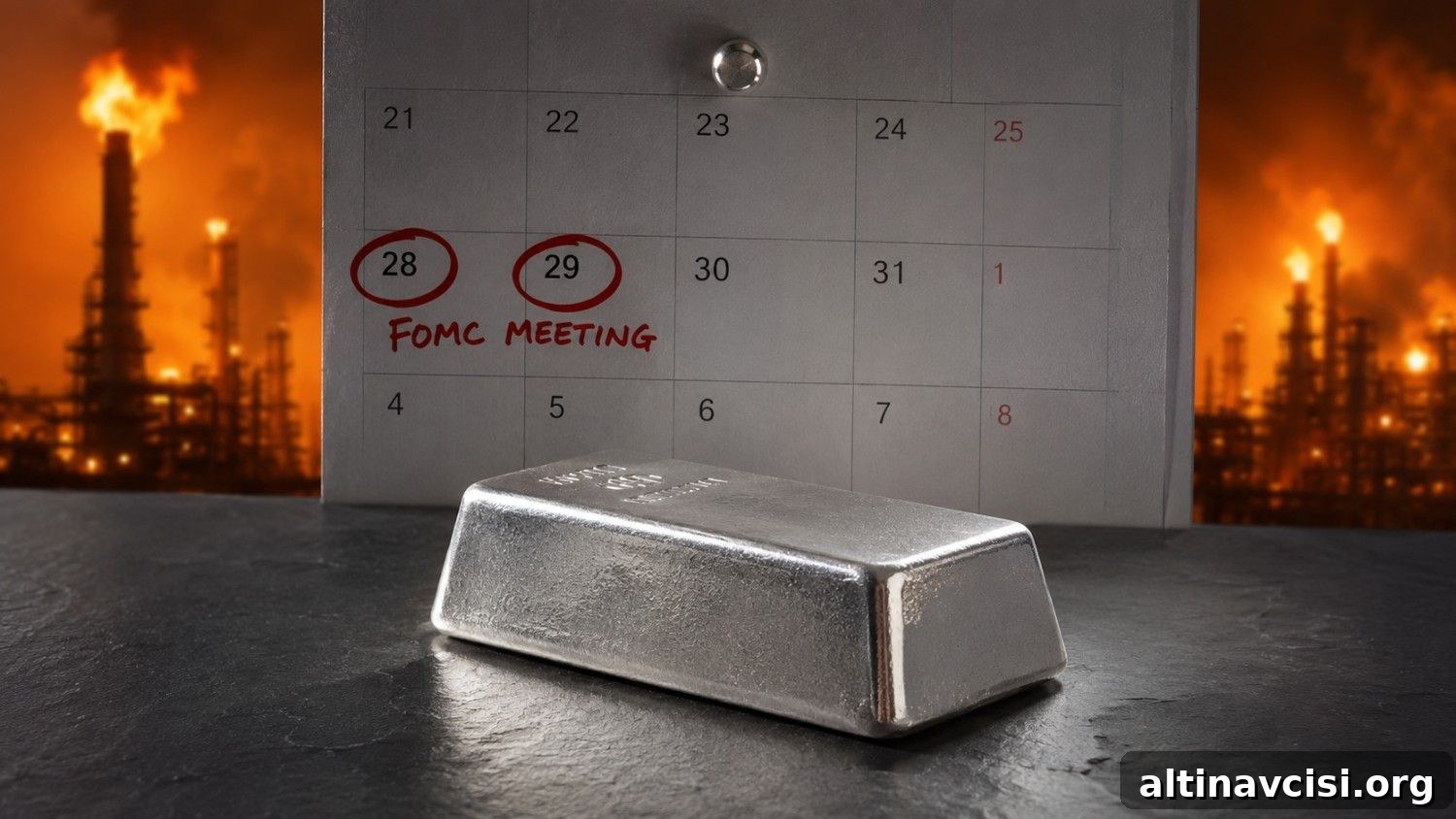
Oil is up about 3% this morning. Under typical conditions that move would normally pressure silver, and most traders understand why. Yet today silver is moving higher instead of falling, a divergence that is worth examining because it reveals how markets are already pricing in future policy decisions.
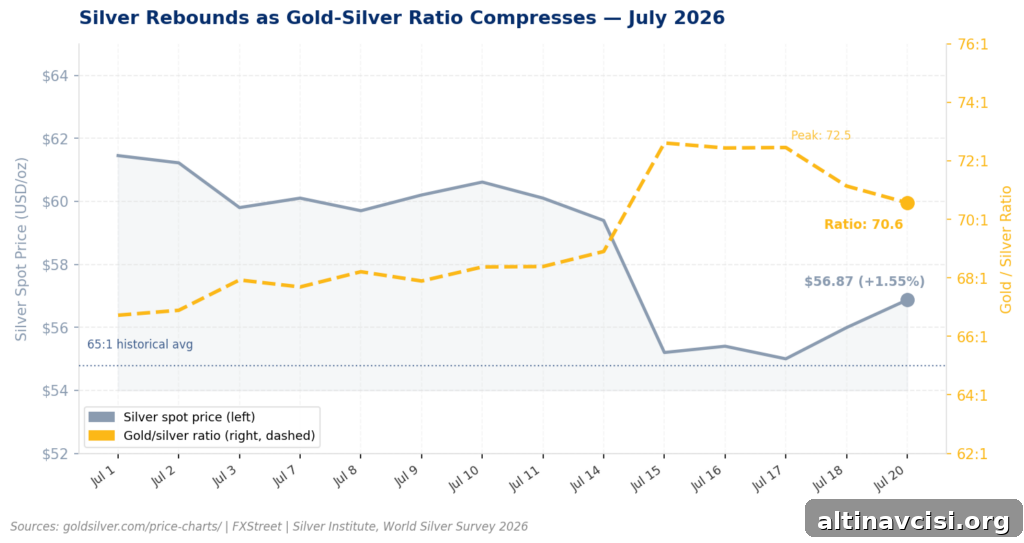
Silver’s spot price is trading near $56.87, up roughly 1.55%, while gold is largely unchanged around $4,013, down about 0.15%. At the same time, WTI crude has moved toward $85 a barrel and Brent has pushed above $90. These two directional moves — oil higher and silver higher — usually offset one another, but the reasons they are not cancelling today are instructive.
Why Does Rising Oil Usually Push Silver Lower?
The connection between oil and silver typically unfolds in four steps. First, an oil price surge—often linked to geopolitical tensions—boosts headline inflation. Second, higher inflation increases the odds that the Federal Reserve will raise interest rates. Third, expectations of higher rates raise the opportunity cost of holding non-yielding assets. Fourth, that higher-rate outlook both increases the cost of financing and suppresses industrial activity, which directly reduces demand for industrial metals like silver.
Silver is uniquely exposed because its demand comes from two main sources: industrial and monetary. Roughly 58% of annual global silver demand is industrial — including solar panels, semiconductors and electric vehicle components — while the remainder is driven by investment and monetary uses. When rate fears intensify, both demand engines are hit simultaneously: industrial demand weakens with slowing activity and investment demand falters as the dollar and yields strengthen. Gold, by contrast, is driven almost entirely by monetary demand and therefore tends to hold up better under those conditions.
That dynamic was visible for much of July: as airstrikes increased and oil climbed, silver fell more than 7% last week. But today’s uptick shows that the link between oil and silver can be moderated by how much of the Fed’s reaction has already been priced into markets.
What Changed Today? Why Is Silver Ignoring the Oil Spike?
The key factor is market expectations ahead of the Federal Open Market Committee meeting on July 28–29. By the close on Friday, pricing tools showed the probability of the Fed holding rates above 85%. That consensus means markets have largely decided there will be no July rate hike. In addition, June consumer price data showed headline inflation slowing to 3.5% year-over-year from 4.2% in May — a decline that helped anchor the hold expectation.
Because the July meeting is now broadly expected to be a pause, a one-day oil spike does not materially alter the rate-hike probability. With the July outcome effectively priced, silver’s industrial demand is less threatened by a single session’s oil-led inflation headline. Meanwhile, the dollar is slightly softer on the day, which supports silver’s monetary component. The combination of those factors lets silver climb even as oil rises: markets have already internalized the most consequential inflation signal for this cycle.
What Does the Gold-Silver Ratio Tell Us Right Now?
The gold-silver ratio — the number of ounces of silver required to buy one ounce of gold — has been a useful gauge in 2026. Recently the ratio has compressed, falling from about 71.77 to roughly 70.6 as silver outperformed gold intra-day. That compression typically signals that silver’s industrial demand is reactivating relative to the previous period of weakness.
For perspective, the ratio had moved to near 55:1 in May before the Fed-driven repricing in June and early July pushed it closer to the low 70s. A long-term historical average near 65:1 suggests silver remains relatively undervalued versus gold at current levels. The physical market supports that view: industry estimates point to continued structural deficits in silver supply, with projected annual shortfalls adding up to meaningful draws on above-ground inventories. Those supply constraints are a foundational bullish element that can reassert once rate uncertainty eases.
What Should Long-Term Silver Holders Understand About Today’s Move?
The episode underscores that silver’s behavior follows mechanical drivers rather than random moves. When rate anxiety dominates, industrial demand gets suppressed. When rate clarity arrives, that industrial engine can begin to recover. In the near term, markets have priced a July hold, which explains today’s resilience. But uncertainty remains for later in the year — September still carries meaningful probability of a hike — so silver is likely to remain range-bound until the path beyond July becomes clearer.
At the same time, the structural supply-demand imbalance is not erased by short-term rate noise. Several consecutive years of projected supply deficits mean the physical market is drawing down inventories faster than mining can replace them. That dynamic responds to real demand and supply over many months and years. Today’s rise in silver is not a definitive breakout, but it demonstrates that the compression trade that relied on persistent rate fear has limits once policy expectations shift.
What to Watch Before the FOMC Decision
Two near-term events will shape silver’s path. First, the FOMC decision on July 29 and the subsequent communications — especially the chair’s comments about the likelihood of further hikes into September — will matter most. Any suggestion that September is “live” again will likely push the gold-silver ratio wider. Second, June personal consumption expenditures (PCE) data, released July 30, is the Fed’s preferred inflation measure; a soft PCE print would reinforce the hold narrative and could further support silver.
Beyond the calendar, geopolitical risk in the Strait of Hormuz remains a wildcard. The conflict has persisted for months and recent strikes have kept oil elevated. As long as supply concerns keep oil and headline inflation sticky, the Fed’s flexibility to pivot remains constrained, which in turn limits how quickly silver can fully recover. That constraint affects timing, not the underlying supply-demand story that supports silver over a multi-year horizon.
SOURCES
1. GoldSilver — Live Silver Spot Price, July 20, 2026
2. GoldSilver — Live Gold Spot Price, July 20, 2026
3. Silver Institute / Metals Focus — World Silver Survey 2026 & Sixth Consecutive Annual Market Deficit Outlook, April 15, 2026
4. Bureau of Labor Statistics — Consumer Price Index Summary, June 2026
5. CME Group — FedWatch Tool, July 2026 FOMC Hold Probability, July 18, 2026
6. FXStreet — Silver Price Today: Silver Rises, July 20, 2026
Disclaimer: This article is for informational purposes only and does not constitute financial or investment advice. Always consult a qualified financial adviser before making investment decisions.
You May Also Like:
- Hong Kong Just Ran Its First Gold Settlement. The Banks Who Did It Also Run London’s.
- Consumer Inflation Expectations Just Fell to 4.2%. Gold Fell Too. The Survey Missed the Oil Spike.
- Gold Fell 3.4% This Week. The Long-Term Case Didn’t.
- Manufacturing Just Had Its Best Month of 2026. Gold Just Had One of Its Worst Days.
- Warsh Told Wall Street to Stop Watching the Fed. Gold Already Knew.
- Gold Falls as Retail Sales Confirm the Fed Has No Reason to Cut