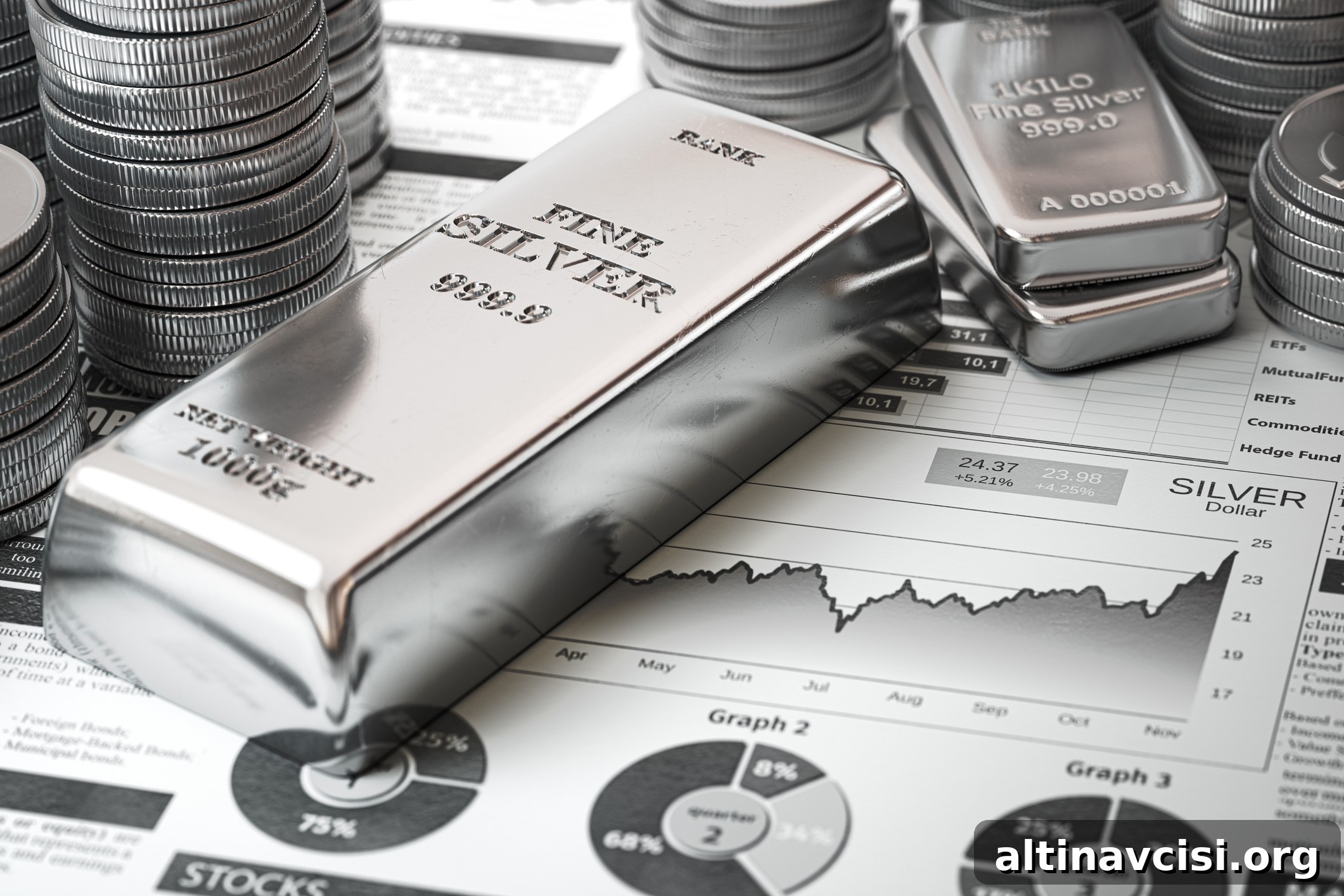
Veteran commodity investor Jim Rogers recently said he prefers silver over gold in the present market, citing silver’s lower price as the primary reason for that preference. With precious metals drawing attention from investors looking for safe-haven assets amid ongoing global economic uncertainty, Rogers highlighted silver’s relative affordability as an attractive attribute compared with gold.
Rogers also described other elements of his portfolio. He confirmed he continues to hold positions in U.S. dollars and in agricultural commodities, reflecting his long-standing focus on tangible assets and real-world demand drivers. In particular, his exposure to agriculture underscores a belief in commodities that are tied to basic human needs and long-term global consumption trends.
On the subject of regional opportunities, Rogers expressed strong optimism about India’s economic prospects under its current leadership. He suggested that downturns in markets should be viewed as potential buying opportunities, and specifically urged investors to consider Indian markets when prices weaken. Rogers framed this view as part of a broader conviction that significant economic and investment gains can be found by looking beyond short-term volatility and focusing on structural growth trends.
A persistent theme in Rogers’s commentary is the value of contrarian investing. He stressed that successful long-term returns frequently require going against the prevailing market consensus and taking positions that may feel unpopular at the time. This contrarian approach has been a hallmark of his investing career, which has spanned decades and included a heavy emphasis on commodities and global macroeconomic trends.
Rogers’ preference for silver reflects several practical considerations beyond simply the metal’s current price. Silver has a wide range of industrial applications—ranging from electronics and photovoltaics to medical devices and specialized manufacturing—which can make its demand profile distinct from gold’s primarily monetary and store-of-value role. That industrial component can amplify silver’s sensitivity to economic cycles, offering the potential for outsized gains if industrial demand rebounds.
At the same time, silver’s smaller market size and lower total above-ground stock relative to gold can contribute to greater price volatility. For some investors, that volatility represents opportunity; for others, it introduces additional risk. Rogers appears to favor the potential upside created by those conditions, given his view of silver as relatively undervalued.
Keeping allocations in U.S. dollars and agricultural commodities fits with a diversified approach designed to balance inflation, currency fluctuations and real-world consumption patterns. The dollar position can provide liquidity and a hedge against short-term market dislocations, while agricultural exposure targets a sector driven by population growth, shifting diets and supply constraints that can fuel long-term price appreciation.
When evaluating markets such as India’s, Rogers emphasized the importance of looking at leadership, policy direction and structural reforms that can support sustained economic expansion. He advised investors to treat market dips as moments to reassess and potentially increase exposure to economies where fundamentals point to durable growth prospects. That mindset aligns with his broader practice of identifying long-term themes and stepping in when sentiment is weakest.
Ultimately, Rogers’ remarks reiterate familiar principles: favor undervalued assets, consider real-economy exposures like agriculture, and adopt a contrarian stance when consensus crowds into the same trades. For investors weighing precious metals, his current tilt toward silver signals a bet on affordability, industrial demand and the potential for stronger relative gains compared with gold, while his broader portfolio choices reflect a pragmatic combination of liquidity, diversification and thematic conviction.