
Written by: The MacroButler
Harry Browne’s Permanent Portfolio is essentially a balanced four-course financial plan: stocks to benefit from inflationary booms, bonds for deflationary periods, gold as the crisis backstop, and cash for liquidity when markets seize up. Its strength is simple: whatever the economy serves, at least one component usually performs. Layering Schumpeter’s business cycle helps indicate which piece of the portfolio should be emphasized, though identifying the current phase remains a challenge.
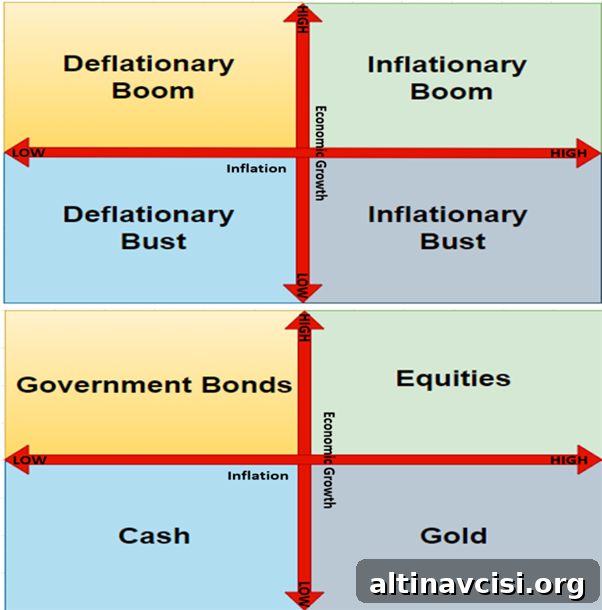
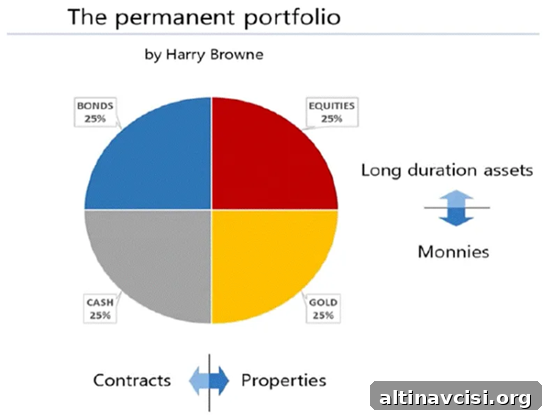
Think of Browne’s approach as a slow cooker for wealth: combine stocks, bonds, cash, and gold and let them weather booms, busts, bubbles, and panics. The allocation is designed to deliver resilience without constant trading or panic. Viewed another way, financial assets fall into two types—contracts (IOUs like bonds) and properties (ownership claims like equities)—and across the long-short time axis. Placed on a grid, the Permanent Portfolio neatly fills four quadrants so that different economic regimes favour different corners.
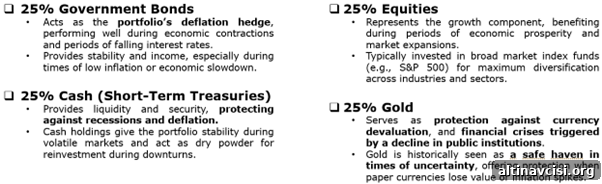
Gold occupies a unique role in Browne’s framework. It has been a store of value and medium of exchange for millennia and functions today as a “break glass in case of emergency” asset. Unlike fiat currencies, gold cannot be created by decree, making it scarce, durable, and resistant to monetary debasement. Central banks hold it, investors turn to it in crises, and when inflation, currency instability, or geopolitical shocks strike, gold often acts as a safe haven.
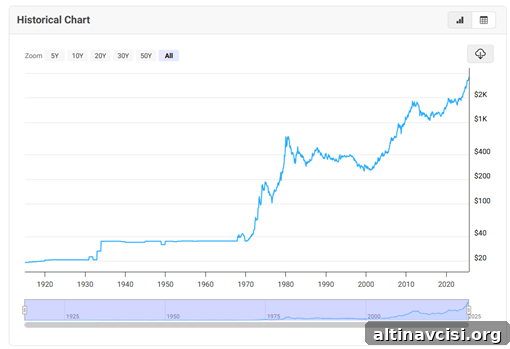
Historically, gold has preserved purchasing power across eras—from ancient coinage to modern reserves—outlasting many paper promises. Its long-term appeal stems less from precise alignment with short-term inflation readings and more from its enduring trust as an asset that retains value when fiat systems wobble.
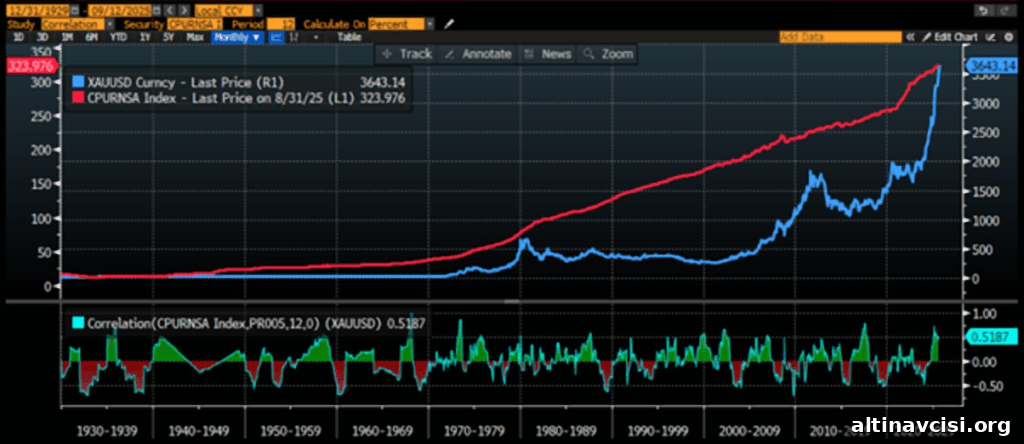
Debate continues over whether gold is a reliable inflation hedge. Empirical evidence shows that short-term correlations between gold and CPI are inconsistent; gold rarely tracks consumer prices tick-for-tick. Instead, its strength lies in being a long-term store of trust—effective when confidence in paper money erodes rather than as a precise inflation instrument.
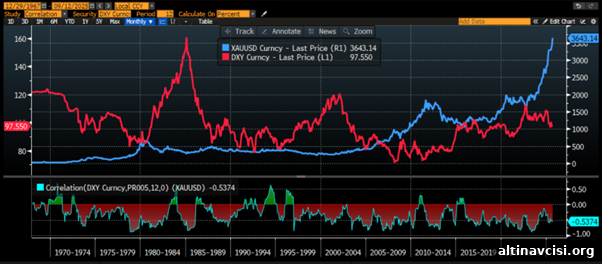
So what moves gold if not always inflation? The U.S. dollar matters because gold is priced in dollars; a strong dollar tends to pressure dollar-denominated gold. Historically, gold and the dollar index have often been negatively correlated. Gold also reacts to perceived sovereign risk—when credit concerns rise, demand for gold can increase, reflecting its role as an alternative to government paper.
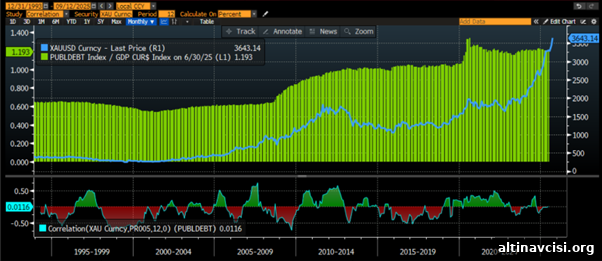
Gold’s appeal also stems from having no counterparty risk: it is an asset you own outright. Governments with heavy debts have historically resisted private ownership of gold because it limits monetary policy flexibility. Despite that, gold persists and often reflects broader concerns about sovereign balance sheets, geopolitical risk, and market instability.
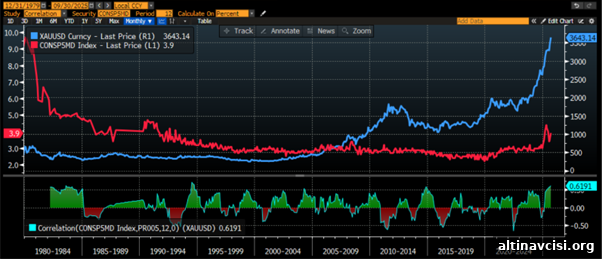
Caution is warranted: it’s easy to mistake correlation for causation. Popular narratives—like gold moving primarily with real yields—have broken down during certain periods, most notably in 2023. Markets evolve, and relationships that once seemed reliable can change rapidly.
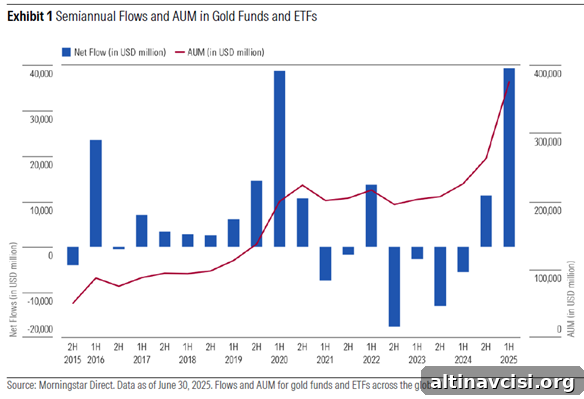
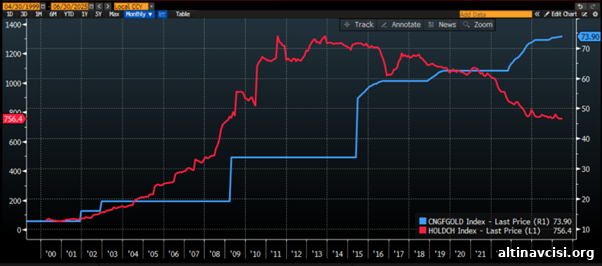
Recently, gold has outperformed many investable assets. Its rise reflects a mix of macro uncertainty, structural dynamics, and geopolitical tensions that push investors toward assets perceived as safe. Institutional flows into gold ETFs expanded significantly in recent years, demonstrating renewed appetite from central banks, retail investors, and institutions alike.
The Permanent Portfolio’s equal-weight design—cash, bonds, stocks, and gold—seeks to produce steady real returns across business cycles. In a world of rising geopolitical tension and growing distrust in institutions, assets that benefit from volatility—antifragile assets—become valuable. Nassim Nicholas Taleb described antifragility as the property of systems that gain from disorder, showing convex responses to shocks and offering asymmetric upside while limiting downside. Gold is one of the few tangible assets that fits this profile.
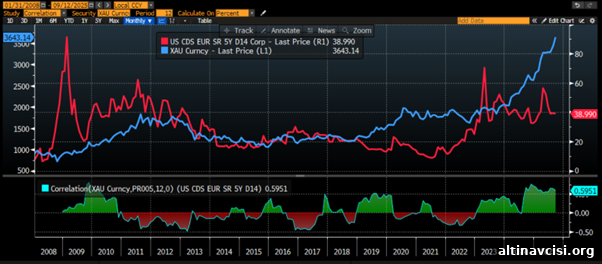
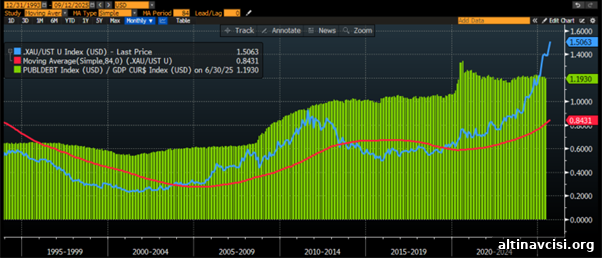
Markets often tell a clearer story than headline economic data. Tracking gold relative to government bonds, for example, can reveal currency debasement and shifts in confidence more effectively than bureaucratic inflation numbers. When debt-to-GDP rises, the gold-to-bond ratio frequently trends higher, signalling investor concern about future purchasing power.
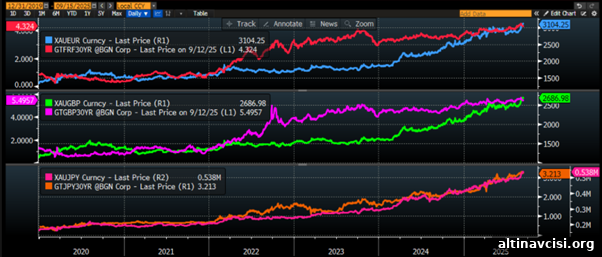
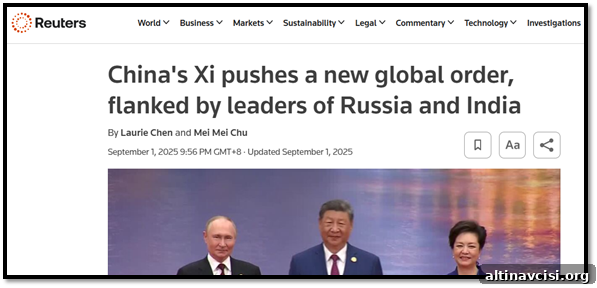
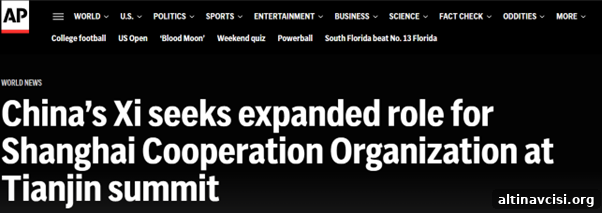
Geopolitically, recent international alignments have nudged capital flows and reserve behaviour. Developments like the SCO summit and initiatives to finance projects in local currencies indicate a gradual diversification away from a strictly USD-centric system. Central banks in parts of the Global South have increased gold reserves while trimming some dollar assets, underscoring a broader shift in reserve strategy.
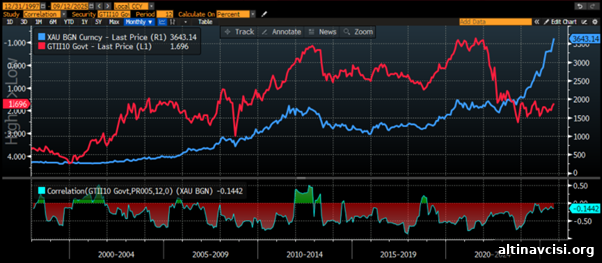
Gold offers a degree of freedom from credit risk, asset freezes, and monetary surprise. As trust in institutions declines and geopolitical friction rises, both institutions and individuals are more inclined to hold assets with no counterparty risk. For investors, this changes the calculus of diversification.
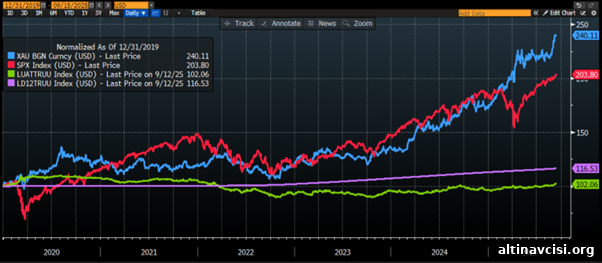
History repeatedly shows gold’s connection to conflict and regime stress. From financing wars and protecting wealth to acting as a reserve during political upheaval, gold’s role in crisis remains undeniable. For investors, wartime and systemic stress are environments where tangible, counterparty-free assets outperform.
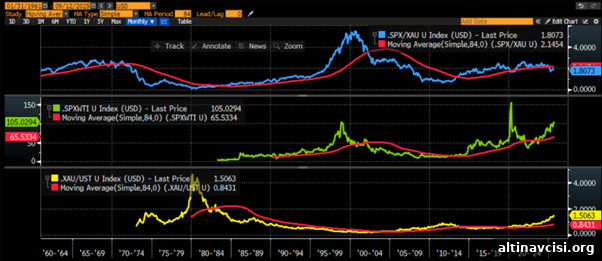
Empirically, gold often outperforms when volatility spikes and equities struggle. Measures like the gold-to-S&P 500 ratio tend to rise as risk metrics increase, and when that ratio dips below long-term averages it can foreshadow equity weakness. These signals can help guide allocation decisions between risk assets and safe havens.
That said, absolutist views that only gold survives are misguided. Money historically has been about trust and convention as much as metal content. Coins and monetary systems evolved because people trusted the issuer and the broader economic order. Gold’s role is this: in times of eroded trust, it becomes a preferred refuge, but it is not a cure-all for every market condition.
Practically, investors should treat gold and other tangible assets as part of a defensive allocation designed to protect capital during crises. Keep physical assets in secure, independent custody across jurisdictions, and avoid overreliance on fragile banks or long-dated sovereign bonds that can lose real value in wartime or during fiscal stress. Cash and short-duration quality fixed income remain useful for liquidity and agility.
For equity exposure, favour companies with low leverage, strong cash flows, and resilient business models that can survive reshoring, trade frictions, and higher defense spending. The focus should be on preserving capital and optionality rather than chasing high short-term returns.
In short: tangible assets like physical gold and silver, and a selective approach to equities and short-duration investment-grade fixed income, form a pragmatic defence against the risks of monetary debasement, political risk, and global supply disruptions. Preparation, diversification, and custody matter more than hot tips or market timing.
KEY TAKEAWAYS.
As investors reassess gold’s role, the main points to remember are:
- Harry Browne’s Permanent Portfolio balances stocks, bonds, cash, and gold to navigate different economic regimes with limited active management.
- Gold is a durable, scarce asset that often preserves wealth when fiat systems and confidence deteriorate.
- Gold is not a perfect short-term inflation hedge but serves as a long-term store of trust.
- Gold carries no counterparty risk, making it attractive when sovereign credibility is questioned.
- Antifragile assets like gold can gain value from volatility and shocks, offering asymmetric protection in crises.
- When the S&P 500-to-Gold ratio falls below its long-term average, historical patterns often point to elevated equity risk.
- Geopolitical realignments and reserve diversification are contributing to renewed interest in gold.
- As stagflation risks rise, focus should shift toward preserving capital rather than chasing yield or nominal returns.
- Physical gold and silver remain practical hedges against extreme policy or geopolitical risks.
- Short-duration USD investment-grade fixed income and cash instruments help maintain liquidity and flexibility.
- Expect higher volatility and modest inflation-adjusted returns in the near term; plan portfolios accordingly.
HOW TO TRADE IT?
As of September 12, 2025, market conditions suggested that an inflationary bust could follow the prevailing boom. Investors should remain disciplined, monitor cycle indicators such as the S&P 500-to-Gold ratio, and avoid reactionary moves driven by headlines. Maintain cash and short-duration high-quality bonds for agility, hold allocated physical gold and silver in secure custody, and favour resilient, low-debt equities for long-term exposure.
In times of severe crisis, the simplest rules matter most: do not over-rely on fragile banks or long-duration sovereign claims; diversify custody across safe jurisdictions; hold tangible assets that cannot be printed or frozen; and prioritize preservation of capital and freedom of action. The art of staying wealthy is often about avoiding catastrophic loss rather than chasing outsized gains.

History suggests tangible assets endure while paper promises can fail. For investors seeking resilience, a disciplined allocation to physical precious metals, short-duration high-quality fixed income, and conservative equities, combined with thoughtful custody and diversification, offers a practical path to protect wealth through uncertain times.
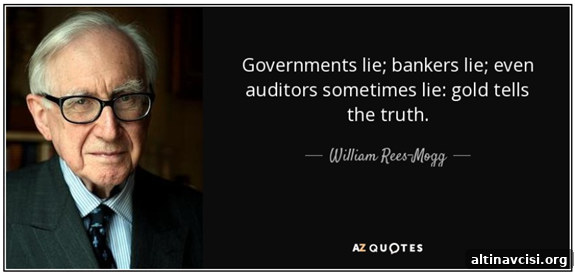
As William Rees-Mogg observed: “Governments lie; bankers lie; even auditors sometimes lie. Gold tells the truth.”
Want the full deep dive? You can read The MacroButler’s original article on his Substack
https://themacrobutler.substack.com/p/why-gold-why-now